World Liberty Pushes USD1 Onto Canton as Stablecoins Move Deeper Into Institutional RWA Settlement
World Liberty Financial has launched USD1 natively on Canton Network, giving institutions a dollar token designed to settle alongside tokenized real-world assets inside a privacy-aware market structure. The move matters less as another chain expansion and more as a bid to become the cash leg for regulated onchain finance.
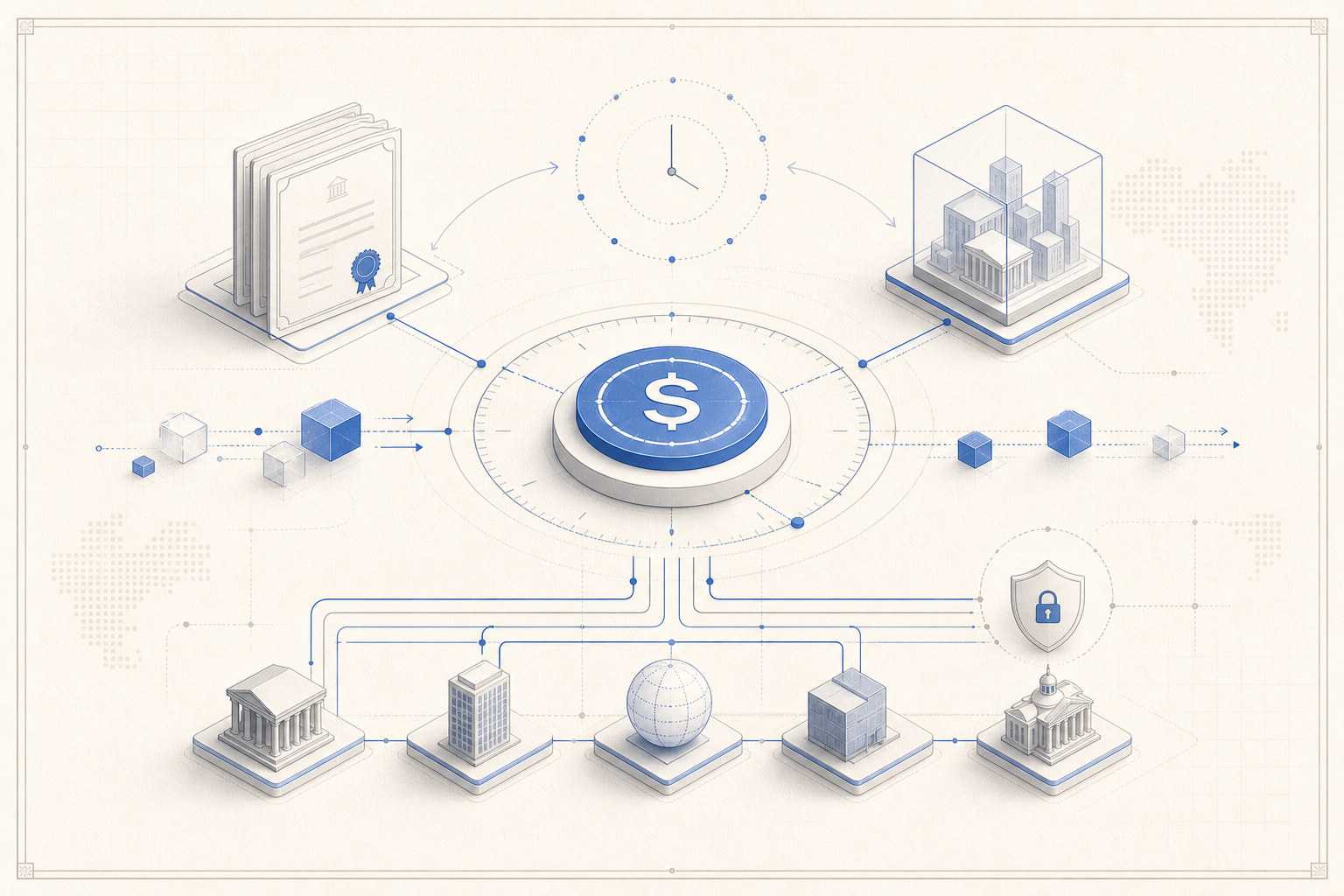
World Liberty Financial has extended USD1 onto Canton Network through a native deployment, opening a new institutional settlement rail for one of the market’s fastest-growing dollar tokens. The immediate headline is straightforward: firms using Canton for tokenized real-world-asset activity can now access USD1 directly on the network rather than relying on an external representation or a bridged version. The broader significance is bigger than a chain expansion. Stablecoin issuers are increasingly competing to become the default settlement layer for tokenized funds, credit products, collateral movements and redemptions, and Canton is one of the few networks built specifically around that institutional workflow.
Native issuance is the key detail. In tokenized markets, the cash side of a trade is often where operational friction appears, especially when the asset leg and the payment leg sit on different rails or require extra wrapping steps. By putting USD1 directly on Canton, World Liberty is positioning the token to move in the same environment as the instruments it is meant to finance or settle. That matters for delivery-versus-payment style workflows, intraday collateral mobility and redemptions that need tighter operational controls than retail-oriented public-chain activity typically provides. In practical terms, the launch is about shortening the path between tokenized assets and final cash settlement.
USD1 is already large enough for that positioning to matter. DeFiLlama data currently places the token at roughly $4.08 billion in circulation, making it the sixth-largest dollar stablecoin by supply. World Liberty says USD1 is redeemable one-for-one for U.S. dollars and backed by reserves that include dollars, U.S. government money market funds and other cash equivalents, with monthly reserve reporting published for transparency. That reserve mix puts the token squarely in the institutional cash-management conversation rather than the more experimental corners of crypto credit. It also gives World Liberty a clearer pitch to treasury, trading and settlement desks that care as much about redemption confidence and reserve quality as they do about onchain transfer speed.
Canton is also a deliberate venue for this push. The network has spent much of its product positioning around regulated capital-markets use cases rather than generalized crypto activity, emphasizing privacy controls, synchronization across applications and a structure that can support compliant market participants. By Canton's own figures, the network processes upward of $9 trillion of tokenized-asset activity in a typical month, and daily movement of onchain U.S. Treasury positions on its rails runs above $350 billion. Whether every issuer will want a stablecoin from World Liberty is a separate question, but the infrastructure context is important: USD1 is being inserted into a market where tokenized collateral, funding and settlement are already central design requirements.
That framing lines up with the use cases highlighted by Canton and World Liberty around the rollout. The two sides have pointed to derivatives collateral, institutional lending, onchain issuance and redemptions, cross-border payments and broader financing interoperability as target workflows for the token. Those are not speculative meme-coin use cases; they are core balance-sheet and market-plumbing functions. The logic is that a stablecoin becomes more valuable when it is not just transferable, but operationally native to the environments where tokenized securities and treasury-like instruments are actually moving. If tokenization continues shifting from pilot programs toward everyday issuance and servicing, the cash instrument that travels with those assets becomes strategically important infrastructure.
The launch also says something about the next phase of stablecoin competition. For the last cycle, the market mostly rewarded scale, exchange distribution and DeFi integration. In this cycle, institutional fit is becoming a separate battleground. A stablecoin that can sit comfortably inside permission-aware market structure, work alongside tokenized funds and support regulated financing flows has a different value proposition from one built mainly for exchange liquidity or consumer payments. USD1 is still much smaller than USDT and USDC, but its Canton deployment shows how issuers are trying to win share in specialized settlement domains rather than waiting to compete everywhere at once. The prize is not only circulation growth, but deeper embedment in the workflows that generate repeat institutional volume.
There are still real constraints. Native availability on Canton does not by itself guarantee adoption from asset managers, banks or issuers already committed to other settlement assets. Institutions will still evaluate reserve quality, mint and redeem operations, legal structure, counterparty exposure and how smoothly the token fits with their existing compliance stack. They will also care about whether tokenized-asset venues on Canton standardize around one cash instrument or continue supporting several. In other words, distribution on the right network is necessary, but not sufficient; real traction will depend on whether USD1 becomes part of actual issuance, collateral and post-trade workflows rather than simply adding another chain to its footprint.
Even with those caveats, the launch is a meaningful marker for onchain finance. It shows that tokenized-asset infrastructure is now mature enough that stablecoin issuers are optimizing for market structure, settlement finality and institutional usability, not just headline circulation. That is a useful signal for the broader RWA market. As more tokenized funds, treasuries and credit products move onchain, the competitive edge may belong less to the asset wrapper itself and more to the cash rail that can clear, fund and redeem those products with the least friction. USD1’s move onto Canton is an early example of that contest becoming explicit.