Tokenized Model Portfolios Push RWA Market Beyond Single-Asset Wrappers
Ondo's BlackRock-designed Intelligent Portfolios point to a broader phase for tokenized finance: packaging managed investment strategies, not only individual securities, into programmable onchain products.
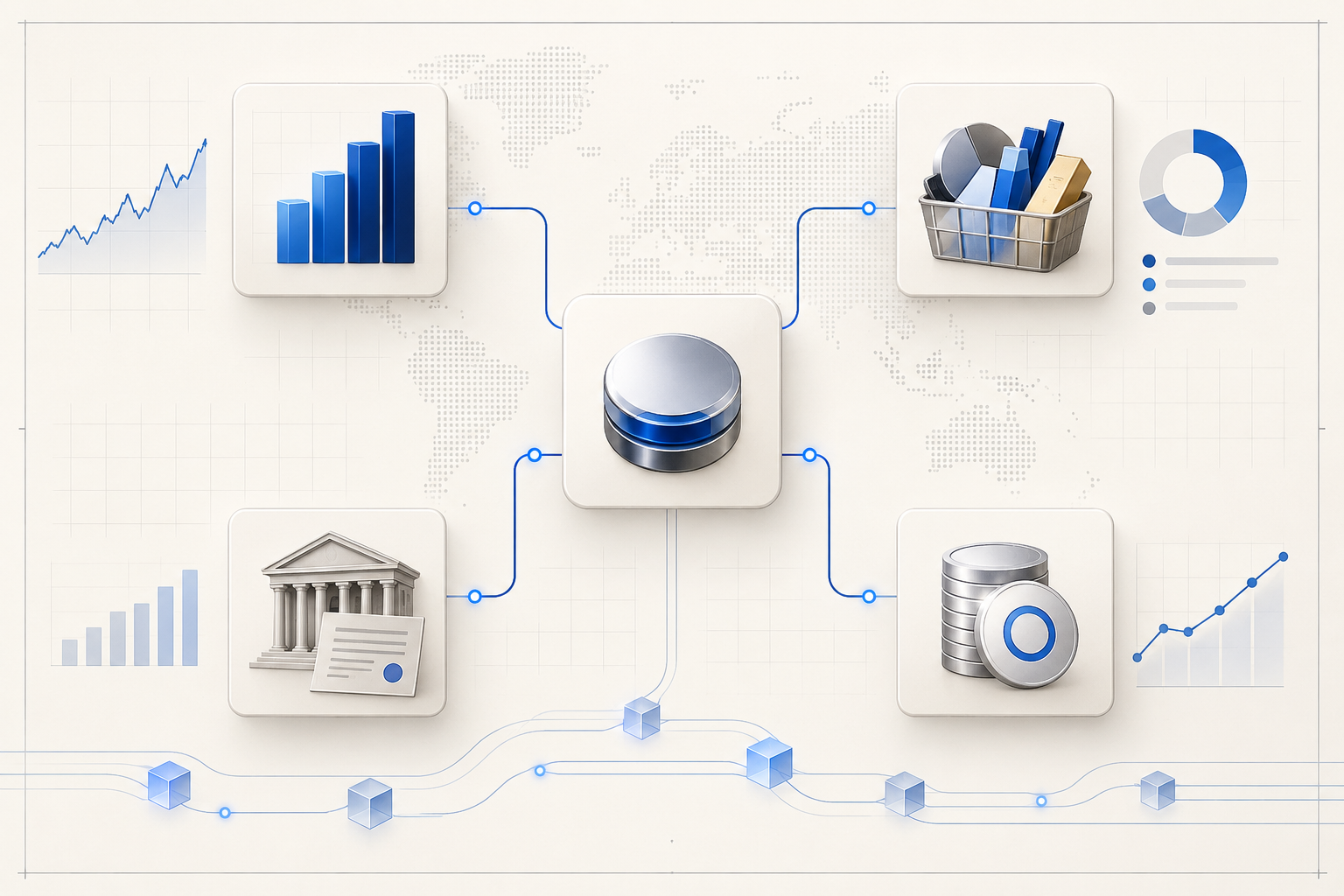
Tokenization is starting to move from the question of whether individual assets can trade onchain to whether full investment strategies can be delivered the same way. Ondo Finance's launch of Intelligent Portfolios, with the first three strategies developed by BlackRock for Ondo, gives the RWA market a concrete example of that shift: a single token designed to represent diversified portfolio exposure, with allocation and rebalancing handled programmatically rather than by the end investor.
The product matters because most of the tokenized securities market has so far been built around one asset at a time. Tokenized Treasury funds, yield-bearing dollar products, tokenized equities and ETF wrappers have each expanded access to familiar financial exposures. Intelligent Portfolios try to combine those building blocks into a higher-level product: a portfolio token whose underlying positions are drawn from Ondo Stocks and governed by preset rules.
Ondo describes each portfolio as based on a defined investment strategy supplied by a third party, starting with BlackRock, or by Ondo itself. Ondo then determines how that model is implemented inside its own product structure, while allocation, fee and rebalancing logic are encoded into smart contracts. The intended user experience is closer to holding one managed portfolio token than manually buying and maintaining a basket of tokenized securities.
That distinction is important for asset managers and wealth platforms. Traditional model portfolios are a large distribution channel in conventional finance because they package asset-allocation decisions into repeatable strategies used by advisers and managed-account platforms. Bringing a similar format onchain could give issuers a way to distribute portfolio construction as software, while giving investors a more compact product surface than dozens of separate tokenized stocks or ETFs.
The underlying infrastructure also shows how RWA markets are becoming more modular. Ondo's broader platform already includes USDY, OUSG, Ondo Stocks and other onchain market products, while its public materials say Ondo Stocks are backed by U.S. stocks, ETFs and cash with broker-dealer custody arrangements and daily verification. Intelligent Portfolios build on that stack by treating tokenized securities as composable portfolio ingredients rather than isolated wrappers.
That modularity is also where onchain products start to diverge from conventional brokerage experiences. A portfolio token can, in theory, be transferred peer to peer, pledged as collateral, placed inside another structured product or routed through DeFi venues without rebuilding the portfolio from scratch. Those features are not automatic guarantees of better liquidity or investor outcomes, but they explain why issuers are testing portfolio-level tokens rather than stopping at stock-by-stock tokenization.
For BlackRock, the launch fits a longer tokenization arc. The firm already sponsors BUIDL, a tokenized institutional liquidity fund that helped normalize Treasury-style collateral on public blockchain rails. Model-based tokenized portfolios would extend the concept from cash-management and single-fund exposure toward multi-asset investment delivery, where the strategic value is not only the asset token but also the rules that govern the portfolio.
The open questions are still meaningful. Availability remains restricted by jurisdiction, and the product will need to prove that its minting, redemption, disclosure and rebalancing mechanics hold up under real market stress. Investors will also need clear visibility into underlying holdings, fees, liquidity dependencies and the difference between owning a portfolio token and owning the securities directly. Those details will determine whether the structure is seen as a genuine improvement or simply another wrapper.
Even with those caveats, the direction is notable. RWA tokenization is increasingly less about placing a familiar asset on a blockchain and more about rebuilding how investment products are assembled, distributed and used as collateral. If portfolio tokens gain traction, the next competitive layer may be strategy design, automated execution and interoperability across onchain venues, not just the race to list more tokenized assets.