Tokenized markets are starting to behave less like their offline benchmarks
New market data points to a split between tokenized-asset supply and trading behavior: cash-equivalent products still anchor value, while tokenized equities are driving a larger share of activity. The result is a more nuanced RWA market than simple one-for-one replication of traditional finance would suggest.
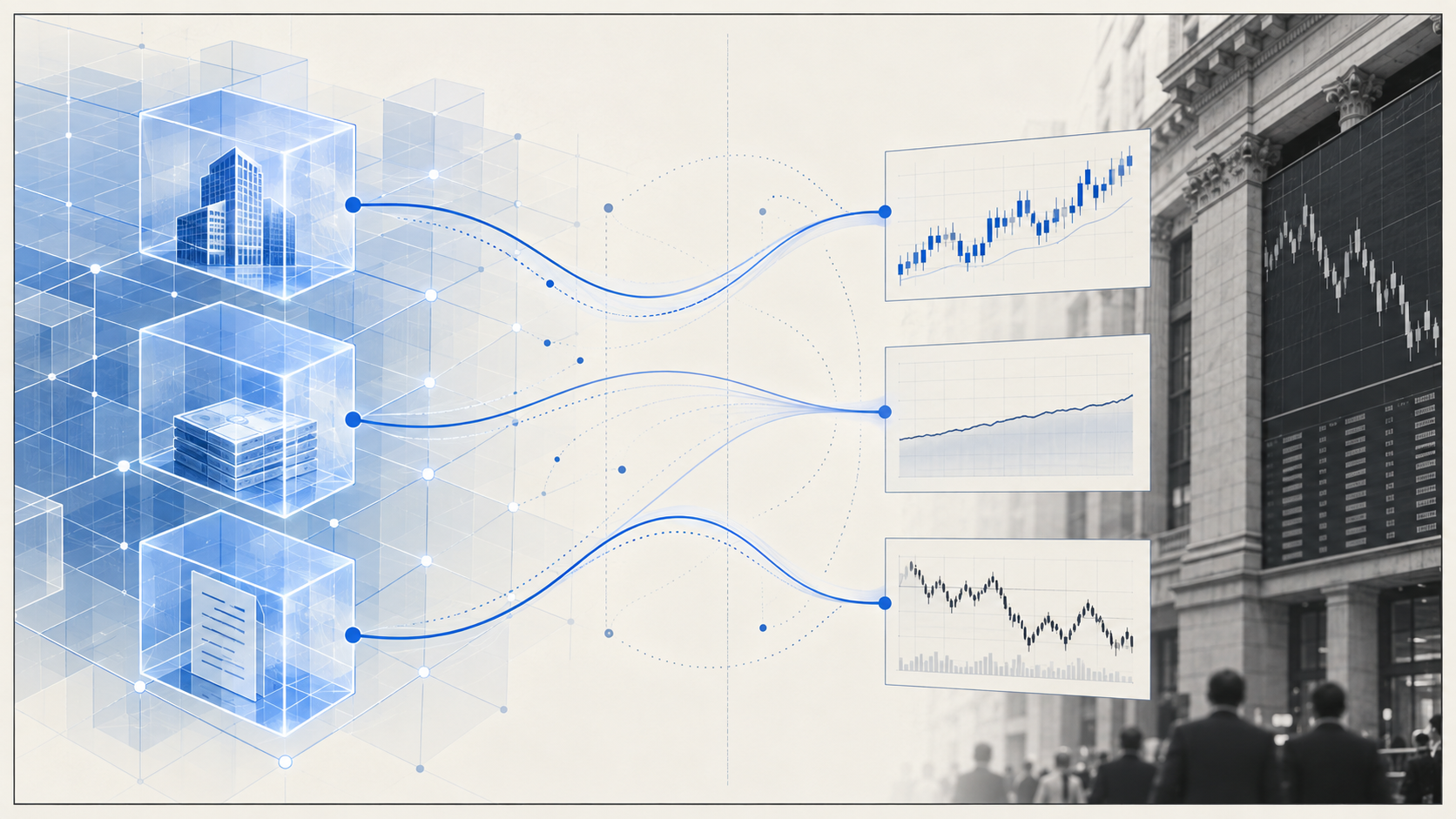
Tokenized real-world assets are no longer developing as a single, uniform market. The latest industry data shows a sharper divide between the assets that hold most onchain value and the products that attract the most active trading, a pattern that matters for issuers, venues and investors trying to understand where tokenization is actually gaining traction.
Dune's newest analysis of tokenized markets, summarized in current market coverage, puts tokenized RWA value at $34.5 billion as of Aug. 31, up more than 140% from a year earlier. The headline growth number is notable, but the composition is more important: cash-equivalent instruments remain the core of supply, while tokenized equities appear to be producing a disproportionate share of trading interest. That split suggests tokenization is not simply recreating traditional market structure on new rails. It also gives operators a better signal for where users value tokenized access itself, rather than treating the wrapper as a novelty layered on top of familiar instruments.
The contrast is especially visible in equities. Dune found that single stocks accounted for 81% of tokenized equity spot supply, with ETFs making up the remaining 19%. In traditional brokerage portfolios, diversified funds often dominate retail exposure because they package broad market access into one instrument. Onchain, the early tokenized-equity user appears more willing to select individual names directly, perhaps because tokenized venues can make cross-border access, fractional sizing and always-on settlement feel more like crypto-native market behavior than conventional brokerage allocation.
That does not mean tokenized equities are large in absolute terms. Separate Binance Research figures cited in the same reporting placed the tokenized equity market at $4.43 billion as of Sept. 15, after rapid growth in 2026 but still equal to only a tiny fraction of global listed-equity value. The data supports two ideas at once: adoption can be fast from a small base, and the market remains early enough that structure, distribution and investor protections are still being tested.
RWA.xyz data provides a useful reality check on the broader market. Its live dashboard on Oct. 1 showed distributed RWA value of roughly $38.66 billion, represented asset value above $415 billion, and stablecoin value near $294.67 billion. It also showed tokenized government securities, credit, stocks, private-market assets, commodities and real estate developing at very different scales. That breadth reinforces the idea that tokenization is becoming a family of markets, not a single category with one adoption curve.
For issuers, the message is that product-market fit depends on the asset class. Cash-equivalent products are still useful because they give users a familiar low-duration instrument for collateral, treasury management and settlement. Equities, by contrast, test whether tokenized access can create new demand around specific names, international reach or extended trading windows. Credit and private-market tokens have yet another challenge: proving that disclosures, servicing and secondary liquidity can keep pace with the complexity of the underlying assets.
For infrastructure providers, the divergence raises practical questions. If tokenized assets trade differently from their offline equivalents, venues need market controls, pricing data, redemption processes and disclosure surfaces that reflect onchain behavior rather than merely importing brokerage assumptions. Liquidity can also be fragmented across chains, issuers and wrappers, making consolidated market data and clear asset identity increasingly important.
The strongest read is not that tokenization has already replaced traditional markets, but that it is beginning to form its own microstructure. Cash products are anchoring value, equities are testing user demand, and analytics platforms are giving the market a clearer view of how those behaviors differ. That is a healthier signal than hype alone: the RWA market is becoming measurable enough for participants to see where onchain finance is copying legacy rails, and where it is starting to depart from them.