Tokenized stock push sharpens the line between access and ownership
The latest fight over tokenized equities is less about whether stocks can move onchain and more about what investors actually receive. Wrapper-style products, 1:1 certificates and issuer-led models are now competing to define the market’s trust layer.
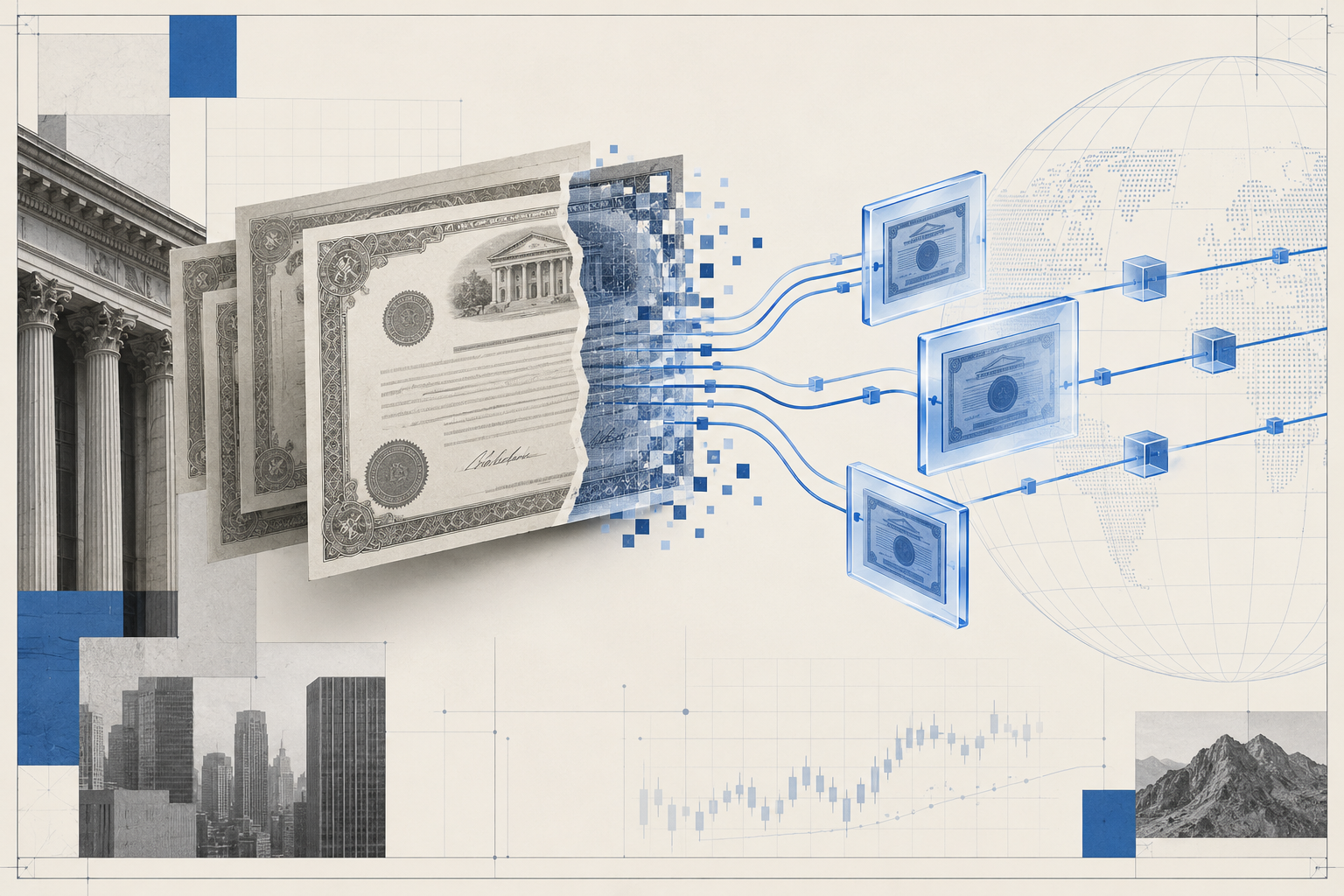
Tokenized equities are moving from novelty to market-structure argument. The newest flashpoint is a simple but consequential question: when a blockchain token tracks a public share, should holders receive direct ownership rights in the underlying security, or is economic exposure through an offshore or contractual wrapper enough?
That distinction matters because tokenized stocks are no longer just a crypto trading product. They are becoming distribution rails for U.S. equity exposure, fractional investing, around-the-clock trading and programmable collateral. For investors outside the United States, the appeal is obvious: large-cap U.S. names can be difficult to access through local brokers, expensive to trade, or unavailable in small sizes. Tokenization promises a cleaner interface, but the legal architecture behind the token determines whether the instrument is closer to a share-like security, a tracker certificate, a debt claim, or a synthetic contract.
The debate has been sharpened by criticism of synthetic stock tokens that mirror price performance without giving token holders direct ownership of the underlying shares. In that model, the issuer or affiliate may hold reference assets or collateral, while the token itself represents a contractual claim against the issuer rather than shareholder status at the company. Supporters argue this can expand global access quickly. Critics counter that it can pull demand away from the public equity market while giving buyers fewer governance, custody and investor-protection rights than a traditional share.
Primary product documentation across the market shows that tokenized-equity structures vary widely. xStocks describes its tokens as 1:1 collateralized instruments backed by the relevant stock or ETF, with availability across multiple public chains and investor restrictions for the United States and other prohibited jurisdictions. Dinari’s documentation describes dShares as tokenized assets backed 1:1 by real securities, with tokens minted or burned after corresponding trades settle through brokerage and custody relationships. Those models are not the same as a purely synthetic price feed, but they still depend on issuer controls, eligibility rules, custody arrangements and redemption mechanics.
The practical result is that tokenized stock markets now have several competing trust models. Some products emphasize transferable onchain exposure and secondary liquidity. Some are built around primary issuance and redemption with know-your-customer checks. Others use tokenized debt or certificate structures to replicate the economics of a listed equity without passing through every feature of direct share ownership. For users, the product label can look similar across interfaces, but the rights stack underneath can be materially different.
That difference is increasingly relevant for RWA venues and data platforms. A Coinbase-linked tokenized stock, a Robinhood-issued stock token, an xStock, a Dinari dShare and an Ondo-style tokenized equity may all point to the same underlying ticker, but they should not be treated as identical instruments. Important fields include issuer, jurisdiction, collateral policy, redemption path, trading venue, corporate-action handling, and whether the token is spot exposure or a derivative/perpetual product. The more tokenized equities fragment across chains and issuers, the more investors will need normalized catalog data rather than a flat list of tickers.
The market is also exposing a tension between access and market integrity. Broader access to U.S. equities could be one of tokenization’s strongest real-world use cases, especially for investors who cannot easily use U.S. brokerage infrastructure. But if trading volume migrates into wrappers that do not transmit demand back into the underlying listed market after initial collateralization, issuers, exchanges and regulators may question whether the public company ecosystem benefits. If products are fully backed and redeemable, the concern shifts toward operational risk, custody transparency and jurisdictional compliance.
For RWA builders, the takeaway is not that tokenized stocks are good or bad as a category. It is that the category is splitting into subtypes that must be evaluated separately. The strongest products will make their backing, redemption, corporate-action treatment and investor rights explicit. The weakest products will rely on ticker familiarity while obscuring the legal claim behind the token. As more equity exposure moves onchain, the winners will likely be the venues that can combine global accessibility with transparent, verifiable ownership architecture.