SVB review puts stablecoin reserve banking back in focus
A fresh review of Silicon Valley Bank’s collapse is a reminder that stablecoin risk does not stop at the blockchain. For USDC and other fiat-backed tokens, reserve composition, bank exposure and liquidity planning remain core infrastructure questions.
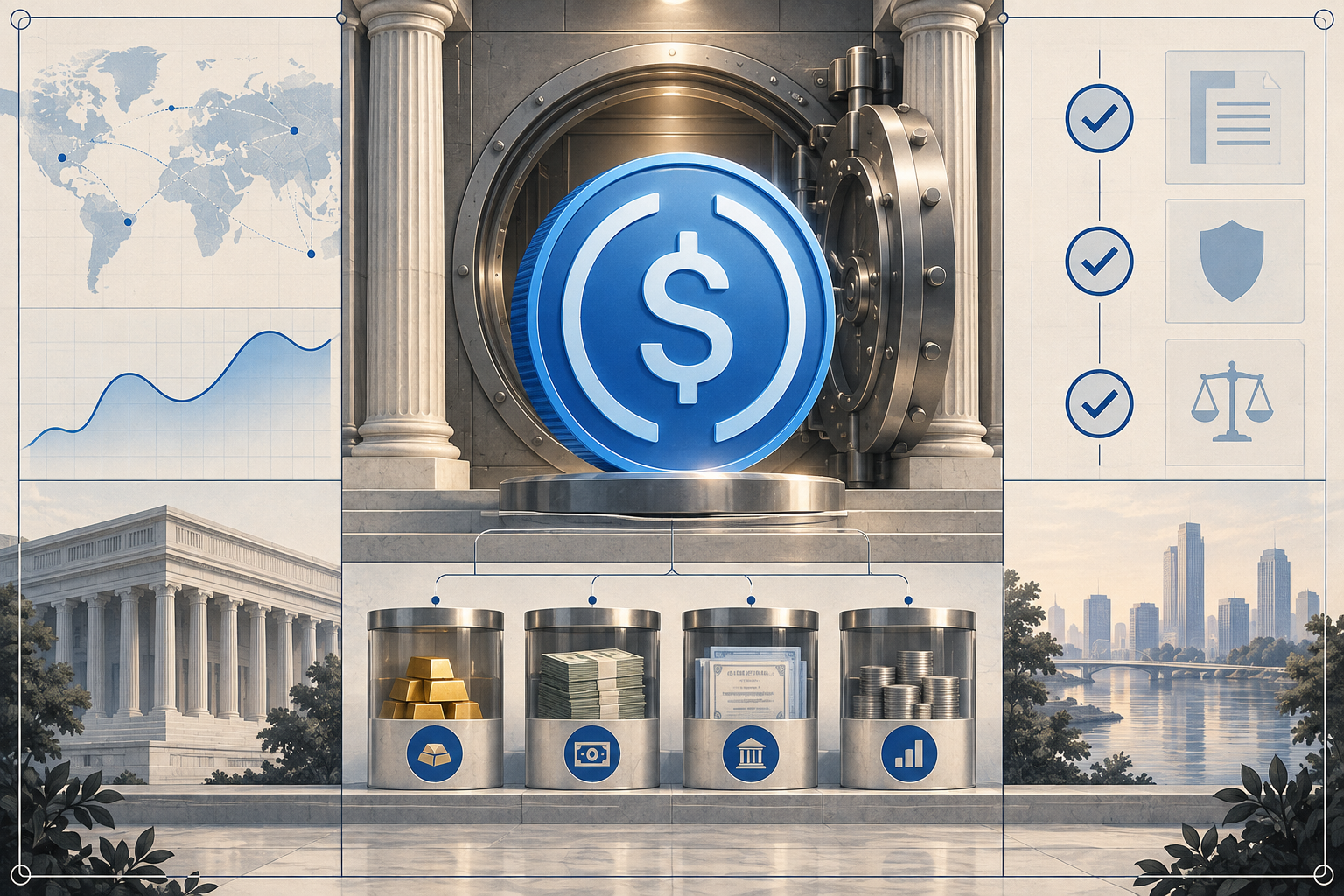
A new look at Silicon Valley Bank’s failure is putting an old issue back in front of digital-asset treasury teams: the weakest link in a fiat-backed stablecoin can sit offchain, inside ordinary banking and reserve-management arrangements. The lesson is not that stablecoins failed their technical design test. It is that onchain settlement speed does not remove concentration risk, interest-rate risk, liquidity risk or the operational dependency on banks that hold reserve cash.
The SVB episode remains one of the clearest stress tests for that model. When the bank was closed in March 2023, Circle disclosed that $3.3 billion of the cash reserves backing USDC were still at Silicon Valley Bank. The amount was a minority of USDC’s roughly $40 billion reserve base at the time, but the disclosure was large enough to unsettle a product whose central promise is one-to-one redeemability with the U.S. dollar. USDC traded below its peg before confidence returned after U.S. authorities protected SVB depositors.
That sequence matters because the stabilizing event was not a smart contract upgrade or a market-maker intervention. It came from the banking perimeter. Federal Reserve materials on SVB’s failure point to familiar weaknesses: a concentrated depositor base, large unrealized losses as interest rates rose, insufficient liquidity preparation and governance failures around balance-sheet risk. Those findings are conventional banking lessons, but they became stablecoin lessons because part of a major token’s reserve stack depended on that bank being accessible.
Circle’s current transparency materials show how the market has adjusted its expectations since then. The company describes USDC reserves as held separately from operating funds for the benefit of token holders, with weekly reserve disclosures, monthly third-party assurance and reserve categories that distinguish bank deposits, deposits at systemically important institutions, short Treasury exposure and overnight Treasury repo. That structure is designed to make the backing easier to inspect and harder to confuse with corporate working capital. It also shows how much stablecoin trust is now tied to reserve reporting discipline rather than only token mechanics.
For users, the practical diligence question is no longer simply whether a stablecoin is issued on reliable chains or can move cheaply between venues. The deeper question is where the dollars sit, who controls the accounts, what proportion is in cash versus government securities or repo, how quickly assets can be liquidated, and what happens during a bank holiday, receivership or sudden redemption wave. These are the same questions corporate treasurers ask about cash management, but stablecoins compress the feedback loop because redemptions, secondary-market trading and public reserve scrutiny can all move continuously.
The implications extend beyond USDC. Tokenized deposits, payment stablecoins and yield-bearing cash products are increasingly being marketed as institutional settlement infrastructure. As more companies use digital dollars for payments, collateral, liquidity management and cross-border treasury operations, the reserve layer becomes part of market structure. A well-designed token can still inherit risk from a poorly diversified banking setup. Conversely, conservative custody, high-quality liquid assets and clear attestations can make an otherwise simple stablecoin materially more useful for real-world finance.
The policy debate is moving in the same direction. Regulators are less focused on whether token balances can be recorded on a blockchain and more focused on redemption rights, reserve eligibility, disclosures, segregation, operational resilience and the interaction between private stablecoin issuers and the banking system. SVB showed why that framing is necessary. A stablecoin that references dollars ultimately depends on institutions that hold dollars, securities that can be sold for dollars and legal arrangements that determine who has a claim when something breaks.
For RWA markets, the takeaway is straightforward: reserve architecture is product architecture. Stablecoins are often the settlement leg for tokenized funds, securities, invoices, commodities and private credit. If that settlement leg is treated as risk-free merely because it is programmable, the rest of the stack inherits a blind spot. The stronger approach is to evaluate stablecoin issuers the way capital markets evaluate cash custodians and short-duration liquidity products: by concentration, asset quality, legal priority, redemption mechanics and transparency under stress.