Stablecoin rails push manufacturers’ treasury controls into the critical path
Faster digital-dollar settlement is starting to expose a less visible bottleneck for manufacturers: vendor identity, invoice approval and reconciliation workflows. The RWA takeaway is that stablecoin payment rails only create working-capital gains when treasury controls can move at the same speed.
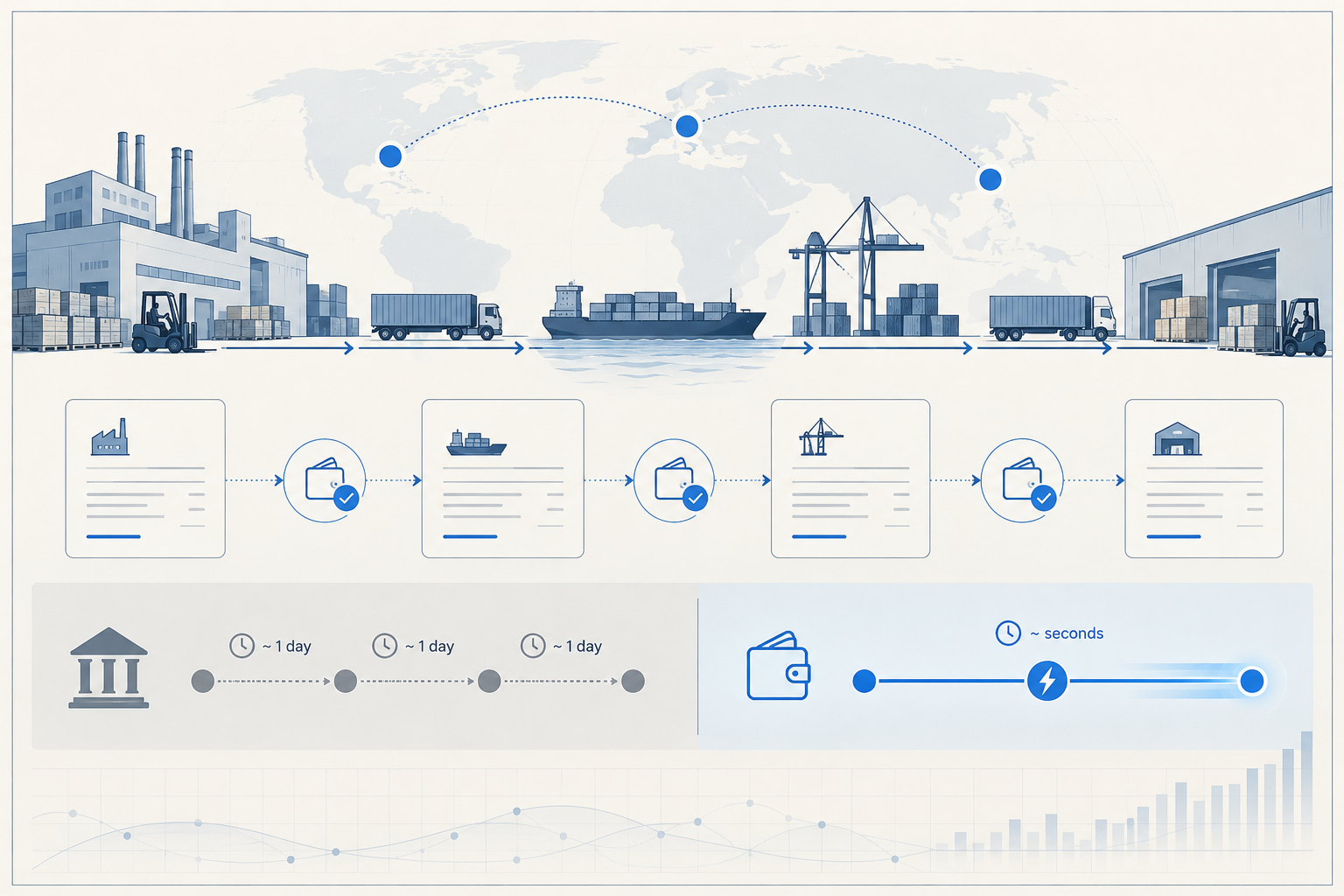
Stablecoins are becoming a live treasury question for manufacturers, not just a crypto-market talking point. The promise is straightforward: replace multi-day correspondent banking settlement with dollar-denominated value that can move across borders around the clock. For companies managing overseas suppliers, contract manufacturers and regional operating accounts, that can reduce the amount of cash trapped in payment transit and make liquidity planning less dependent on banking windows.
The harder lesson is that faster settlement does not automatically create a faster corporate payment process. A supplier invoice still has to be approved, matched to a purchase order, screened for sanctions and fraud risk, assigned to the right subsidiary and posted back into accounting systems. If those controls remain batch-based, a stablecoin transfer that settles in minutes can still sit behind a two-day approval queue. The rail changes the timing of final settlement, but it does not remove the operational work around it.
That distinction matters most in manufacturing because supplier networks are broad, international and operationally sensitive. Many firms source components, tooling, packaging or raw materials from multiple jurisdictions, often with intermediaries and frequent changes to payment instructions. In that setting, the wallet address becomes an extension of vendor master data. Treasury teams need confidence that a particular wallet is controlled by the approved counterparty, remains authorized for the relevant token and chain, and has not been substituted through business-email compromise or invoice fraud.
Recent payments-sector research points to the same adoption gap. A large share of smaller and mid-market companies already buy goods or inputs from overseas suppliers, which makes cross-border payment efficiency commercially relevant beyond the largest multinationals. At the same time, reported usage of stablecoins among middle-market firms remains limited, with most companies still cautious about digital assets. That combination suggests the near-term market is less about universal replacement of bank rails and more about selective use cases where payment timing, supplier trust and internal automation are already strong enough to justify the change.
Regulatory expectations add another constraint. Global standard setters have emphasized that stablecoin arrangements need clear governance, risk management, redemption rights, operational resilience and anti-money-laundering controls. Those requirements do not disappear because a transaction is business-to-business. For corporate users, they translate into practical vendor onboarding, transaction monitoring, chain selection, wallet custody and recordkeeping decisions. Manufacturers that cannot connect those decisions to their enterprise resource planning and treasury management systems may find the compliance workload offsets the settlement benefit.
The opportunity is still meaningful. For high-frequency supplier payments, emergency procurement, weekend settlement needs or corridors where banking cutoffs routinely delay delivery, digital dollars can compress cash-conversion cycles and reduce idle balances. They can also give finance teams a more granular view of when value has moved, which is useful for cash forecasting and intragroup funding. The strongest use cases are likely to involve approved counterparties, recurring flows, pre-agreed tokens and integrations that automatically reconcile the onchain payment to the invoice and ledger entry.
This is why the next phase of stablecoin adoption in industrial supply chains will be measured as much by controls as by transaction speed. Banks, payment companies and fintech providers are racing to package stablecoin services for businesses, but manufacturers will judge them on identity assurance, auditability, fiat conversion, dispute handling and accounting integration. The winners will not simply be the rails that move money fastest; they will be the systems that let corporate finance teams move value quickly without weakening the checks that protect supplier networks and balance sheets.