Stablecoin Rails Are Becoming the Payment Layer for AI Agents
A growing x402 stack is turning HTTP-native payments into usable infrastructure for machine-to-machine commerce. The shift matters because agentic software needs cheap, fast settlement rails, and stablecoins are becoming the default answer.
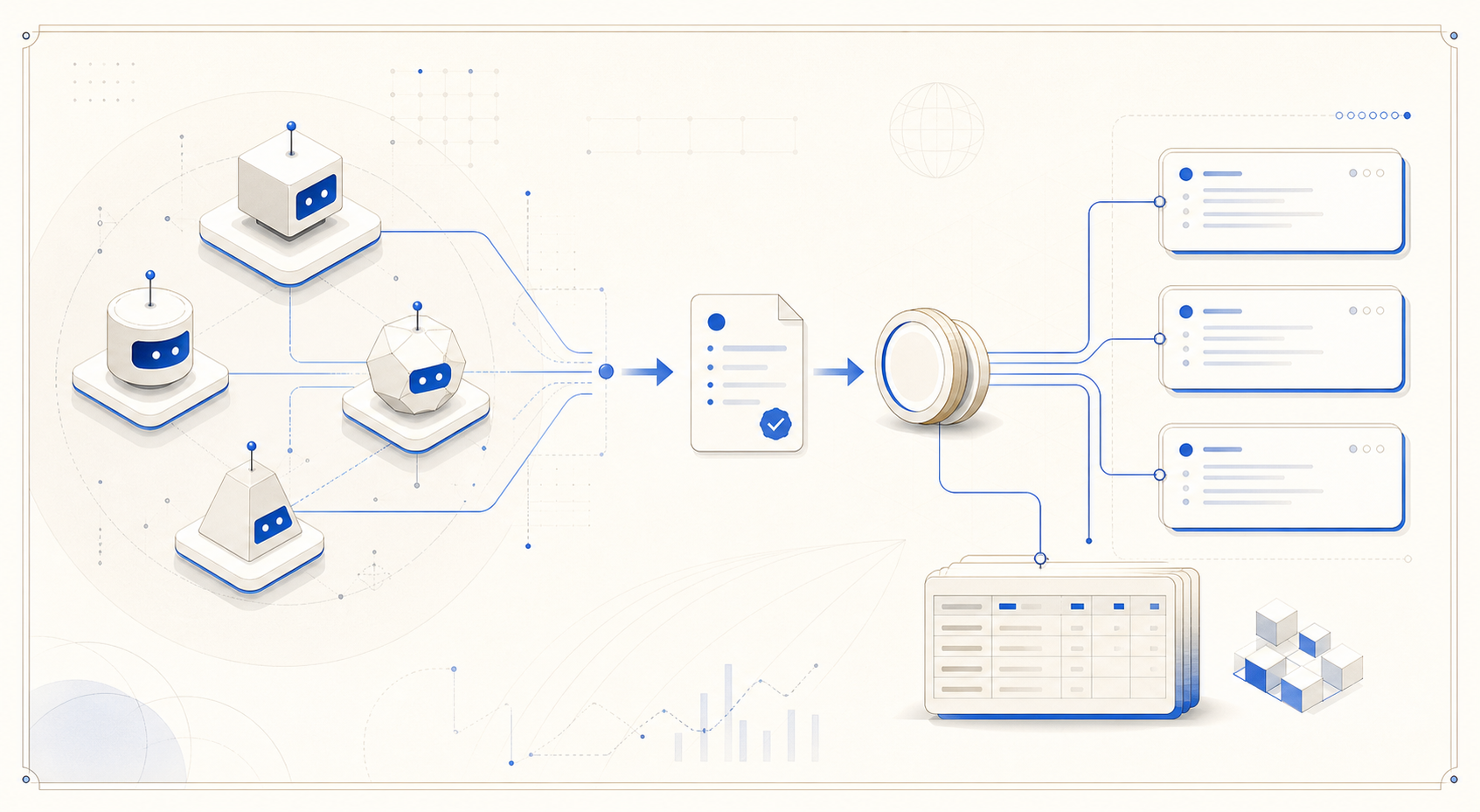
The race to build AI agents that can buy data, compute and software tools is starting to expose an old limitation in internet commerce: machines can call APIs instantly, but they still struggle to pay for them natively. That gap is why stablecoins are moving from a crypto payment niche into a more structural role in agentic infrastructure. A new wave of tooling around x402, the open protocol for internet-native payments over HTTP, is giving developers a way to charge for individual requests, meter usage in software and settle value without forcing every interaction back through a human checkout flow.
The protocol’s governance has also become more formal. In July, the Linux Foundation announced the operational launch of the x402 Foundation and confirmed that Coinbase had contributed the protocol into a neutral stewardship model. At launch, the foundation said 40 organizations had joined, spanning card networks, cloud providers, payment firms and crypto infrastructure groups. The member list included names such as Circle, Mastercard, Stripe, Visa, AWS, Google, Ripple, Shopify, Solana Foundation and Stellar Development Foundation. That mix matters because it suggests the market is no longer treating agent payments as a narrow wallet feature; it is being framed as shared internet infrastructure.
What x402 is trying to standardize is straightforward in concept even if the underlying plumbing is technical. A server can require payment for an endpoint, return an HTTP 402 response when payment is missing, and let a client pay and retry as part of the same machine workflow. In practice, that means an AI agent could pay for a weather feed, a model inference call, a proprietary dataset or a one-off software action without leaving its execution loop. The current implementation is explicitly designed to support multiple payment types, but stablecoins are emerging as a practical fit because they can move programmatically, settle quickly and work across globally distributed counterparties.
The stablecoin angle is no longer theoretical. Circle, one of the x402 Foundation’s premier members, said the combination of x402 and USDC gives agents a native way to pay inside the request-response cycle, with transactions that can clear in seconds and at very low unit cost. Coinbase’s current x402 documentation says its developer platform has already processed more than 100 million x402 payments across Base and Solana, a notable signal that the model is moving beyond concept demos. On the public x402 site, the project currently reports tens of millions of transactions over the last 30 days, alongside meaningful buyer, seller and volume counts. Those figures do not prove mass-market adoption yet, but they do show sustained live usage rather than a dormant standards exercise.
Another important development is the protocol’s shift toward higher-frequency settlement models. In May, x402 contributors from Cloudflare and Coinbase introduced batch settlement, a design that separates real-time authorization from eventual onchain redemption. Instead of pushing a blockchain transaction for every API call, an agent can provide signed vouchers during each interaction while the merchant settles the aggregate value later in bulk. That change is especially relevant for stablecoin-based agent commerce because it reduces the overhead that would otherwise make per-request monetization uneconomical. For services priced by the call, token, kilobyte or millisecond, batching is the difference between an interesting demo and a viable business model.
The broader implication for stablecoins is that they are being repositioned from exchange cash equivalents into operating infrastructure for software. In consumer payments, stablecoins still have to compete with cards, bank accounts and closed-loop wallets. In machine commerce, the benchmark is different: the winning rail is the one that is easiest to embed into code, easiest to reconcile automatically and cheapest to settle at internet scale. x402 does not guarantee that a single coin or chain will dominate that layer, but it does strengthen the case that stablecoins can become the programmable balance sheet for autonomous commerce, especially when paired with open standards instead of single-vendor APIs.
There are still real constraints. Governance standards do not eliminate compliance, dispute handling, fraud controls or merchant risk management, and enterprise buyers will want tighter controls over wallets, spending limits and approvals before allowing agents to transact broadly. Even so, the direction of travel is getting clearer. The combination of open protocol work, vendor-neutral governance, production transaction volume and stablecoin settlement support suggests that agent payments are moving from speculative narrative to deployable stack. For RWA and stablecoin markets, that is the notable shift: value transfer is being packaged as a native internet primitive, and stablecoins are increasingly the settlement layer developers are choosing to build around.