SoFi and Payward Link Bank Rails, Stablecoin Distribution, and Crypto Liquidity
SoFi and Kraken parent Payward are stitching together real-time dollar settlement, a bank-issued stablecoin, and institutional crypto execution in a structure that looks increasingly like shared financial market infrastructure rather than a simple exchange listing. The partnership matters because it joins regulated bank connectivity with 24/7 digital-asset liquidity at a time when tokenized cash is becoming part of mainstream market plumbing.
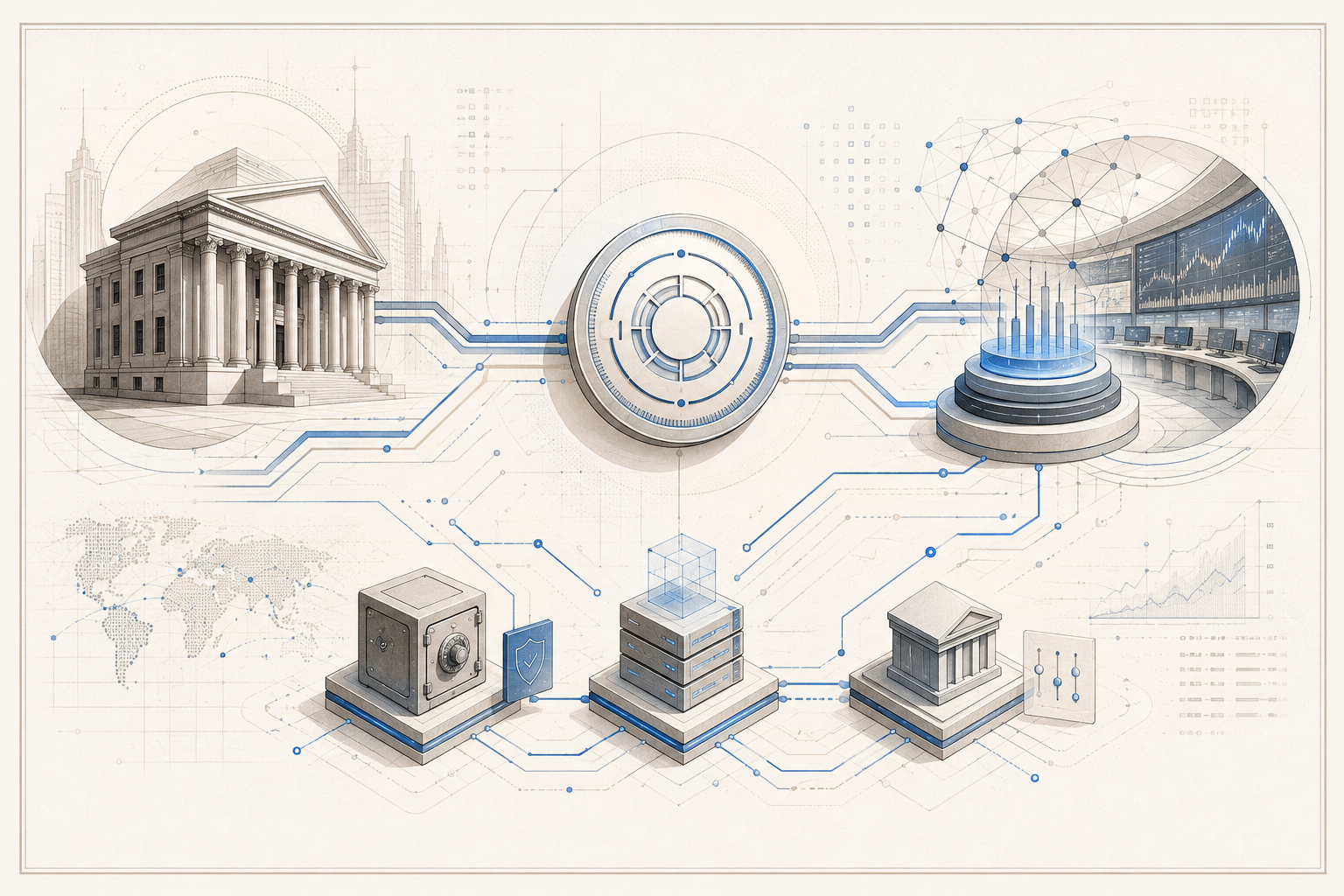
The latest SoFi-Payward partnership is notable less for a single product launch than for the way it bundles several pieces of market infrastructure into one operating relationship. Under the deal, Kraken parent Payward will connect to SoFi’s real-time dollar settlement network, Kraken will list SoFiUSD, and SoFi will route additional crypto trading flow through Kraken Prime. Taken together, those moves show how the boundary between bank payments, stablecoin distribution and digital-asset brokerage is narrowing. For the RWA market, that matters because tokenized cash works best when it is tied to reliable fiat entry points, continuous settlement windows and enough liquidity to move size without excessive operational friction.
According to reporting from Cointelegraph and Decrypt, Payward is joining the SoFi Exchange Network so institutional and business clients can clear and settle U.S. dollar transactions around the clock rather than waiting for legacy banking cutoffs. The same coverage says Kraken will list SoFiUSD for retail, professional and institutional customers, while SoFi will use Kraken Prime as an additional source of crypto liquidity for trades executed through the SoFi app. The companies have also said qualified custody services could be added over time. That combination is important because it turns what might have been a conventional token listing into a broader distribution and settlement arrangement spanning both bank and exchange infrastructure.
Kraken’s own write-up on the collaboration fills in the market-structure logic behind the deal. The company says Kraken Prime uses smart order routing to read pricing and depth across supported venues in real time and route orders to the best available execution path. It also says Prime gives institutional and corporate partners a single relationship for execution, custody and market access instead of forcing them to manage venue-by-venue fragmentation. In practical terms, that means SoFi can preserve its consumer-facing app experience while relying on a deeper external liquidity layer underneath it. If that model works at scale, it offers a blueprint for how consumer fintech distribution can sit on top of institutional-grade crypto plumbing without exposing end users to the operational complexity behind the scenes.
The stablecoin leg is what makes the arrangement especially relevant for tokenized-finance watchers. A bank-issued dollar token such as SoFiUSD is more useful when it is not isolated inside one proprietary environment. Listing it on Kraken expands access, but the bigger strategic point is that SoFiUSD is being paired with a banking network that can settle fiat at all hours and with a trading venue that can distribute the asset across multiple customer segments. That starts to resemble the early stages of a tokenized-cash stack: bank deposit connectivity for funding, a stablecoin for onchain transfer and exchange liquidity for circulation. In RWA markets, those three functions increasingly need to work together if tokenized assets are going to settle smoothly against tokenized dollars.
There is also a larger institutional convergence story here. Kraken’s blog frames the SoFi relationship alongside its wider push into more traditional finance-adjacent infrastructure, while outside coverage places the partnership within Payward’s broader effort to deepen connections with regulated banking and capital-markets channels. That context matters because RWA adoption rarely hinges on investor demand alone; it depends on whether custody, settlement, compliance and liquidity providers can interoperate well enough to support repeat usage. A bank that can move dollars in real time, an exchange group that can aggregate crypto liquidity and a stablecoin that can bridge the two are all pieces of the same commercial puzzle.
None of that guarantees immediate scale. Real-time settlement access is only valuable if counterparties actually use it, and stablecoin listings do not automatically produce meaningful balances or transaction volume. SoFiUSD will still need to prove that it can attract recurring payment, transfer or collateral use rather than simply exist as another dollar token in an already crowded field. Likewise, routing SoFi order flow through Kraken Prime improves execution architecture on paper, but the user-facing payoff will depend on whether customers actually see tighter pricing, better fill quality and more resilient access during volatile trading periods.
Even with those caveats, the partnership qualifies as a meaningful RWA-adjacent development because it shows tokenized cash moving deeper into the infrastructure layer of mainstream finance platforms. The market has spent years talking about 24/7 settlement, bank-issued stablecoins and better distribution for digital-asset liquidity as separate themes. SoFi and Payward are now testing what it looks like when those themes are integrated into one commercial relationship. If more banks, fintechs and exchanges follow that pattern, tokenized dollars may become less of a standalone product category and more of a standard settlement instrument for the next phase of onchain financial markets.