SoFi and Kraken Tie Stablecoin Distribution to 24/7 Dollar Settlement Rails
SoFi and Kraken are linking stablecoin distribution, exchange liquidity and always-on dollar settlement in a structure that points to how tokenized cash could move through consumer and institutional crypto workflows. The deal matters less as a listing headline than as a sign that banking-style payment rails and exchange infrastructure are starting to merge.
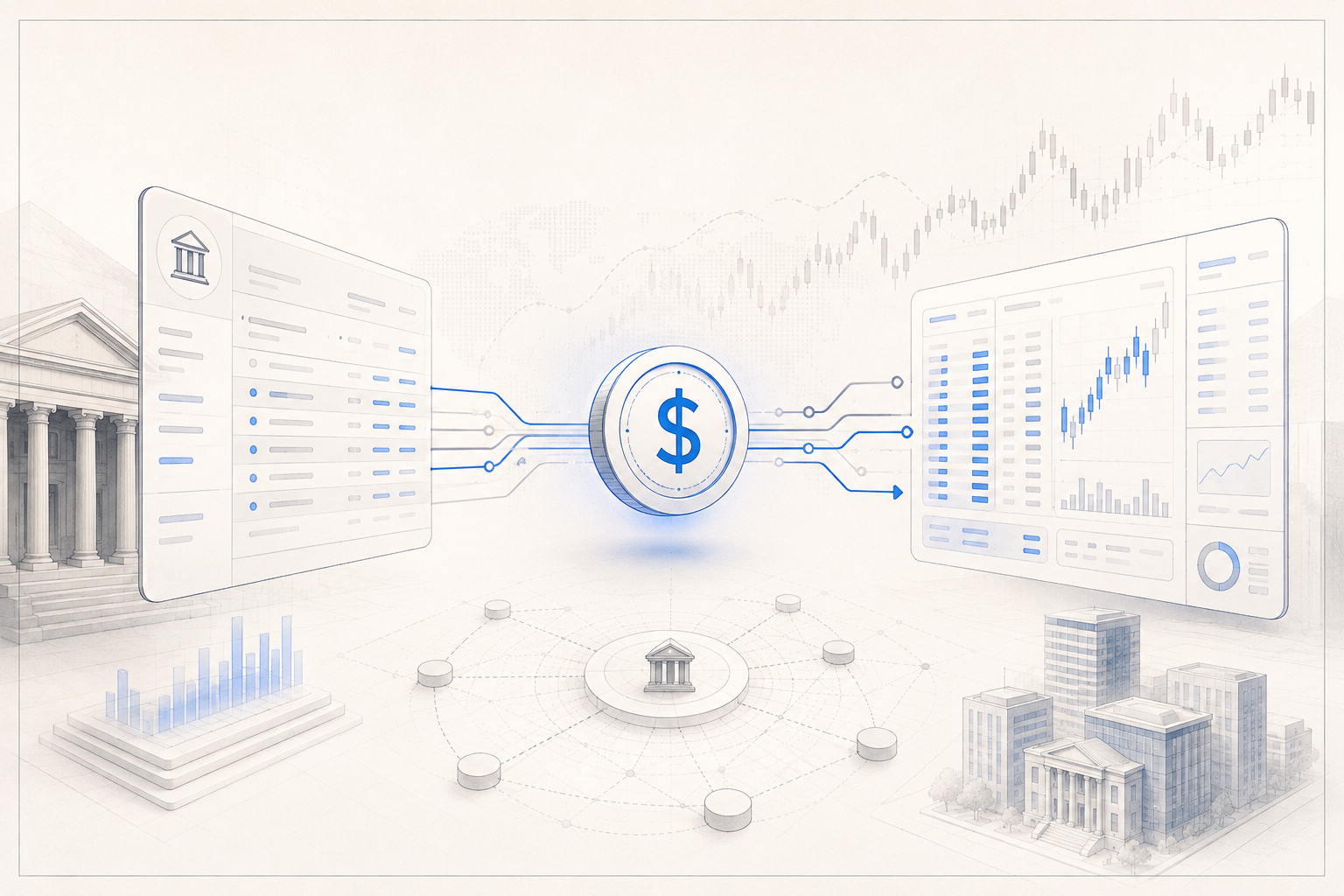
SoFi and Kraken are using a single commercial agreement to connect three pieces of digital-asset infrastructure that are usually discussed separately: fiat settlement, stablecoin distribution and execution liquidity. The companies said Kraken will list SoFiUSD, while SoFi will route part of its in-app crypto flow to Kraken Prime and connect Kraken to SoFi’s round-the-clock dollar settlement network. Taken together, the arrangement is a meaningful signal for the RWA and stablecoin market because it treats tokenized dollars and banking rails as part of the same operating stack rather than as adjacent products.
The structure matters. A simple exchange listing would have been notable on its own, but the combination of listing, settlement access and institutional execution makes this a broader market-infrastructure story. Kraken gains a new stablecoin asset and another path into dollar movement outside conventional banking windows. SoFi gains an additional institutional-grade execution venue for crypto trading inside its app. If the integration works as described, the result is tighter connectivity between a consumer finance platform, an exchange operator and a tokenized-dollar instrument that can move across trading and payment contexts more quickly than traditional banking cutoffs typically allow.
The execution side is relatively easy to contextualize. Kraken’s official Prime materials describe a platform that combines execution, custody and financing for institutional users, which supports the idea that SoFi is not merely adding another retail venue but tapping into a service layer built for deeper liquidity and more controlled trade handling. Kraken has also been expanding its regulated financial footprint this year. On its own news page, Kraken said Kraken Financial received a Federal Reserve master account, giving the firm direct access to Fedwire rather than forcing it to rely entirely on intermediary banks. That does not make the SoFi relationship risk-free or inevitable, but it does show that Payward has been building toward a model where crypto-market access and fiat-rail connectivity sit closer together.
For the stablecoin market, the most interesting question is distribution. A dollar token becomes more relevant when it is not confined to a single wallet or a narrow payments loop. By placing SoFiUSD onto a large exchange while also tying it to a banking-oriented settlement path, SoFi is effectively testing whether a branded stablecoin can function as both a user-facing asset and an internal liquidity tool. That is the same strategic direction increasingly visible across tokenized cash, fund subscriptions and 24/7 collateral management: issuers want programmable dollars that can travel across trading, treasury and transfer workflows without waiting for the next banking session to open.
There are still important unknowns, and those unknowns will determine whether this becomes a real RWA-adjacent milestone or just a contained product integration. Public reporting on the deal establishes the headline mechanics, but it does not yet answer several operational questions that sophisticated users will care about: how broadly SoFiUSD will be available by jurisdiction, what reserve and redemption terms govern the token, whether custody services will be expanded beyond the current plan, and how much actual flow SoFi directs through Kraken Prime once the integration is live. Without that detail, it is too early to frame the arrangement as a full-scale competitive challenge to the largest exchange stablecoins.
Even so, the direction is hard to ignore. RWA markets increasingly depend on cash instruments that can settle when tokenized funds, tokenized equities and crypto venues remain active outside legacy market hours. In that environment, a platform that can combine customer acquisition, dollar movement and tradable tokenized cash has a structural advantage over one that only offers one of those layers. SoFi’s public-market footprint gives it a distribution channel many crypto-native issuers do not have, while Kraken brings exchange liquidity and institutional execution that consumer fintechs typically lack. That mix is precisely why the partnership is more important than a standard wallet integration or marketing tie-up.
The cleanest read is that both companies are positioning for a market where tokenized dollars are expected to do real operational work, not just serve as parked balances between trades. If SoFiUSD gains meaningful usage on Kraken and SoFi successfully improves execution quality for its users through Kraken Prime, the partnership will stand as another example of how the boundary between fintech cash management and crypto-market infrastructure is fading. For RWA watchers, that is the real headline: the path to tokenized finance is increasingly being built through practical settlement links and distribution agreements, one infrastructure bridge at a time.