Shinhan and Visa map a bank-grade route into stablecoin issuance and settlement
Shinhan Financial Group and Visa are moving beyond general digital-asset rhetoric into a concrete stablecoin infrastructure plan built around issuance, remittance and redemption. The agreement stands out because it aims to fit stablecoin rails into mainstream banking, card settlement and business payments rather than treating them as a side experiment.
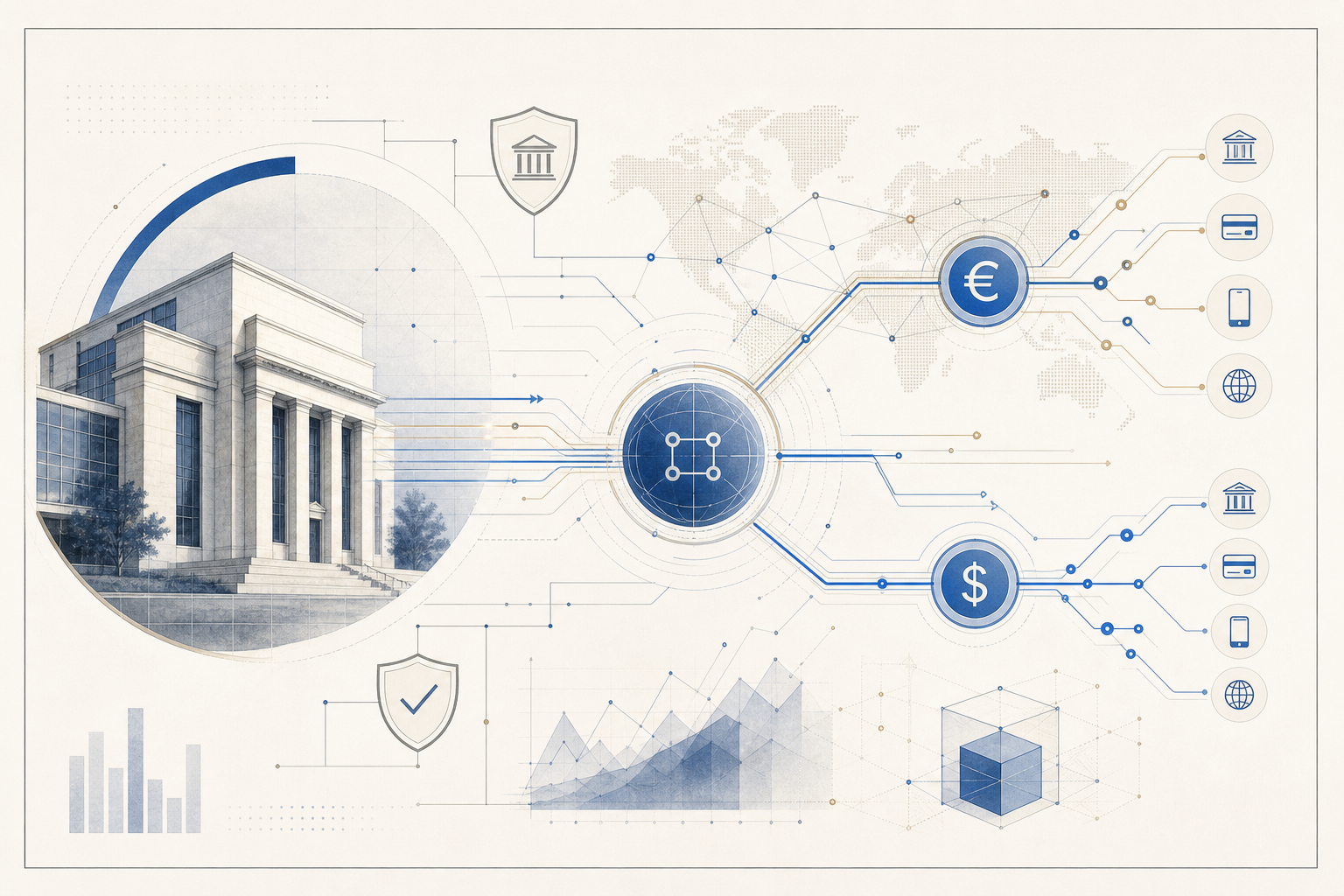
Shinhan Financial Group has taken a more concrete step into stablecoin infrastructure by signing a strategic agreement with Visa that goes well beyond generic partnership language. According to statements described by multiple reports in Korea and abroad, the two sides plan to work on the core mechanics that matter most for bank-grade digital money: issuance, remittance and redemption. That makes the announcement notable in RWA terms, because it frames stablecoins not as a speculative consumer add-on but as financial plumbing that a major banking group wants to fit into real payment and treasury workflows.
The agreement was signed in Seoul and presented as a follow-up to strategic discussions the two groups began earlier this year. The reported operating plan is specific. Shinhan intends to test core stablecoin functions using Visa’s platform and to jointly design what local coverage described as a Korea-style business model tailored to the domestic financial environment. The work is also expected to extend into card-settlement pilots, AI-based payment models, and broader B2B and B2C payment flows, suggesting that the project is being scoped as infrastructure rather than as a narrow token launch.
That distinction matters because Shinhan is not approaching the sector as a standalone crypto company. It sits at the center of a large financial group spanning banking, cards and other financial services, which means any stablecoin effort has to answer harder operational questions than a typical wallet product. A bank-linked model needs clear redemption pathways, integration with existing compliance systems, and a reason for enterprises or consumers to use the instrument instead of ordinary deposits or card balances. Framed that way, the value of the Visa tie-up is less about branding and more about whether Shinhan can plug a regulated stablecoin layer into payment, distribution and settlement channels it already controls.
Visa’s own public positioning helps explain why the partnership is plausible now. On its stablecoin solutions pages, the company pitches programmable stablecoins as a way for banks, fintechs and wallets to support faster, borderless and more flexible payments at global scale. That language lines up with the functions Shinhan is reportedly evaluating. The focus is not simply on putting a token in circulation; it is on building connective tissue between existing financial institutions and new forms of digital cash so that money can move with fewer time-zone and bank-hour constraints.
The timing also fits Visa’s broader push into regulated stablecoin settlement. In a separate announcement this week, Visa said it had joined the Monetary Authority of Singapore-led BLOOM initiative and that its first pilot under that framework would explore using regulated dollar- and euro-denominated stablecoins for settlement with Nium. Visa said the goal was to test seven-day settlement, including weekends and public holidays, while preserving the compliance and security expectations of mainstream payments. Taken together with the Shinhan agreement, that signals a consistent strategy: use stablecoins where they can improve settlement flexibility, but keep the rails closely tied to regulated institutions and familiar payment infrastructure.
For South Korea, the local design question is a big part of the story. Stablecoin projects cannot simply be imported wholesale from another market because domestic payment habits, bank regulation, wallet distribution and supervisory expectations all differ. A Korea-specific model implies work on issuance controls, reserve management, customer access, and how stablecoin balances interact with existing banking and card products. It also suggests the partners are thinking about a system that can live inside a national financial framework, rather than only serving offshore crypto traders.
The broader RWA implication is that stablecoins are increasingly being treated as part of institutional market structure, not just as exchange cash. When a major banking group starts testing issuance and redemption with a global payments network, the conversation shifts from token launch headlines to operational credibility. That is the same transition the wider tokenization market is trying to make: products matter less as static wrappers than as usable instruments inside settlement, treasury and customer distribution flows. If Shinhan can connect a regulated stablecoin process to card, banking and business-payment channels, it would represent a more consequential milestone than another isolated pilot with limited real-world reach.
None of that means deployment risk is solved. Korea still needs clear guardrails on how bank-affiliated stablecoin models should be supervised, how reserves and redemptions should be structured, and how these instruments should coexist with deposits and existing e-money regimes. But this agreement qualifies as a meaningful development because it focuses on the hard part of the stack: getting a large incumbent bank group and a global payment network to design the operational path from issuance to settlement. In the current market, that is where stablecoin adoption starts to become infrastructure rather than narrative.