Latin America’s stablecoin rails face a liquidity concentration test
A new map of Latin America’s stablecoin ecosystem points to a structural bottleneck: hundreds of user-facing apps rely on a much smaller layer of wholesale liquidity, treasury and credit providers. For tokenized-dollar adoption, the next phase may be less about wallet growth and more about resilient cash-out rails.
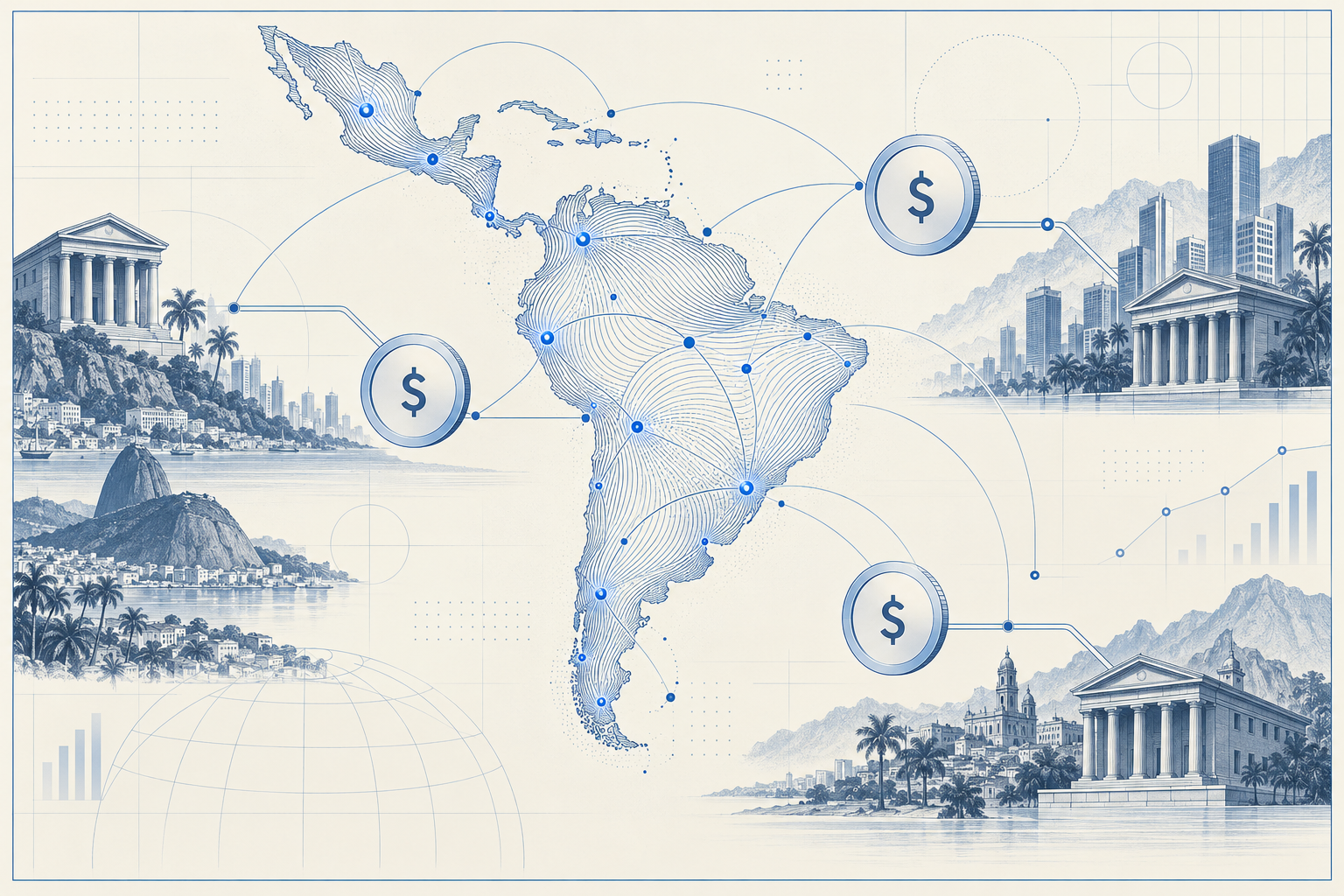
Latin America’s stablecoin market is entering a more operational phase. The region already has strong consumer and merchant demand for digital dollars, but new research on the provider stack highlights a narrower question for the next cycle: who supplies the wholesale liquidity that lets users move back into local currency when conditions are stressed?
A newly published ecosystem analysis from Varys Capital and Verda Ventures, using Verda’s Stablescape database, reviewed 494 companies active across Latin American stablecoin services. The notable finding was not the size of the app layer, but the thinness beneath it. Only 16 companies were identified as primarily focused on wholesale stablecoin-to-fiat liquidity, corporate treasury and credit. That creates a potential dependency point for exchanges, wallets, remittance apps and merchant-payment products that market stablecoins as always-on dollar rails.
The issue matters because stablecoins solve only part of the payment chain. A dollar token can settle onchain around the clock, but local users still need banking relationships, market makers, foreign-exchange capacity, compliance coverage and local payout options. If several front-end platforms are ultimately relying on the same desks, banks or liquidity corridors, the user experience may look diversified while the actual redemption layer remains concentrated.
That concentration risk is especially important in Latin America, where stablecoins often compete with slow payment rails, volatile currencies and expensive cross-border transfers. Chainalysis has described the region as one of the major crypto adoption centers, with stablecoins serving as a practical tool for dollar access and payments rather than only as trading collateral. Circle’s USDC materials make a similar broader case for digital dollars as programmable settlement assets, while Visa’s public onchain analytics dashboard frames fiat-backed stablecoins as a measurable global payments network. Those indicators support the demand side of the story, but they do not remove the infrastructure question raised by the new regional mapping.
For RWA markets, the lesson is familiar. Tokenized assets are only as useful as their redemption, custody and settlement arrangements. Stablecoins are the cash leg for much of onchain finance, including tokenized treasury products, private credit vehicles, exchange settlement and collateral movement. If the cash leg depends on a small number of local liquidity providers, then an outage, banking restriction or compliance pullback can ripple into venues that otherwise appear unrelated.
The more constructive read is that the bottleneck is investable infrastructure. Regional stablecoin adoption has already produced many wallets, payment interfaces and consumer apps. The next layer of growth may come from stronger treasury-management providers, better local-currency market making, bank-integrated on- and off-ramps, and more transparent disclosure around where liquidity is sourced. That would make stablecoin usage less fragile and more suitable for institutions that need predictable settlement behavior, not just fast blockchain confirmation. It would also give issuers and venues a clearer basis for counterparty-risk monitoring as volumes scale.
There is also a regulatory dimension. Local authorities are likely to focus less on the existence of dollar tokens and more on reserve quality, redemption rights, consumer disclosures, anti-money-laundering controls and the resiliency of fiat payout channels. In markets where stablecoins function as de facto payment or savings tools, operational failure at the liquidity layer can quickly become a consumer-protection issue.
The takeaway is not that Latin America’s stablecoin market is weak. It is that the market is becoming mature enough for infrastructure concentration to matter. If the region can broaden its liquidity base and connect stablecoin services more deeply into regulated banking and FX networks, digital dollars can remain a useful payments and settlement tool. If not, the fastest-growing layer of the ecosystem may continue to depend on one of its thinnest foundations.