Kakao Adds Fireblocks to Korea Stablecoin Infrastructure Push
Kakao Pay and KakaoBank are moving from policy watching to infrastructure testing, signing a Fireblocks memorandum that focuses on regulated digital-asset distribution and stablecoin rails in South Korea. The work is still exploratory, but it gives Korea’s bank-led stablecoin debate a more concrete technical track.
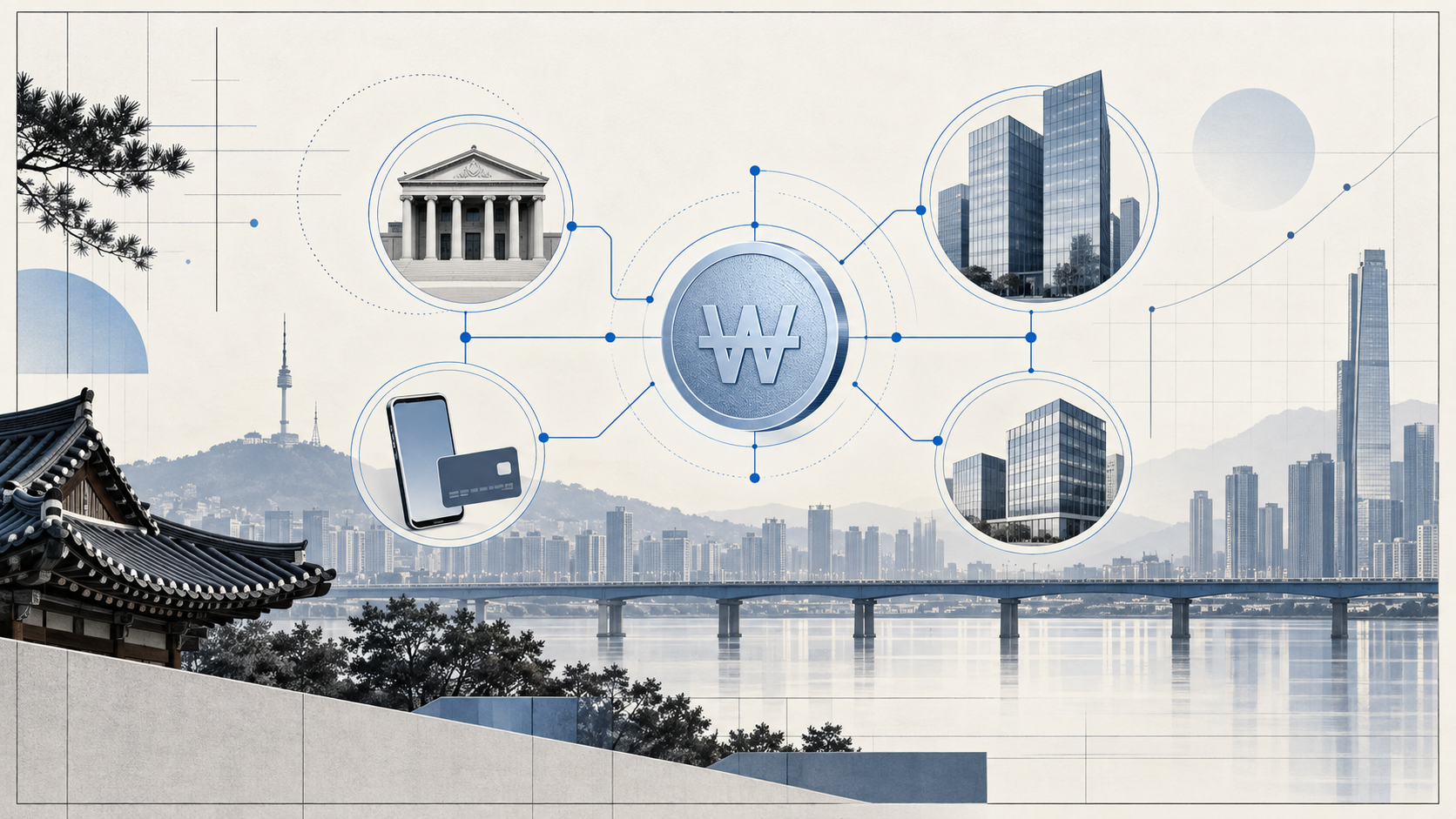
Kakao’s financial arms are taking another step toward regulated stablecoin infrastructure in South Korea, with Kakao Pay and KakaoBank signing a memorandum of understanding with Fireblocks to examine digital-asset distribution frameworks and proof-of-concept tests. The agreement does not announce a product launch, token issuance, investment size or commercial timetable. Its importance is narrower but still meaningful: one of Korea’s largest consumer technology ecosystems is now pairing bank and payments reach with institutional wallet, custody, settlement and compliance infrastructure.
The scope disclosed by the companies centers on business opportunities in Korea’s emerging digital-asset market, with a specific focus on stablecoins. Kakao Pay, KakaoBank and Fireblocks plan to assess frameworks that fit local regulatory, security and service requirements, then test whether those designs can support practical onchain distribution. That framing matters because the Korean market is not simply looking for another crypto payment experiment; banks, fintechs and policymakers are trying to define who may issue won-referenced instruments, how reserves and redemption should work, and what operational controls should apply before retail-scale deployment.
Kakao brings a distribution layer that few financial groups in Korea can match. Kakao Pay is embedded in daily consumer payments and financial services, while KakaoBank is a major internet-only bank. Both sit inside a broader Kakao ecosystem that already touches messaging, commerce and consumer finance. If Korea eventually permits bank-led or tightly supervised won stablecoins, that footprint could make Kakao a natural venue for wallet access, merchant settlement, remittances and consumer-facing payment flows. The new memorandum should be read as preparation for that possibility rather than evidence that such a product is imminent.
Fireblocks contributes the institutional infrastructure side of the stack. The company describes its platform as supporting wallet operations, stablecoin payments, settlement, custody, tokenization, compliance reporting and connectivity across a large network of banks, payment providers, issuers, exchanges and custodians. In the release announcing the Kakao agreement, Fireblocks said its infrastructure has been deployed by more than 2,500 institutions, including over 100 banks. For a regulated payment or banking group, those details are central: stablecoin systems fail not only on token design, but also on governance, permissions, key management, transaction controls, reconciliation and the ability to audit flows.
The Fireblocks tie-up also follows Kakao’s earlier memorandum with Circle, which focused on blockchain-based payments, digital-asset technology and potential won-denominated stablecoin use cases. Together, the two agreements show Kakao assembling separate pieces of a possible stablecoin architecture: issuer and network expertise on one side, institutional custody and transaction infrastructure on the other. That does not guarantee a Kakao-issued token, and the companies have not committed to one. It does suggest that Kakao wants optionality if Korean rules move from discussion to licensed implementation.
South Korea has been an active stablecoin policy market this year because the opportunity is local as well as cross-border. A won-denominated stablecoin could support domestic merchant settlement, exchange settlement, programmable corporate payouts and remittances, but it would also raise familiar questions around deposit substitution, consumer protection and monetary oversight. KB Financial Group’s earlier won-stablecoin pilot, which tested issuance, offline merchant payments and overseas remittance flows, showed that large Korean financial institutions are already pressure-testing end-to-end designs while lawmakers and regulators work through the rulebook.
For RWA markets, the Korean activity is relevant beyond payments. Reliable local-currency settlement rails are a prerequisite for tokenized securities, tokenized deposits and onchain funds that need predictable cash legs. A bond, fund share or tokenized equity product is only as useful as the settlement asset around it. If Korean banks and payment platforms can create regulated won cash rails with strong controls, the same infrastructure could later support tokenized capital-market workflows, from primary issuance to secondary settlement and collateral movement.
The clean takeaway is that Kakao’s Fireblocks agreement is an infrastructure signal, not a launch headline. The companies are testing how bank-grade digital-asset systems might fit Korea’s regulatory and consumer-finance environment before a full commercial market exists. That makes the development less flashy than a new stablecoin ticker, but potentially more durable: regulated RWA and stablecoin adoption depends on institutions doing the unglamorous work of controls, distribution, reconciliation and settlement before products reach scale.