India Tests Tokenized Corporate Bonds With CBDC Settlement
India’s Demat 2.0 pilot has moved tokenized corporate bonds from concept to live issuance, pairing distributed-ledger securities records with wholesale digital-rupee settlement. The early deals are small relative to India’s debt market, but the structure points to a regulated path for faster bond issuance, payment and servicing.
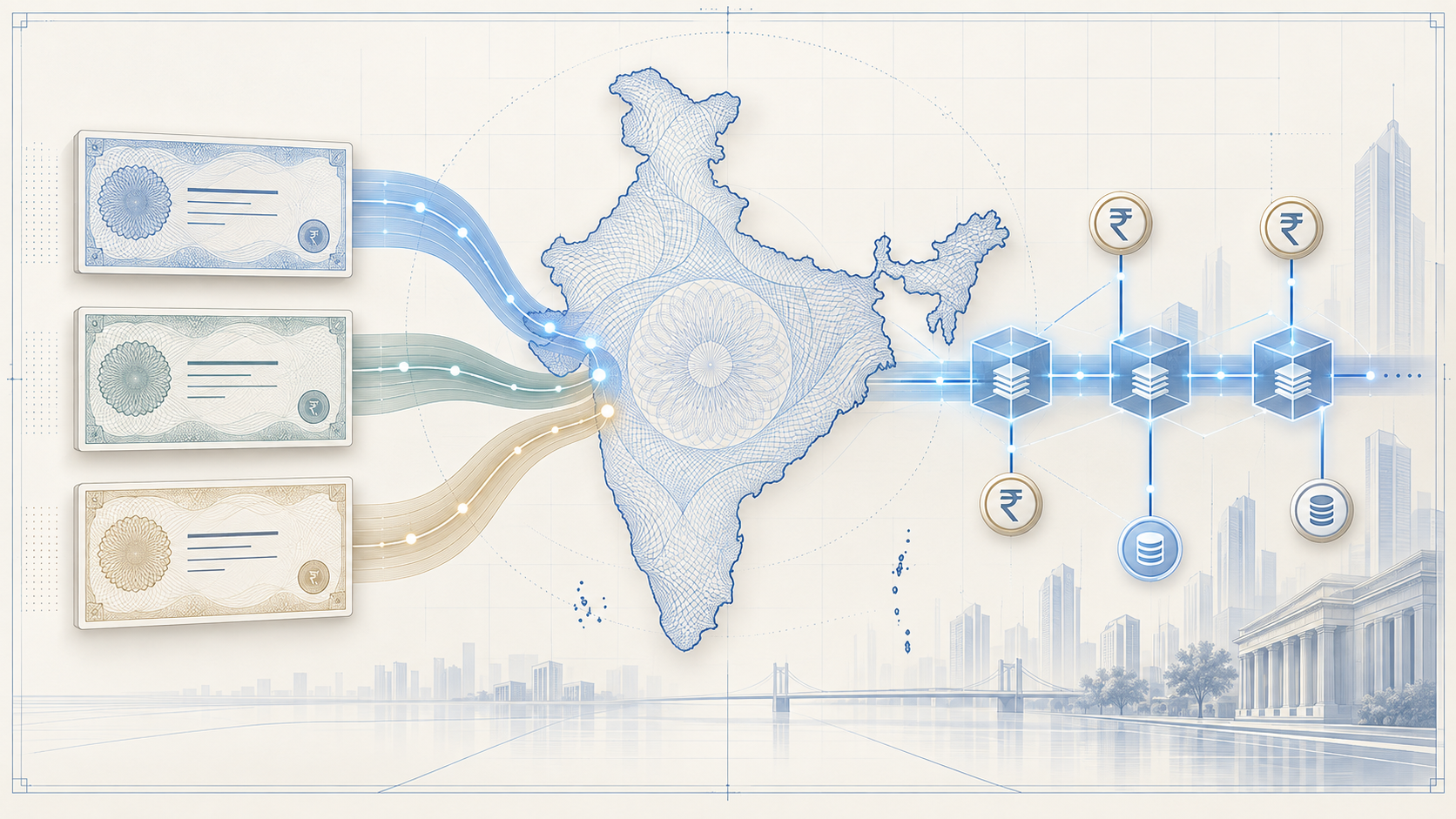
India has taken one of the more concrete steps yet toward regulated bond tokenization, using a new Demat 2.0 pilot to issue corporate debt as digital tokens and settle the cash leg through the Reserve Bank of India’s wholesale digital rupee infrastructure. The first transactions were modest in absolute market terms, but they are important because they connect securities issuance, depository records and central-bank money inside a supervised market workflow rather than a standalone proof of concept.
The pilot opened with three corporate-bond issuances totaling 10.25 billion rupees, or roughly $107 million. Public-sector lender REC raised 5 billion rupees from 18 investors, Larsen & Toubro raised another 5 billion rupees from four investors, and IIFL issued 250 million rupees to one investor. That mix matters: it shows the test was not limited to a single issuer or bilateral transaction, and it gives regulators a first look at how tokenized debt behaves across different borrower profiles and investor counts.
Under the design described by Indian market authorities, corporate bonds can be issued and held as digital tokens on distributed-ledger infrastructure operated by the country’s statutory depositories. The payment leg is linked to the RBI’s wholesale central bank digital currency through the Unified Market Interface. In practical terms, the securities token and the cash token can move as part of the same settlement event, which is the core capital-markets promise behind tokenization: fewer breaks between execution, funding, recordkeeping and asset servicing.
The immediate operational benefit is faster funding. Conventional bond issuance often involves a gap between investor bidding, movement of money and final securities credit. The Demat 2.0 workflow is intended to let issuers receive funds on the bidding day instead of waiting two to three days, while investors receive digital bond records through the depository layer. That is not just a speed upgrade; it reduces the period during which one side of the transaction has performed and the other side has not.
The structure also introduces a clearer path for programmable servicing. Smart-contract logic can be used to automate interest and redemption events once bond terms are represented in machine-readable form. This is where regulated tokenization differs from simply mirroring an offchain asset on a public chain: the token is tied to securities-market infrastructure, depository control and central-bank settlement rails, so automation can be evaluated within the existing supervisory perimeter.
India is not presenting the pilot as an instant replacement for its corporate-bond market. Later phases are expected to add secondary trading and, eventually, retail investor access. Those two steps will be harder than primary issuance because they require liquidity, investor-protection controls, transfer restrictions, reporting and market surveillance to work continuously rather than at the moment of issuance. The first deals therefore function as a controlled test of issuance and settlement before the market structure is widened.
For RWA markets, the signal is that tokenized bonds are moving closer to official financial-market infrastructure in major jurisdictions. The pilot uses a depository-led model and central-bank money, not an offshore wrapper or loosely connected stablecoin payment flow. If that model scales, it could become a template for how large domestic markets tokenize debt without giving up regulatory control over securities records, settlement finality and investor eligibility.
The open question is whether the efficiency gains will be large enough to justify broader adoption by issuers and intermediaries. Faster settlement and automated servicing are valuable, but market participants will still need reliable secondary liquidity, integration with existing custody and accounting systems, and legal certainty around token records. India’s first Demat 2.0 issuances do not answer all of those questions, but they create a real transaction base from which regulators and market operators can iterate.