EDX turns yield-bearing onchain dollars into working exchange collateral with Figure’s YLDS
EDX Markets’ decision to use Figure’s YLDS as both collateral and a treasury asset pushes yield-bearing digital dollars closer to a real balance-sheet role. The move matters because it addresses one of the biggest frictions in institutional crypto trading: idle collateral that protects positions but earns nothing.
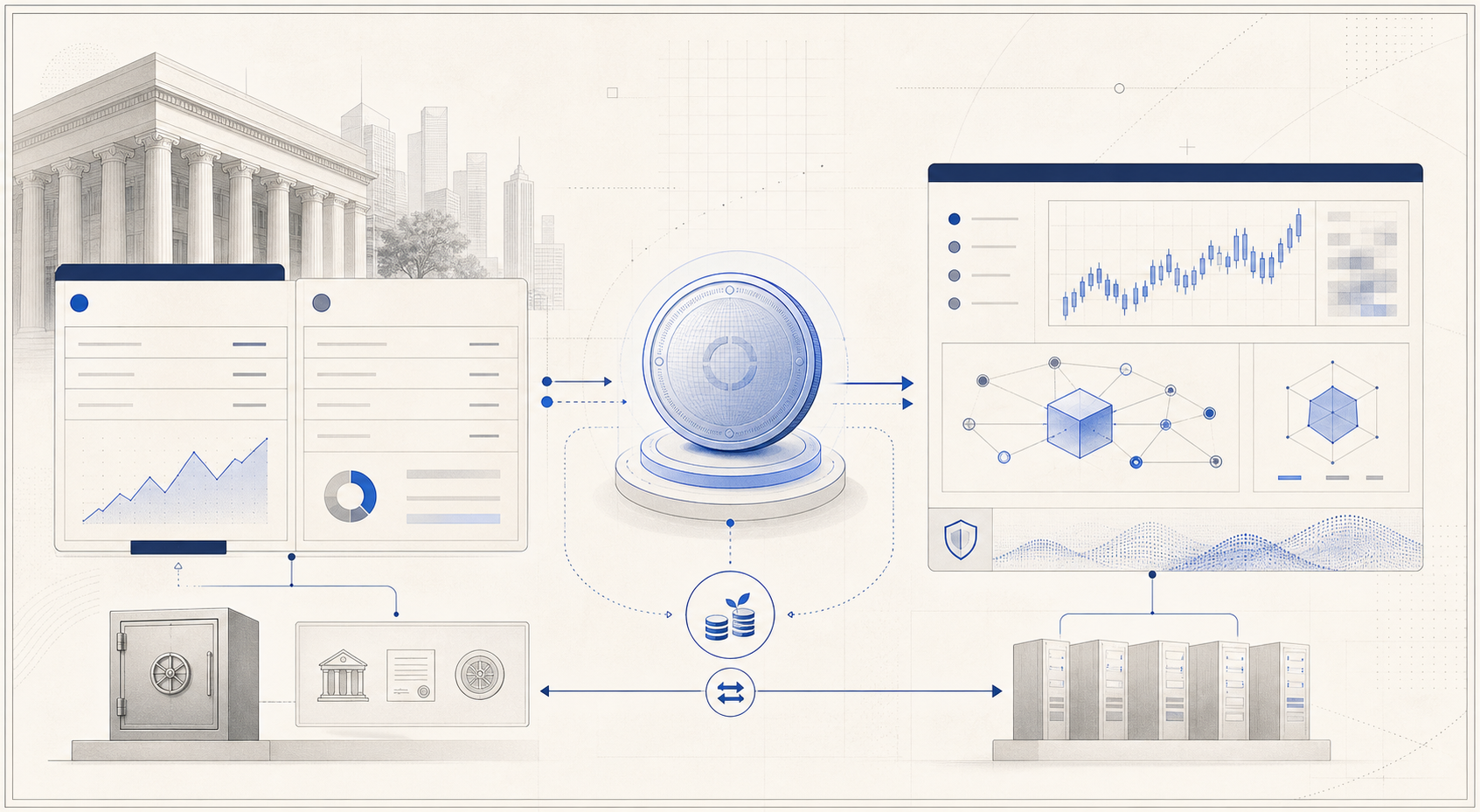
Institutional crypto venues have spent years trying to look more like capital-markets infrastructure, but one balance-sheet problem has lingered in the background: the cash and stablecoins posted to support trading activity usually sit idle. EDX Markets is now testing a different model by adopting Figure’s YLDS as both exchange collateral and a treasury asset, bringing a yield-bearing onchain dollar instrument into a part of market structure where capital efficiency matters as much as raw liquidity. For the RWA market, that is the more important signal than the headline itself. It suggests tokenized cash equivalents are starting to move from passive holdings into operational financial plumbing.
The underlying instrument is unusual by crypto standards. When Figure Markets introduced YLDS in February 2025, the company described it as the first interest-bearing transferable stablecoin native to a public blockchain that was registered with the U.S. Securities and Exchange Commission. Figure said YLDS is issued through its subsidiary Figure Certificate Company, exists on the Provenance blockchain as a fixed-price, daily-accrual public security, and is backed by the same types of securities typically held by prime money market funds. The issuer also said the token was built to support peer-to-peer transfer, self-custody and around-the-clock trading access, while distributing accrued interest rather than forcing holders to give up yield in exchange for settlement utility.
That design helps explain why an exchange use case matters. A trading venue that can hold a dollar-like instrument on its own treasury balance sheet while also accepting the same instrument as margin collateral reduces a familiar drag on institutional activity. Firms no longer have to choose as sharply between capital parked for risk management and capital deployed for return. In traditional finance that tradeoff is often managed through collateral transformation, sweep products and money-market balances. Onchain markets have mostly handled it with non-yielding stablecoins, manual treasury movement or off-exchange cash management. Bringing yield directly into the collateral stack is a cleaner RWA-native answer, even if it will take time to prove at scale.
The EDX piece is especially relevant because the venue has positioned itself around institutional market design rather than retail token speculation. Its backers include Citadel Securities, Fidelity Investments and Charles Schwab, and the platform has previously emphasized clearing, settlement and custody architecture aimed at professional trading firms. In that context, adding YLDS is less about a new token listing and more about treasury engineering. If a venue built for institutional participants decides a regulated, yield-bearing digital dollar is useful in day-to-day collateral management, that strengthens the case that tokenized cash instruments can compete on function, not just on novelty.
This also lines up with the thesis Figure itself laid out at launch. In its announcement last year, the company explicitly pointed to exchange collateral, remittances and payment rails as immediate target use cases for YLDS. Figure said the instrument was designed to pass through short-term rates minus a spread, with interest accruing daily and paid monthly, while remaining usable for continuous trading and transfers on its marketplace. Its public materials continue to frame YLDS as a yield-bearing alternative to conventional stablecoins and as part of a broader onchain asset stack that already includes tokenized credit and public-equity infrastructure on Provenance. EDX’s adoption is therefore notable not because it creates a new product category, but because it appears to validate one of the issuer’s earliest practical claims.
For the broader RWA sector, the bigger implication is about hierarchy. Tokenized Treasury funds and yield-bearing dollar instruments have already proven there is demand for blockchain-native access to short-duration cash management. The next phase is whether those instruments become reusable collateral across exchanges, brokers, clearing venues and DeFi-adjacent workflows. If they do, the market stops treating tokenized cash as a parked asset and starts treating it as a working balance-sheet component. That would improve capital efficiency, deepen secondary utility and make tokenized cash products harder to displace with simpler but non-yielding alternatives.
There are still limits to how far this can go. YLDS is structured as a security rather than a plain payment token, which means venue support, transfer rules, custody workflows and counterparty eligibility matter more than they do for a generic stablecoin. Institutions will also care about haircut policy, liquidity under stress, redemption mechanics and whether collateral can move seamlessly between trading, treasury and off-exchange funding operations. In other words, one integration does not by itself create a universal collateral standard. But it does show where the market is trying to go: toward instruments that preserve the cash-like usability of stablecoins while recovering at least some of the yield that professional firms expect from short-term balances.
That is why this development qualifies as more than another stablecoin headline. It sits at the intersection of tokenized money, exchange infrastructure and real-world asset distribution. The RWA story has often focused on issuance totals and tokenized fund launches, but lasting adoption will depend just as much on whether these instruments become embedded in the workflows institutions use every day. EDX adopting YLDS as collateral and a treasury asset is an early sign that the market is starting to answer that question with implementation rather than theory.