Dunamu and Visa are testing how stablecoin rails could plug into mainstream payments in South Korea
Dunamu and Visa have outlined a partnership around stablecoin payments, remittances and AI-assisted commerce, extending Visa’s push into Korean digital-asset infrastructure. The significance is not a single token launch today, but the attempt to connect blockchain-based money movement to large existing payment networks under a more open, multi-stablecoin model.
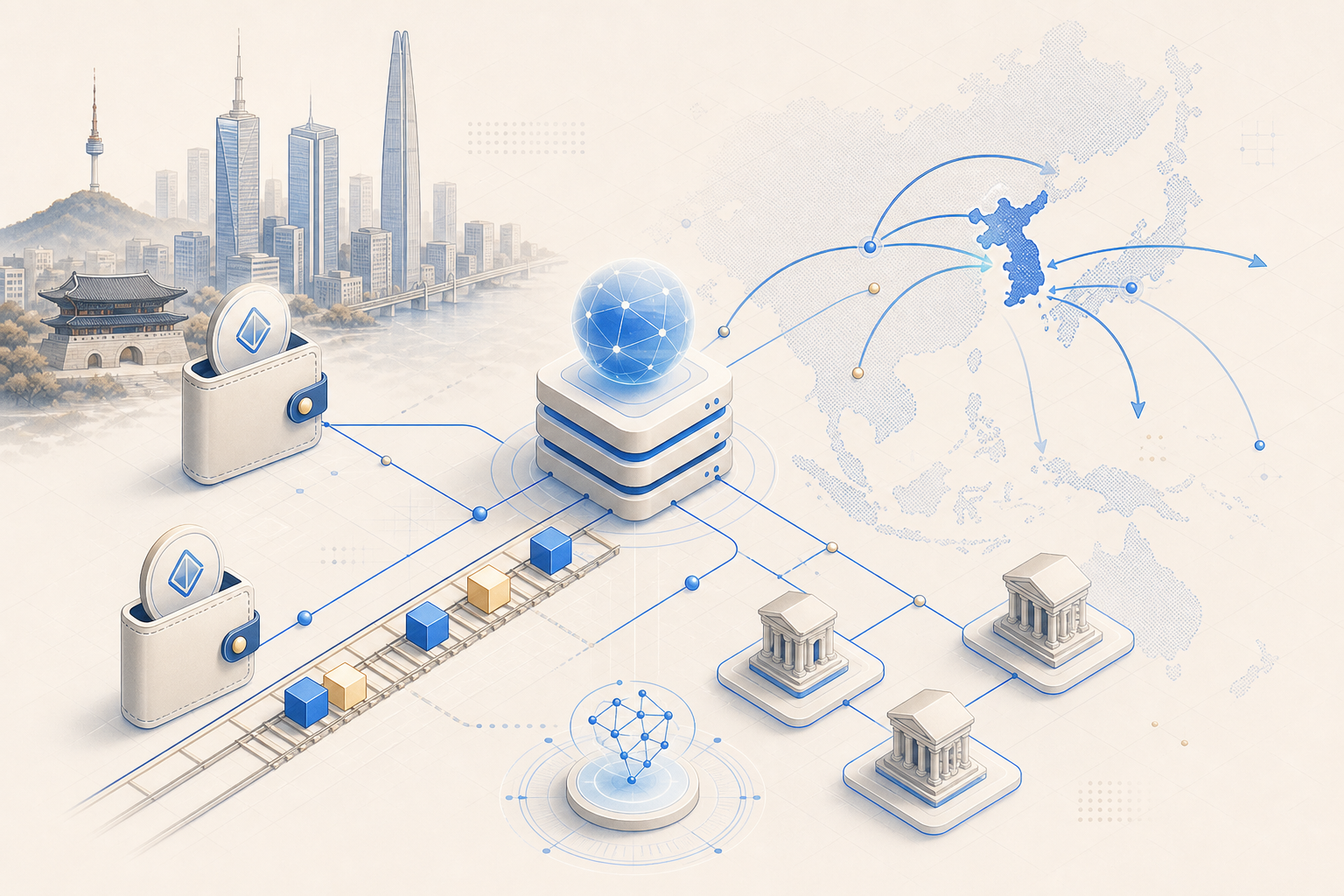
Dunamu’s new partnership with Visa is the kind of development that matters more for market structure than for short-term token headlines. The operator of Upbit said it will work with Visa on stablecoin-based payments, global remittances and AI-linked commerce flows, widening the Korean exchange group’s role from trading infrastructure toward real-world money movement. For RWA and stablecoin watchers, the key signal is that one of Asia’s largest digital-asset platforms is now explicitly trying to tie blockchain-native payment rails into a global card and settlement network rather than keeping those systems in parallel.
The companies framed the arrangement as a strategic effort to combine Dunamu’s digital-asset capabilities with Visa’s global payments reach. In Dunamu’s announcement, the firms said they plan to explore new services around stablecoin payments and international transfers while also examining future payment experiences shaped by AI. The roadmap described a phased approach that takes account of regulation and operational requirements, which is important in a jurisdiction where digital-asset adoption is high but the path from crypto activity to regulated consumer payments still requires careful sequencing.
The partnership also says something about how Visa sees the market. Visa’s own stablecoin materials are no longer narrowly about crypto-linked cards. The company now presents stablecoins as infrastructure for settlement, cross-border movement, developer tools and new forms of onchain financial services. That broader posture fits the Dunamu tie-up. Instead of treating stablecoins as a side product for niche users, the structure points toward using them as programmable settlement rails that could eventually sit underneath remittances, merchant flows or business-to-business transfers while preserving the distribution advantages of established payment networks.
One of the more interesting details is the open-architecture angle. Reporting on the partnership said Dunamu will review the possible use of Open Standard’s Open USD in future collaborations, but the company also stressed that it is not locking itself to a single asset. That matters. The market is moving away from the idea that one stablecoin will dominate every use case. A more credible commercial model is an interoperability layer that can connect multiple stablecoins to bank accounts, wallets, payment credentials and compliance controls depending on corridor, customer segment and regulatory treatment.
South Korea is a logical testing ground for that design. The country already combines high digital-payment penetration, deep retail participation in crypto and some of the region’s strongest consumer expectations around fast, mobile financial services. Dunamu brings a large domestic digital-asset audience and operational familiarity with onchain markets. Visa brings merchant acceptance, network trust and cross-border payment infrastructure. If the two sides can translate that combination into compliant products, they could help define what a hybrid stablecoin payment stack looks like in a major developed Asian market.
There is still a meaningful gap between signing a partnership and shipping scaled payment volume. Stablecoin-based consumer and remittance products depend on licensing, reserve design, sanctions controls, KYC processes, FX handling and clear rules for how digital dollars or other units interact with domestic payment law. The AI-commerce portion adds another layer of complexity because agent-driven transactions require strong user authorization, liability handling and fraud controls before they can move from pilot concepts to mainstream financial products. In other words, the architecture is promising, but the hard work is still ahead.
Even so, this is the sort of partnership that deserves attention because it is aimed at the connective tissue of onchain finance rather than another isolated token issuance. Stablecoins become more economically relevant when they are embedded into actual payment, remittance and settlement workflows, and those workflows usually need incumbents as well as crypto-native operators. Dunamu and Visa are effectively testing that convergence model in South Korea. If it works, the longer-term implication is not just another branded coin, but a more open payments layer where blockchain-based money can interoperate with the systems consumers and businesses already use every day.