Diameter Pay’s new funding round shows where stablecoin infrastructure is becoming a bank product, not just a crypto service
Diameter Pay closed a $10 million Series A as investors backed a compliance-heavy model for connecting stablecoin rails, virtual dollar accounts and U.S. bank settlement. The raise matters because institutions increasingly need regulated dollar access that works around the clock, not just token issuance.
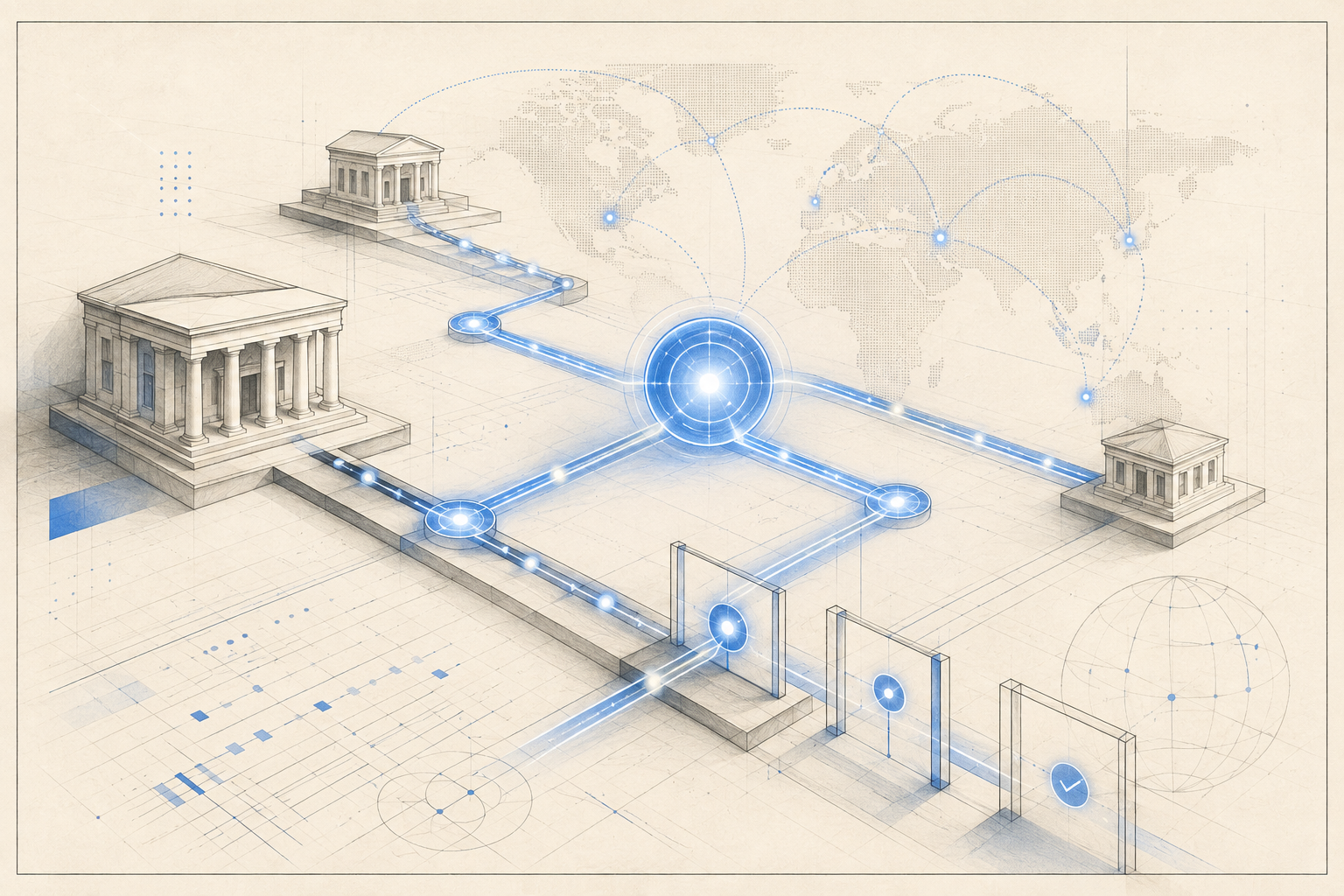
Diameter Pay’s $10 million Series A lands at a moment when the stablecoin market is shifting from headline token launches to the harder question of how dollars actually move between banks, fintechs and blockchain rails. The Jersey City company says it gives institutions API access to U.S. dollar accounts, domestic and international payment rails, stablecoin on- and off-ramps, and embedded compliance controls. That positioning makes the raise more than a venture funding update: it is a signal that investors still see value in the infrastructure layer that connects regulated banking access with always-on digital dollar settlement.
The original report from PYMNTS, citing The Block, said the round was co-led by CMT Digital and Lightspeed Faction, with SixThirty Ventures, Stellar Development Foundation, Tech Council Ventures, Onigiri Capital and BitRock Capital also participating. Independent corroboration from a paid PR Newswire release syndicated by Yahoo Finance confirmed the same investor list, the $10 million round size and the company’s stated plan to use fresh capital to expand banking, payment, stablecoin and foreign-exchange capabilities. Diameter’s own website is sparse, but it clearly frames the business around embedded payments for banks and financial institutions, reinforcing that the company is targeting regulated intermediaries rather than retail wallet users.
That distinction matters because the strongest stablecoin businesses increasingly depend on regulated entry and exit points, not only on blockchain throughput. In the PR release, founder and chief executive David Lighton argued that the global economy is becoming more connected while banking access is becoming more fragmented. The company’s pitch is that many institutions still want dollar connectivity, but correspondent banking relationships have become harder to secure in markets carrying heavier sanctions, anti-money-laundering or compliance risk. Diameter is trying to sit in that gap by offering the controls, data and workflow layer that lets sponsor banks expose payment infrastructure without taking on unmanaged counterparty risk.
The stablecoin piece is what makes the story directly relevant to RWA and onchain finance rather than traditional payments software alone. Stablecoins can move dollar-denominated value twenty-four hours a day, but institutions still need a reliable way to reconcile those balances with bank accounts, fiat payment networks and compliance systems. CMT Digital described Diameter as the connective layer between traditional payment rails, stablecoin infrastructure and compliance, while Lightspeed Faction highlighted trust and banking infrastructure as the harder problem than raw settlement technology. Those comments line up with a broader market reality: tokenized cash is only useful at scale when treasury operations, screening, sanctions controls and bank settlement all work together.
Diameter’s operating claims are also large enough to deserve attention. The company says it has processed more than $10 billion year to date in 2026 and supports virtual accounts, domestic and international payments, and stablecoin conversion flows through multiple U.S. banking partners. According to PYMNTS, Lighton also said the business works with Portage Bank and SSB Bank, plus a third publicly traded sponsor bank that has not been named. Those details cannot fully substitute for audited disclosures, but taken together they paint a more developed picture than a pre-product startup raising against a concept deck. The message to the market is that institutional clients are already buying the workflow that links dollars, compliance and tokenized settlement.
For RWA builders, the more interesting implication is strategic. As tokenized treasuries, private credit vehicles and other yield-bearing onchain assets expand, issuers still need dependable stablecoin liquidity and redemption paths. That means the value chain is widening beyond issuers and exchanges to include firms that help regulated institutions hold dollar balances, settle cross-border transfers and switch between fiat and tokenized cash without breaking compliance programs. In practice, that makes infrastructure vendors like Diameter adjacent to the same institutional stack supporting products tied to assets such as USDC and USDT, even if they are not issuing the tokens themselves.
There is still execution risk. Diameter is not a public company, the funding announcement relies heavily on company-supplied information, and key claims such as payment volume, partner breadth and regional penetration are not independently audited in the materials now available. The sponsor-bank model also carries concentration, compliance and policy risk if banking partners narrow their risk appetite. And as larger incumbents, exchanges and bank-led stablecoin networks build more of this plumbing in-house, middleware providers will need to prove they can defend margins while staying compliant across multiple jurisdictions.
Even with those caveats, this qualifies as a meaningful RWA-adjacent development because it speaks to the infrastructure required for tokenized finance to operate like financial infrastructure instead of a pilot environment. Stablecoin adoption is no longer only about who mints the biggest token. It is increasingly about who can make regulated dollar balances portable across banking systems, payment rails and onchain markets without introducing operational fragility. Diameter Pay’s raise suggests investors believe that bridge layer is becoming a durable category of its own.