Diameter Pay’s funding round shows where stablecoin infrastructure is becoming a bank-distribution business
Diameter Pay’s $10 million Series A is less a generic crypto funding story than a bet that regulated banks and fintechs still need better dollar access, compliance tooling, and stablecoin on- and off-ramps in one stack. If that model works, stablecoins move closer to becoming an embedded treasury rail rather than a standalone crypto product.
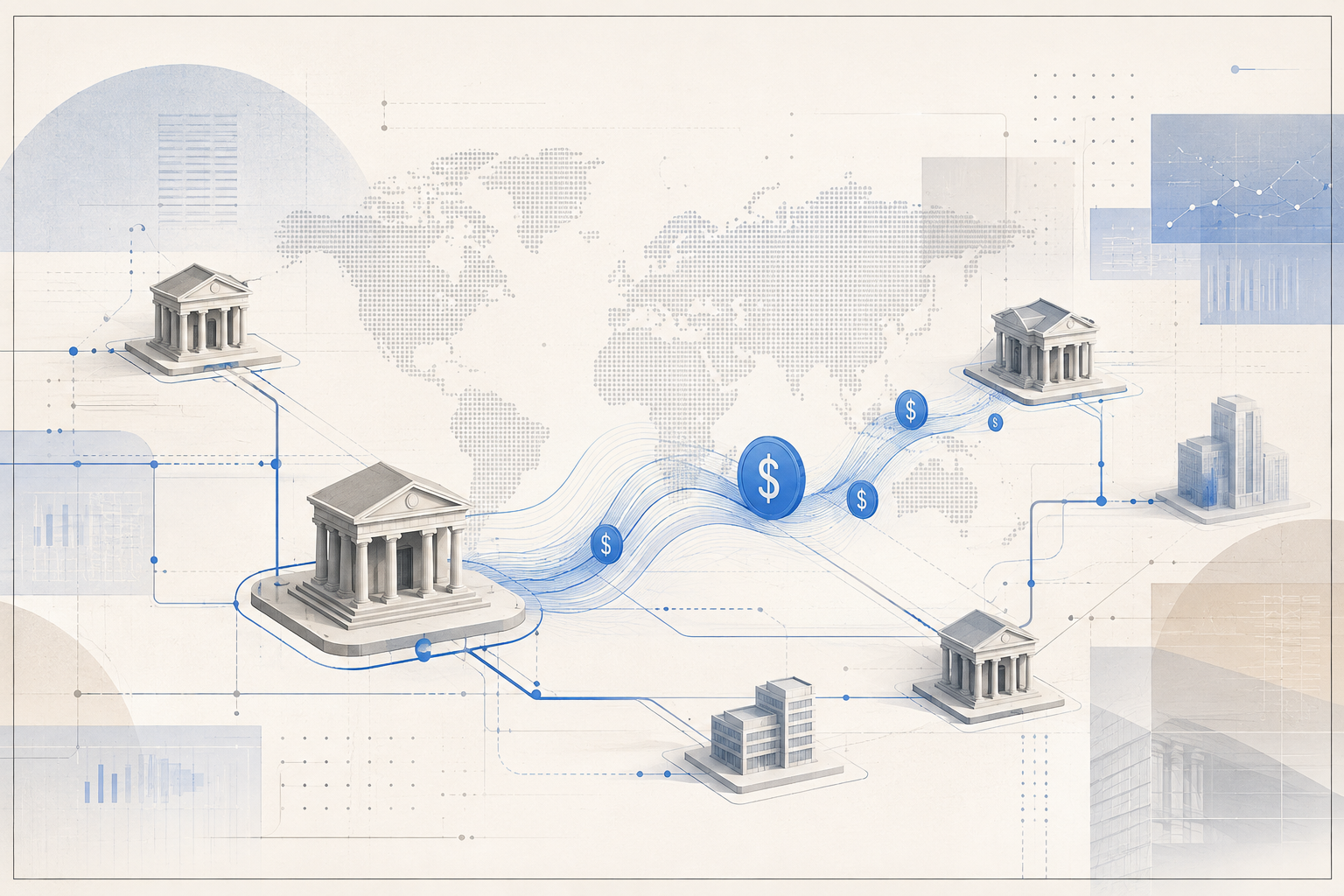
Stablecoin infrastructure keeps getting described as a payments story, but Diameter Pay’s new funding round points to a more specific shift: the real commercial opportunity may be in packaging dollar access, compliance controls, and blockchain settlement into something banks and financial institutions can actually distribute. The company said it raised a $10 million Series A led by CMT Digital and Lightspeed Faction, with participation from investors including the Stellar Development Foundation. On its face, that is a venture round for a young fintech. In practice, it is a signal that the market still sees room for new intermediaries sitting between traditional banking access and stablecoin-based movement of value.
According to the company’s reporting around the raise, Diameter was founded in 2023 and had been bootstrapped before this round. The business is aimed at banks, fintechs, and digital asset exchanges that need U.S. dollar accounts, domestic and international payment capabilities, and stablecoin connectivity without building the full compliance and sponsor-bank stack themselves. That combination matters because stablecoin adoption at the institutional edge is increasingly constrained less by wallet technology than by mundane but critical operating requirements: account structure, sanctions screening, transaction monitoring, settlement controls, and reliable access to clearing infrastructure.
Diameter’s own materials describe the company as an embedded payments provider for banks and financial institutions, with APIs for global and local payments across currencies and payment systems. Its services page highlights named accounts at U.S. banks, custody in dollars and G20 currencies, wire and ACH APIs, automated transaction monitoring, and sanctions screening. Public disclosures on the firm’s website also state that SendFriend, doing business as Diameter Pay, is licensed as a money transmitter in New Jersey and is a financial technology company rather than a bank. That distinction is important. The company is not trying to become a deposit-taking institution itself; it is trying to become the software and compliance layer through which institutions can reach U.S. dollar rails and connect them to digital-asset workflows.
That position also explains why sponsor-bank relationships matter so much to the story. Diameter said its model relies on banking partners that provide access to U.S. clearing infrastructure while the startup handles orchestration, compliance tooling, and customer-facing integration. The company identified Portage Bank and SSB Bank as sponsor partners and said additional banks are being onboarded. Structurally, that is the kind of arrangement stablecoin operators, fintech treasury platforms, and cross-border payment providers increasingly need: banks receive fee income and low-cost deposits, while fintech infrastructure providers make those capabilities programmable and easier to distribute across geographies and customer segments.
The broader market backdrop makes the pitch easier to understand. Correspondent banking has pulled back from a number of markets over the past decade as sanctions risk, anti-money-laundering obligations, and cross-border compliance costs have risen. That leaves legitimate businesses in many regions with weaker direct access to dollars even when demand for dollar settlement remains high. Diameter’s thesis is that stablecoin rails can help close that gap, but only if institutions can move cleanly between bank accounts, payment systems, and tokenized dollars. The company said it has processed more than $10 billion in payment volume year to date, which, if sustained, suggests customers are using the platform for real treasury and operating flows rather than pilot-scale experimentation.
For the RWA market, that is the more interesting angle. Tokenized funds, onchain private credit, digital securities, and stable-value settlement products all depend on dependable cash movement at the edges of the system. A token can represent ownership, collateral, or settlement value onchain, but the product still breaks if users cannot fund accounts, redeem into bank money, or pass institutional compliance checks. In that sense, companies like Diameter are competing to own the connective tissue of the tokenized-finance stack. They are not issuing the asset itself; they are trying to become the default route through which regulated institutions reach the dollar layer that keeps tokenized markets working.
The round does not prove Diameter has won that position. It still needs to add sponsor-bank capacity, deepen licensing coverage, and show that its payment and compliance economics scale across more corridors and customer types. It is also entering a market where incumbents, specialist stablecoin infrastructure firms, and bank-led initiatives are all racing toward the same revenue pools. But the financing is strong enough to matter because it highlights where serious infrastructure demand is forming: not around generic crypto access, but around controlled, bank-compatible movement between fiat systems and tokenized dollars. If stablecoins are going to become durable financial plumbing, this is the kind of unglamorous middleware that will decide how much of the market is actually usable.