Coinbase puts B20 tokenized stocks live on Base and turns listed equities into DeFi-native building blocks
Coinbase’s first B20 tokenized stocks are now live on Base for eligible non-U.S. users, starting with Apple and Nvidia. The launch matters less for the tickers themselves than for the market structure: wallet-native equities that can trade, collateralize and absorb corporate actions onchain.
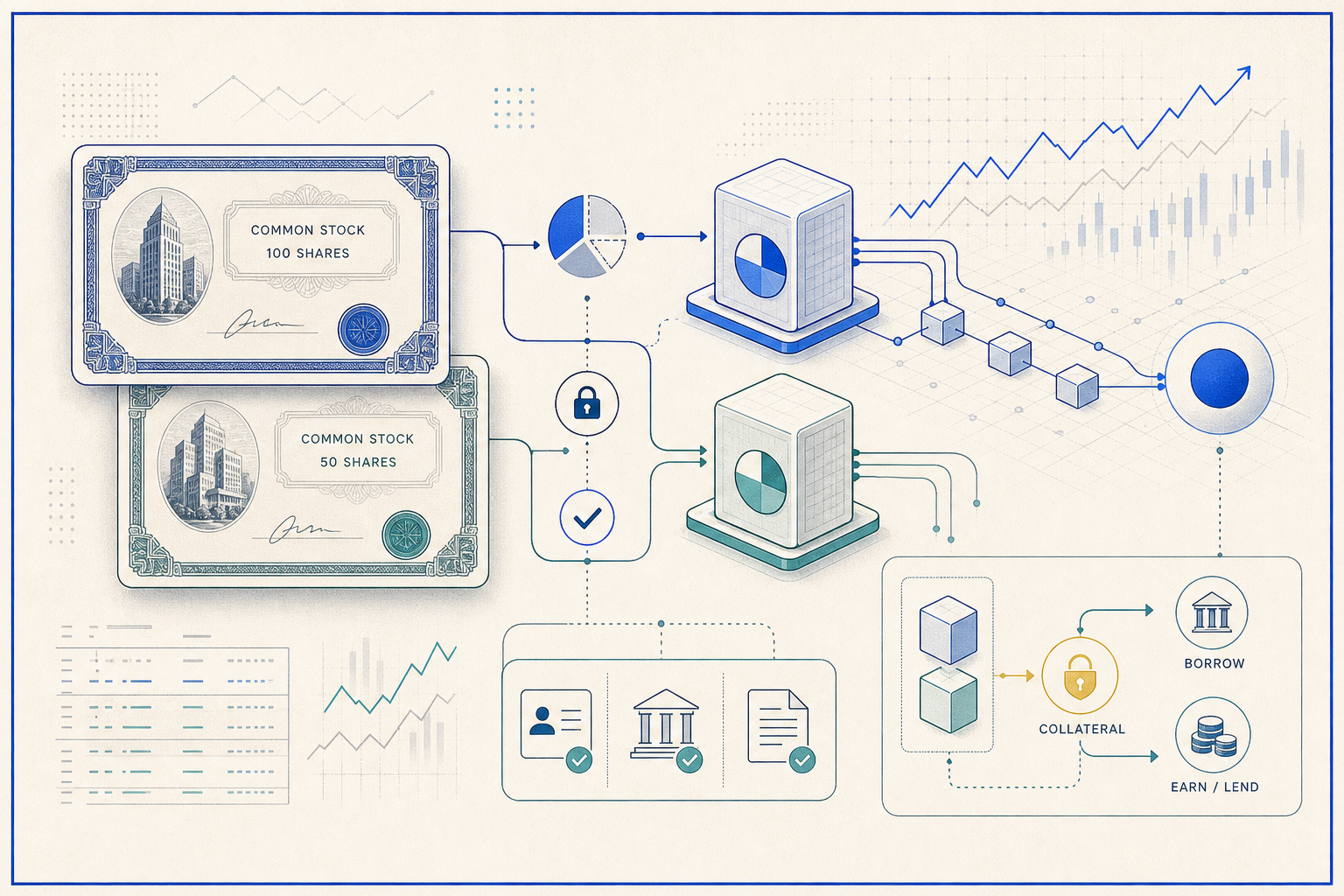
Coinbase has moved its first B20 tokenized equities onto Base, giving eligible users outside the United States a way to hold wallet-native exposure to public stocks without leaving the onchain stack. The initial rollout starts with fractional Apple and Nvidia positions, but the bigger development is architectural rather than numerical. Base is not presenting tokenized equities as a sidecar wrapper around traditional brokerage plumbing; it is positioning them as programmable financial objects that can sit in self-custody, move through decentralized venues and plug directly into lending and liquidity systems.
The rollout mechanics show why the announcement matters. According to the launch materials, users can keep the stock tokens in personal wallets, swap them on Aerodrome and use them inside Aave collateral flows. The referenced share inventory sits with Alpaca, described in the release as the regulated broker and custodian supporting the structure, while the onchain holder receives exposure tied to an actual share claim rather than a cash-settled synthetic wrapper. That custody and claims model addresses one of the oldest weaknesses in tokenized-equity design: investors need clarity on whether the token represents a legally anchored security interest or only a price-tracking instrument. Coinbase is clearly aiming for the first model, not the second.
Independent Base documentation shows that the equity tokens sit on the chain’s B20 standard, a Base-specific asset framework that preserves ordinary ERC-20 compatibility while adding issuer controls and compliance tooling around it. In the B20 specification, issuer roles, policy scopes, signed approvals, pauses, memos and supply limits are built into the operating model, and the standard runs through dedicated precompile entry points rather than a plain vanilla token contract alone. In practice, that means the assets can still interoperate with existing wallets and DeFi interfaces, while the issuer retains a native path for permissioning, operational controls and regulated asset administration.
The tokenized-stocks integration guide fills in another piece that matters for real capital-markets use. Base documents note that these assets should be identified by address, not by ticker alone, and that new listings can be tracked through the B20Created event and onchain metadata. More importantly, the framework is built to handle corporate actions onchain. Base’s technical materials describe multiplier-based mechanisms for events such as dividends and stock splits, with scheduled update paths designed to give advance notice before changes take effect. That is a deeper design choice than it may first appear, because tokenized equities only become credible long-term instruments if dividends, splits and other issuer actions can flow through the token layer without breaking downstream trading, collateral or portfolio positions.
The separate B20 launch guide suggests Base is thinking about this as repeatable issuance infrastructure rather than a one-off product drop. The documentation describes a factory-driven creation flow for asset and stablecoin variants, with compliance controls and configuration applied at launch. That matters for RWA watchers because it lowers the marginal work needed to bring additional securities or cash instruments onchain under a common operational framework. If the first Apple and Nvidia listings are the proof point, the more important question is how quickly that same issuance rail can expand into a broader menu of equities and adjacent real-world assets.
There is also a market-structure implication here that goes beyond Coinbase itself. Traditional equity access is still segmented by exchange hours, broker accounts, market geography and settlement conventions. Base is making the opposite bet: that at least some slice of listed-equity demand will migrate toward 24/7 venues where the same instrument can be traded, financed and reused across a broader set of applications. That does not mean public equities suddenly behave like unrestricted crypto assets; jurisdiction limits, onboarding checks and transfer controls still matter. But it does mean the equity wrapper is beginning to inherit blockchain’s distribution logic, where settlement, collateral mobility and composability are no longer separate product layers.
The remaining risks are not trivial. Direct-claim language only holds up if custody, legal segregation, redemption pathways and corporate-action processing work reliably under stress. Compliance policies built into B20 may help issuers satisfy transfer restrictions, but they also underscore that tokenized securities will not scale on pure code minimalism alone. These are permissioned financial instruments living in open environments, and the operational burden will sit in exactly that tension: preserving enough control for regulated issuance while leaving enough interoperability for onchain use to stay compelling.
Even with those caveats, this launch is a meaningful milestone for tokenized equities as an RWA product category. Earlier experiments proved that stock exposure could be mirrored or wrapped onchain. Coinbase and Base are now pushing the category toward something more ambitious: listed securities that behave like native financial primitives inside DeFi while still tying back to conventional custody and issuer processes. If that model holds, tokenized stocks will stop being a novelty distribution channel and start looking more like a serious settlement and collateral layer for global equity access.