Circle Adds Bitcoin-Backed USDC Borrowing to Its Institutional Mint Stack
Circle is turning wrapped bitcoin into collateral for institutional USDC liquidity, linking Circle Mint, cirBTC and third-party lending markets on Arc and Ethereum. The launch matters because it packages BTC-backed credit into a controlled workflow instead of a loose set of DeFi handoffs.
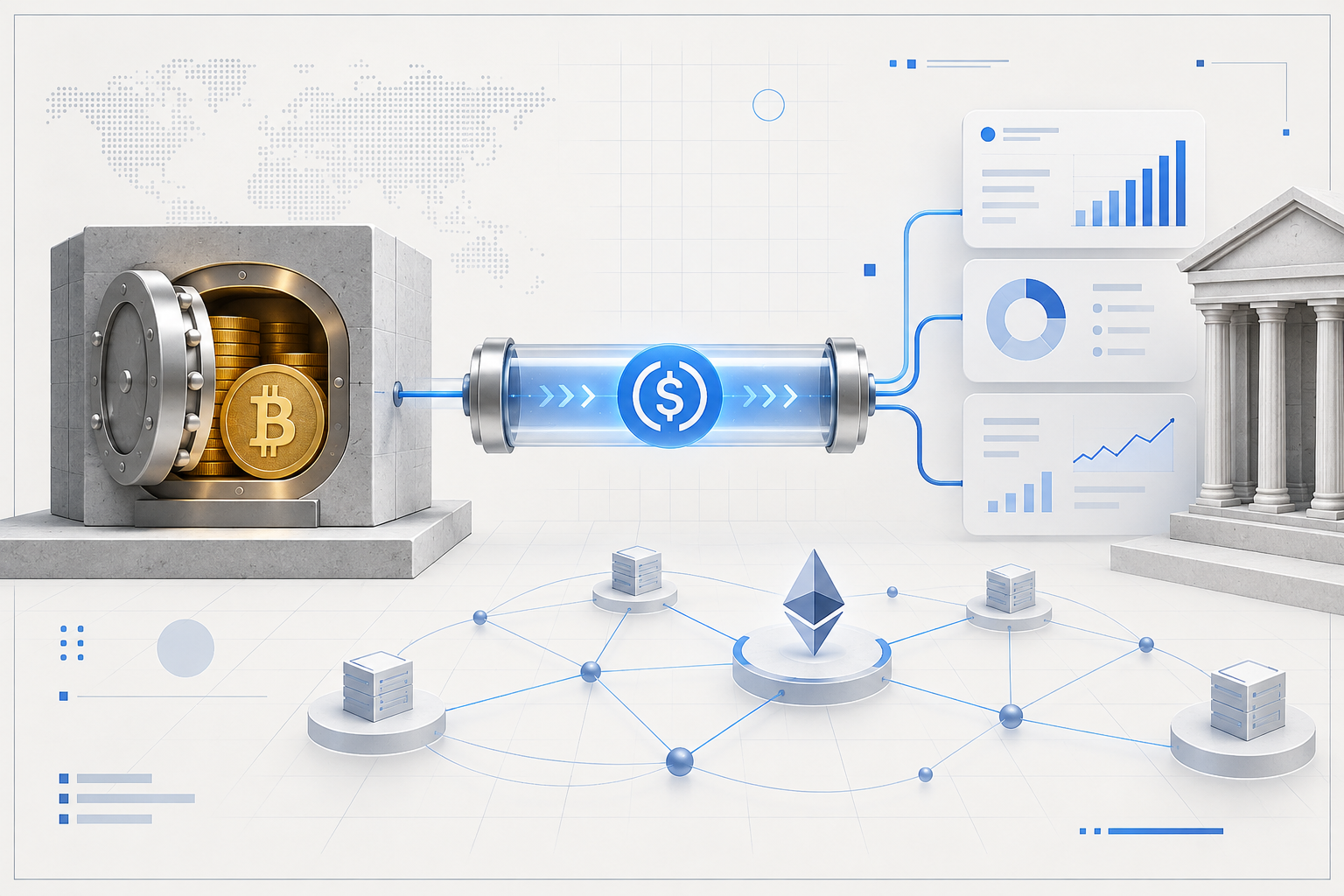
Circle has added a Bitcoin-backed borrowing workflow for eligible institutional clients, giving Circle Mint users a way to borrow USDC against BTC exposure without selling the underlying bitcoin. The new Digital Asset-Backed Borrowing product connects BTC deposits, Circle Wrapped Bitcoin, customer-controlled wallets and third-party lending markets into one operating path for treasury teams that want dollar liquidity while keeping long-term BTC positions intact.
The mechanics are straightforward but strategically important. Eligible Circle Mint LLC customers can deposit BTC, mint cirBTC, supply that cirBTC as collateral to supported lending markets on Arc or Ethereum, and receive borrowed USDC directly into a Circle Mint balance. The borrowing positions are overcollateralized, and the relevant rates, collateral requirements, liquidation thresholds and available liquidity are determined by the selected third-party market rather than by Circle acting as a lender.
Morpho is the first supported lending protocol at launch, with Circle saying support for additional protocols, including Aave, is expected as the product develops. New York clients are excluded, and Circle frames the service as an institutional Mint capability rather than a consumer lending product. That distinction matters because the model is designed around operational controls, wallet permissions, collateral management and compliance boundaries that institutional treasury desks typically require before using onchain credit markets.
The launch is tied closely to cirBTC, Circle’s wrapped bitcoin asset. Circle says each cirBTC is backed 1:1 by native BTC, with reserves independently verifiable onchain and underlying bitcoin safeguarded through Circle National Trust. The cirBTC product page showed the asset live on both Arc and Ethereum, with reserve data and supply by network published for external review. For lending markets, that reserve transparency is a core risk input: collateral is only useful at institutional scale if counterparties can continuously evaluate what backs it and how redemption infrastructure is governed.
Arc’s role is also central. The Arc team said cirBTC is now live on the network and positioned it as collateral infrastructure for stablecoin-native credit, trading, treasury and settlement applications. Arc is built as a financial application layer where USDC is used for fees and settlement, so pairing USDC borrowing with BTC collateral creates a closed loop: BTC can remain an investment asset, cirBTC can move through programmable lending markets, and USDC can serve as the dollar leg for repayment, treasury use or market activity.
The institutional angle is not just about yield or leverage. Many firms hold BTC as a balance-sheet or treasury asset but still need operating liquidity in dollars. Selling bitcoin creates tax, accounting and market-timing consequences; using it as collateral introduces smart-contract, liquidation and counterparty risks. Circle’s approach attempts to reduce the operational burden by wrapping the process inside Mint while leaving credit terms and liquidity to integrated external markets. That makes the product closer to infrastructure than a traditional bilateral loan.
There are still important constraints. These positions depend on overcollateralization, market liquidity and protocol-level risk parameters that can change. A sharp move in BTC, congestion in the underlying networks or a change in collateral settings could force borrowers to add collateral or repay debt. Circle also states that lending services are provided by independent third-party providers and that Arc itself is software infrastructure, not a regulated financial or advisory service. Institutions will need to diligence the full stack: custody, wrapped-asset issuance, smart wallets, lending protocols, liquidations and internal approvals.
Even with those caveats, the product marks another step in the convergence of tokenized collateral and stablecoin liquidity. USDC is already widely used as a settlement asset; cirBTC gives Circle a collateral leg that can plug into credit markets. If institutional users adopt the workflow, BTC-backed borrowing could become a practical bridge between long-term digital asset holdings and short-term dollar funding needs. The bigger signal is that RWA and crypto-market infrastructure are moving from isolated products toward bundled workflows that look more familiar to treasury operators.