Canton’s RISE Pilot Pushes Tokenized Financial Infrastructure Into State Benefit Distribution
Digital Asset and the American Idea Foundation want to test a three-state benefits pilot on Canton in early 2027, using programmable rules and shared auditability to reshape how state aid is delivered. The proposal stands out because it extends infrastructure built for tokenized cash, collateral and capital-markets workflows into a public-sector payments use case with real operational stakes.
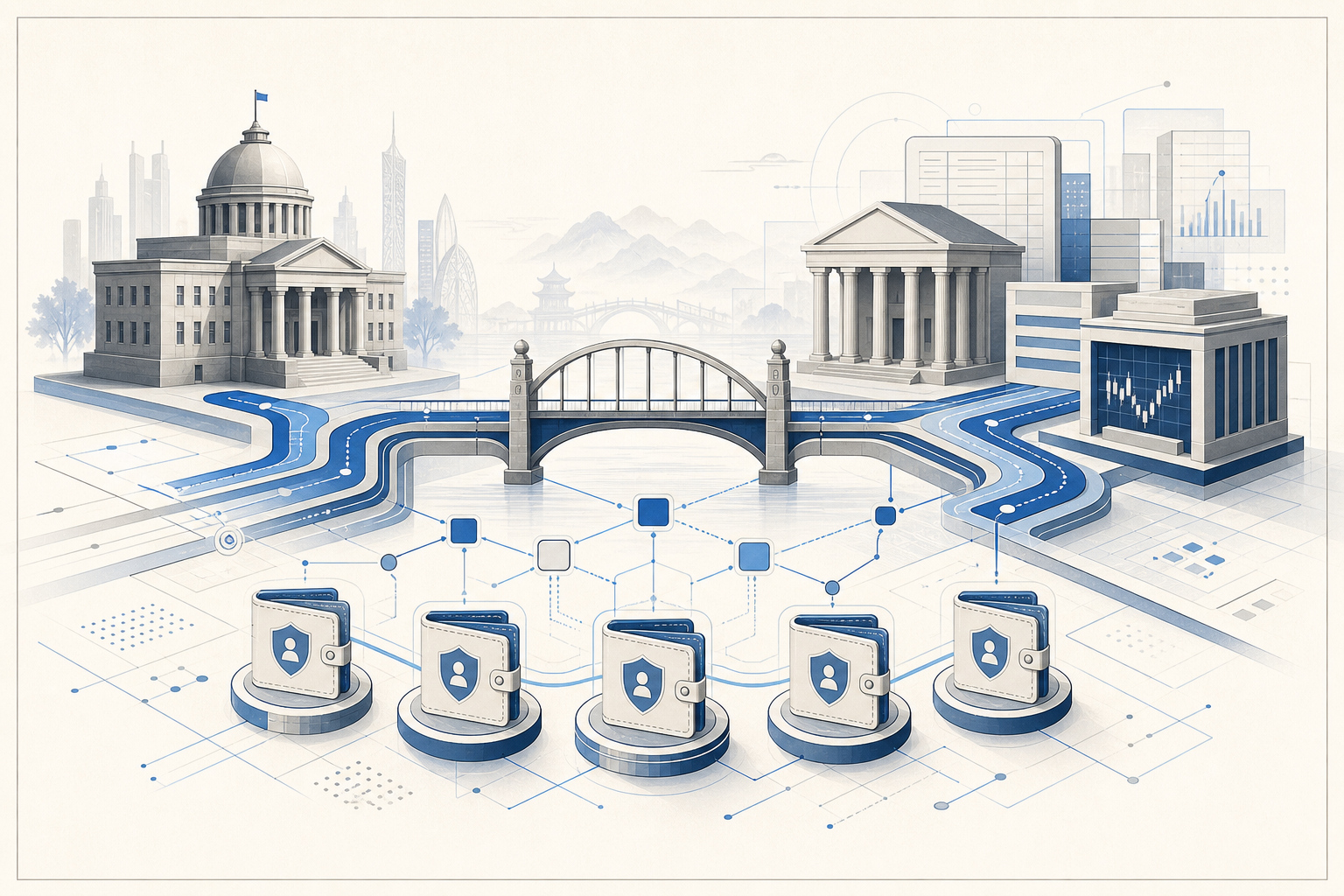
A new pilot proposal around the Canton Network suggests the next expansion of tokenized financial infrastructure may not begin with another fund launch or trading venue, but with public-benefit administration. Cointelegraph reported that Digital Asset and Paul Ryan’s American Idea Foundation plan to launch a state benefits pilot across three U.S. states beginning in early 2027. The significance is not that welfare programs are suddenly becoming onchain assets in the usual market sense. It is that the same programmable transaction, permissions and audit logic being built for tokenized finance is now being tested in a government-linked payments workflow where accuracy, controls and oversight matter just as much as speed.
Digital Asset’s own Aug. 21 announcement gives the proposal more substance than a conceptual blockchain pilot. The company said the RISE program, short for Resources for Independence, Stability, and Employment, would initially roll out in the first quarter of 2027 across three states, subject to federal approvals. Under the proposed model, multiple state-administered benefits could be combined into monthly or twice-monthly distributions, with payment rules applied by category across food, child care and cash. The platform is also intended to verify identity and participation requirements, apply program rules to how funds are used and maintain a live audit trail for participating agencies, nonprofit case managers and research evaluators.
That design lines up closely with the American Idea Foundation’s policy white paper on RISE, released a day earlier. The paper argues that today’s safety-net structure is fragmented across separate programs, schedules and eligibility tests, creating duplication, weak visibility and sharp benefit cliffs as households earn more income. RISE is framed as an attempt to consolidate those fragmented flows into a more measurable and adjustable system rather than simply digitize the current process. In other words, the blockchain component is being presented as operating infrastructure for rules enforcement, payment coordination and program analytics, not as a speculative wrapper around public funds.
From an RWA perspective, the more interesting point is what this says about Canton’s trajectory. The network’s own materials describe a privacy-enabled public blockchain built for real-time financing, movement between stablecoins and tokenized money-market funds, and financing workflows involving tokenized U.S. Treasuries and Eurobonds. Its pitch has been institutional from the start: configurable privacy, synchronized transactions and asset mobility without forcing banks, dealers or issuers into fully open public-market disclosure. A benefits pilot therefore broadens the addressable use case, but it does so with the same underlying primitives that matter in tokenized finance: programmable cash movement, fine-grained permissions, real-time state sharing and auditable control.
That connection is clearer when set against Digital Asset’s recent work in capital markets. In an Aug. 13 press release, MUFG, Digital Asset and partners said they were launching a proof of concept for onchain Japanese government bond repo transactions using Canton, with tokenized deposits or stablecoins under consideration as the digital money leg. The stated goal was not merely issuance, but automation of the repo lifecycle and improvement of funding and capital efficiency through real-time settlement. Whether the asset is a government bond, a money-market fund or a state-administered payment entitlement, the architecture challenge looks increasingly similar: coordinate cash, rules and counterparties across institutions without losing privacy or control.
That does not make the RISE pilot a guaranteed success. The participating states have not been named, the relevant benefit programs have not been finalized and federal approval is still required. Public-sector payment systems also face a more complex set of political, legal and operational hurdles than a closed institutional pilot among large financial firms. Any real deployment will have to prove that programmability improves outcomes without creating new frictions for recipients or new concentrations of operational risk for agencies running essential social programs.
Still, the pilot is worth watching because it shows how RWA-style infrastructure is escaping the narrow category of tokenized securities issuance. If Canton can move from Treasury financing and repo experiments into state benefit distribution, the market should read that as evidence that programmable cash rails are maturing into a broader coordination layer. For builders, the takeaway is not that every public payment should move onchain. It is that the technologies developed for tokenized money, collateral and compliance are starting to look useful in adjacent systems where trust, auditability and conditional disbursement are core product requirements rather than optional extras.