BlackRock frames stablecoins as payment rails for the agentic AI economy
A new BlackRock Digital Assets paper argues that autonomous AI systems could become a structural source of demand for stablecoins, tokenized RWAs and programmable settlement. The thesis pushes digital assets beyond trading and into machine-native commerce, compute procurement and collateral design.
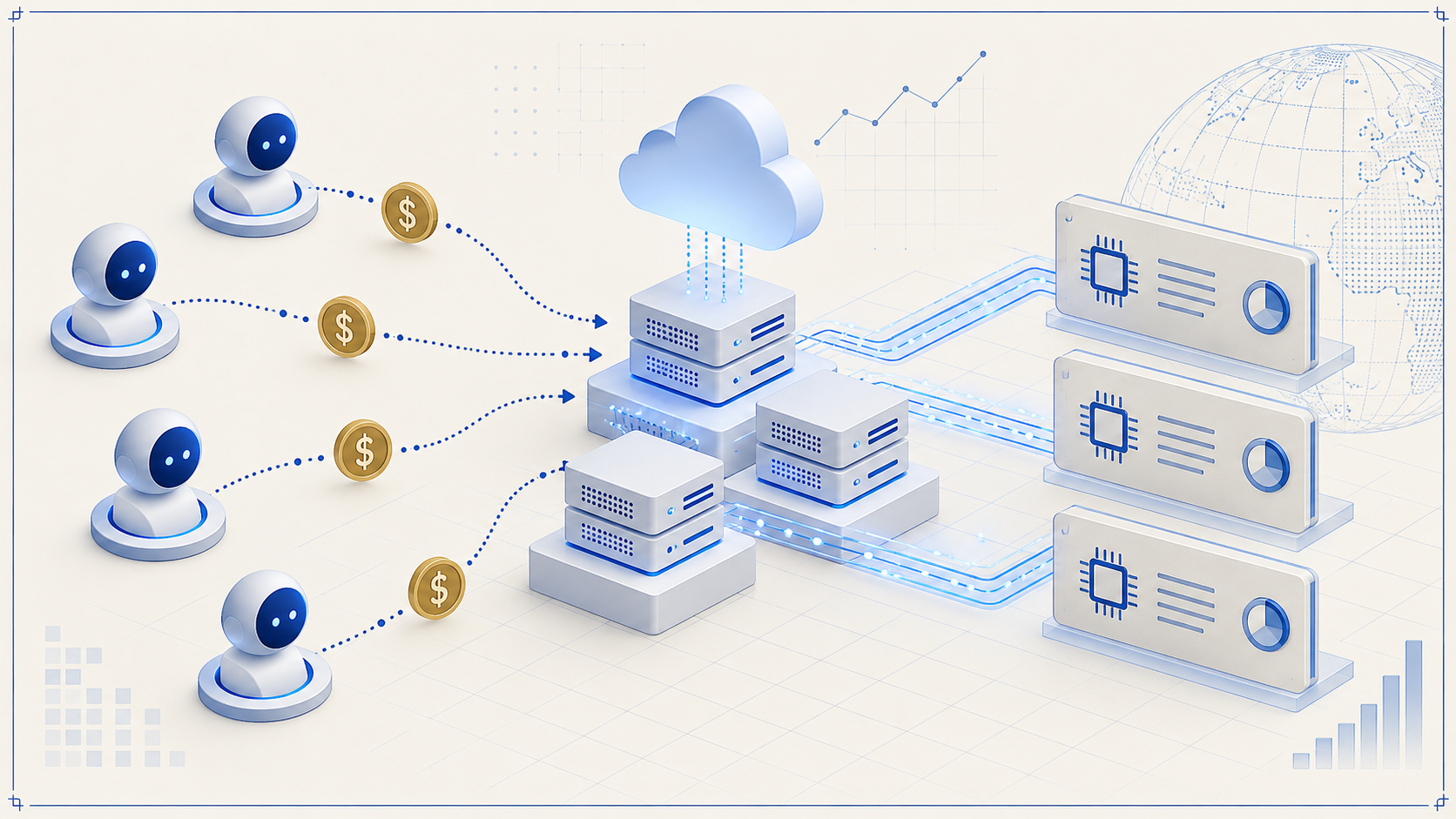
BlackRock is putting a more institutional wrapper around one of crypto’s higher-conviction AI theses: autonomous software agents will need money and assets they can use directly. In a new Digital Assets research paper, The Machine-Native Economy, the asset manager argues that artificial intelligence and blockchain-based assets are beginning to converge because AI provides machine-native intelligence while digital assets provide machine-native money.
The near-term implication is payments. BlackRock’s paper says agentic AI systems that buy data, call APIs, reserve services or provision cloud resources will likely need rails that can operate continuously, settle quickly and support very small transaction sizes. Stablecoins sit at the center of that argument because they preserve a familiar unit of account while allowing programmable transfer, automated settlement and wallet-based execution without the same dependency on human credentialing that exists in many traditional systems.
The paper does not claim that cards, ACH or bank transfers disappear. Instead, it describes a split stack in which traditional rails remain important for human-facing commerce, while programmable payment protocols develop around machine-to-machine activity. BlackRock specifically points to emerging standards such as Coinbase’s x402, which uses the HTTP 402 payment concept for machine-initiated payments, alongside broader agent communication and commerce protocols. In that model, an agent can request a paid service, settle in a stablecoin such as USDC and receive the digital resource after payment confirmation.
For RWA markets, the more important point is that BlackRock treats stablecoins and tokenized assets as part of the same machine-readable financial layer. The paper describes digital asset tokenization as a way to represent economic claims — including fund interests, cash-like instruments, securities or other real-world assets — as standardized ledger entries that software can verify and transfer. That aligns with the wider RWA market’s core proposition: assets become easier for automated systems to read, route, pledge and settle when their rules and ownership records are expressed in a programmable format.
BlackRock also expands the thesis beyond payment messages into compute itself. The paper argues that compute capacity is becoming a large economic resource as AI training and inference demand rises, and that standardized claims on compute could eventually be represented, transferred, financed or pledged through digital-asset infrastructure. It cites analyst expectations that major cloud segments could reach roughly $1.1 trillion of combined revenue by 2030, while noting that contract design, regional power economics, chip heterogeneity and delivery standards remain unresolved.
That caveat matters. Tokenized compute is still an early market structure idea, not a liquid institutional market today. But the direction is relevant for tokenization builders because it applies familiar RWA concepts — standardized claims, collateral use, financing, hedging and programmable settlement — to an economic input that AI systems may increasingly purchase on demand. If agents can discover compute pricing, provision capacity and settle usage automatically, payment rails and tokenized claims begin to blur into one operating layer.
Stablecoins remain the practical bridge. BlackRock’s research cites more than $300 billion of stablecoin market capitalization as of September 2026 and highlights adjusted stablecoin transaction volume as a sign that dollar tokens have already become one of the largest tokenized real-world asset categories. The paper also notes that regulatory clarity in the U.S., Europe, Hong Kong and Singapore could support continued adoption, while network design will determine how much payment activity accrues value to underlying blockchains and stablecoin issuers.
The investment signal is not that every AI payment will move on-chain or that every compute contract will become a token. It is that a major asset manager now sees stablecoins, tokenized RWAs and programmable settlement as plausible infrastructure for autonomous economic activity. For RWA Trails, the takeaway is direct: if AI agents become buyers, payers and collateral users, the demand side for tokenized cash and machine-readable assets could widen well beyond crypto-native trading desks.