Bitwise turns Coinbase tokenized stocks into self-custodied model portfolios
Bitwise has launched automated onchain stock portfolios built on Coinbase’s tokenized U.S. equities, pushing the category from single-name trading toward rules-based portfolio products that still settle into user-controlled wallets.
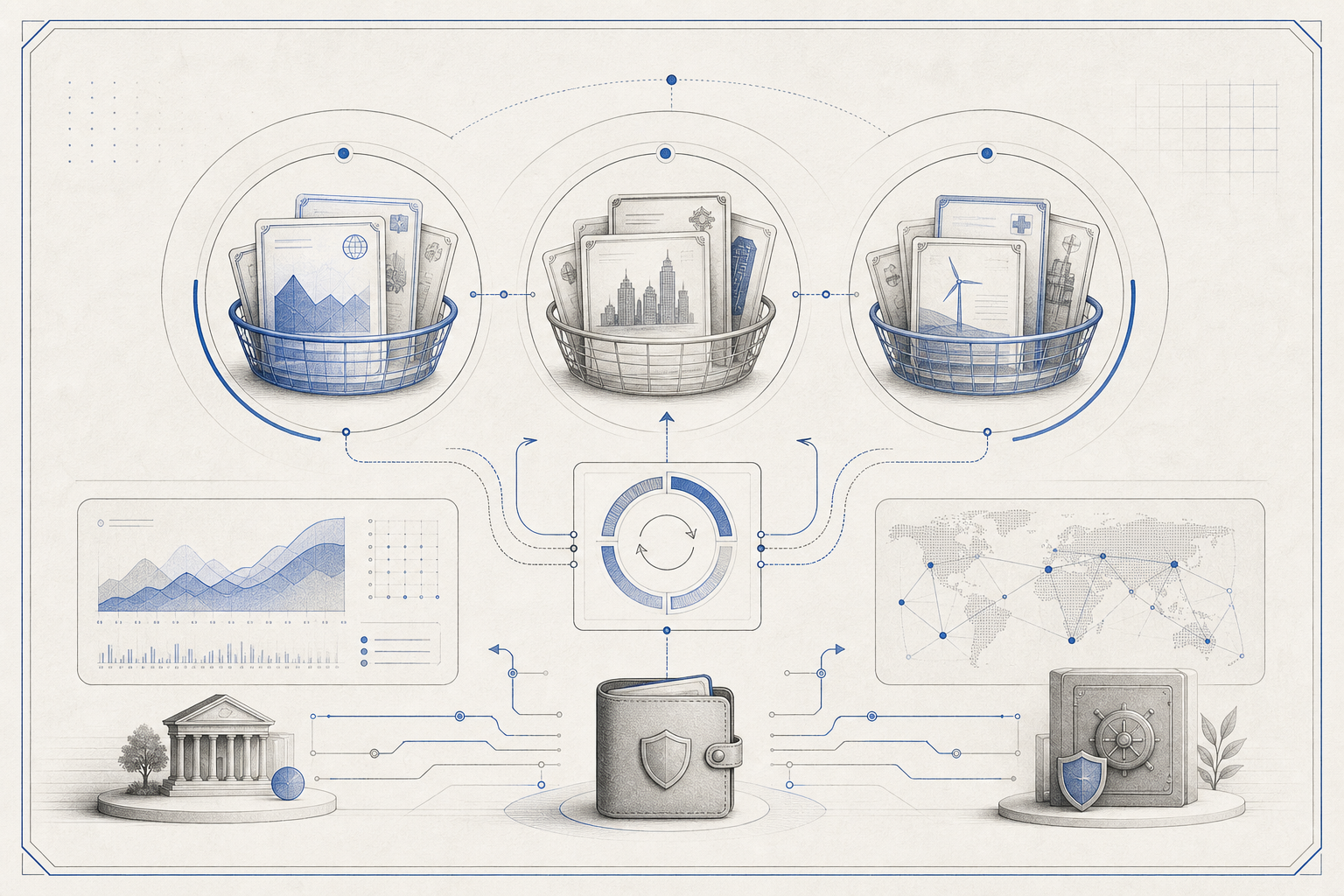
Bitwise has taken another step in the tokenized-equities buildout by packaging Coinbase’s newly launched tokenized U.S. stocks into automated, self-custodied portfolio strategies. The structure matters because it moves the market beyond simply offering single-name tokenized shares for 24/7 trading. Instead, it starts to look more like portfolio manufacturing on open rails: an asset manager defines the strategy, an onchain execution layer keeps allocations in line, and the investor continues to hold the underlying tokens in a personal wallet rather than handing assets to a conventional fund wrapper.
The initial release centers on three themed baskets designed for non-U.S. eligible investors: a Mag7-oriented strategy, an artificial-intelligence leaders basket and a robotics-focused lineup. The disclosed names span large-cap technology exposure such as Apple, Nvidia, Microsoft and Tesla, with SpaceX also listed among the early components. Rather than asking users to buy and rebalance those positions one by one, the product is designed to keep the portfolio aligned automatically as the underlying tokenized stocks trade onchain.
The execution layer sits with Glider, whose platform is marketed as an automated, non-custodial onchain portfolio system. In practice, that gives Bitwise a way to publish model portfolios without taking control of customer assets. Bitwise is supplying the portfolio methodology, while Glider handles the mechanics of rebalancing positions to the target weights. Reported launch terms indicate Bitwise charges a 0.15% methodology access fee, with trading and platform costs sitting separately. That combination is notable because it mirrors a familiar asset-management business model while preserving wallet-based ownership at the product level.
That design choice is what gives the launch broader relevance for RWA infrastructure. Traditional fund products usually collapse portfolio construction, custody and execution into a single account relationship. This model separates those functions. The strategy can be delivered by an asset manager, but the investor still ends up holding the component securities as tokenized assets that can move through other onchain venues. In theory, that opens the door to a wider set of downstream use cases, including collateral, lending and portfolio customization, while keeping the portfolio logic distinct from the custody layer.
The timing also lines up with a market that is becoming large enough for product layering to matter. According to rwa.xyz, tokenized listed stocks now account for roughly $2.49 billion in value, with about 2.25 million holders and more than $27 billion in monthly transfer volume. Those figures do not prove that model portfolios will immediately become a breakout category, but they do show that tokenized equities are no longer operating at hobby scale. Once a market reaches that size, managers can begin competing on packaging, strategy design and distribution instead of only on whether tokenized shares themselves exist.
Still, a portfolio wrapper does not remove the hard parts of tokenized securities. The category will be judged on liquidity, spreads, rebalancing quality, corporate-action handling and the reliability of redemptions back into the underlying share economy. Jurisdiction limits also remain central: these products are being aimed at eligible users outside the United States, not offered as unrestricted global brokerage access. That means the next phase of adoption will depend less on headline novelty and more on whether tokenized-stock infrastructure can deliver the operational consistency investors expect from ordinary listed-equity products.
Even with those caveats, the Bitwise launch is a meaningful signal for where tokenized equities may be heading. The first wave was about proving that individual public-market names could exist onchain in a form investors would actually trade. The next wave looks more ambitious: turning those same building blocks into portfolios, strategies and eventually full-stack wealth products without losing the composability that makes blockchain rails attractive in the first place. If that model gains traction, tokenized stocks will start to compete not just as a new trading format, but as a new distribution format for packaged investment exposure.