Bitwise is turning tokenized stocks into a wallet-native portfolio product
Bitwise has moved beyond issuing research and model weights into an execution layer for tokenized equities, using Coinbase-issued stock tokens and Glider’s self-custody automation. The shift matters because it starts to separate portfolio construction from custody in a way traditional fund wrappers cannot.
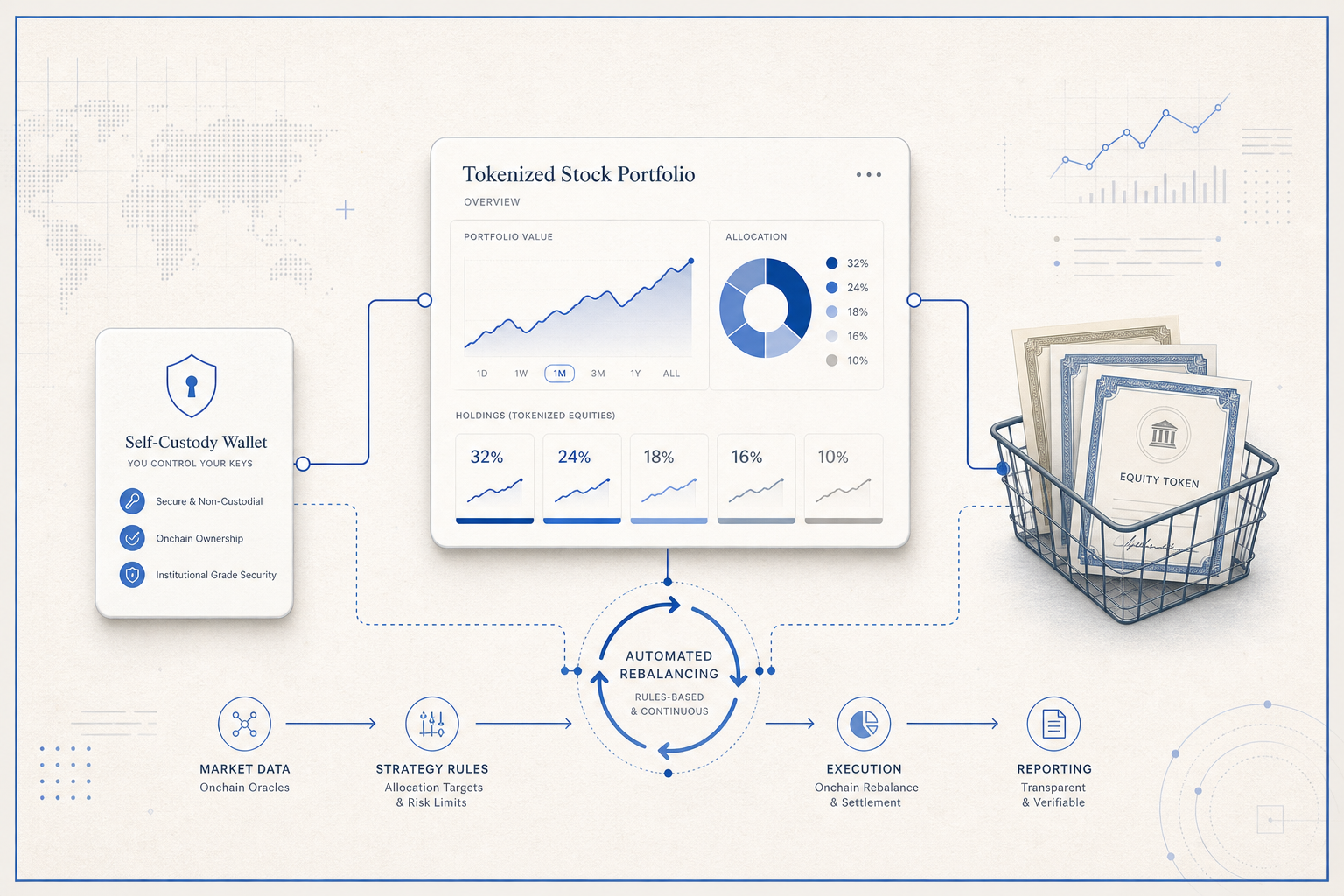
Bitwise has taken a meaningful step deeper into tokenized equities by launching a portfolio product that treats stock tokens less like one-off trading instruments and more like a programmable allocation layer. The key change is structural: instead of asking investors to buy a managed fund, Bitwise is publishing model portfolios that can be implemented in a user-controlled wallet through Glider, using Coinbase’s recently launched tokenized U.S. stocks as the underlying building blocks. That pushes tokenized equities closer to a real asset-management workflow rather than a simple brokerage-style listing expansion.
Cointelegraph reported on Tuesday that the new Automated Token Portfolios initiative lets eligible non-U.S. users follow preset Bitwise strategies while keeping the underlying assets in self-custody. The report said the launch includes thematic baskets tied to large-cap technology, robotics and artificial-intelligence names, and that Glider handles the trading and rebalancing needed to keep portfolios aligned. The significance is not just that another firm has packaged stock exposure onchain; it is that a recognizable asset manager is now treating tokenized shares as instruments that can support ongoing portfolio maintenance, rules-based weighting and strategy distribution.
Bitwise’s own Automated Token Portfolios page backs up that framing. The company describes the product as a set of published, rules-based models designed by Bitwise, implemented by Glider, and available only to eligible non-U.S. users through Glider and other approved platforms. Bitwise says it selects the companies and weights, Coinbase issues the tokenized stocks, and Glider keeps holdings aligned to the published model weights without taking custody away from the user. On the same page, Bitwise is already advertising a live Mag7X strategy built around the Magnificent Seven plus SpaceX, while robotics and AI-focused sleeves are listed as coming soon, with a note that not every holding may be available at launch.
That detail matters because it shows how early the market still is. The product is live enough to prove the workflow, but the underlying token universe is still being assembled venue by venue. Even so, the direction is clear. RWA Trails’ current catalog already shows live tokenized equity exposure for names such as Apple, Nvidia and Tesla across multiple issuers and venues, including Coinbase’s Base-based stock tokens, Robinhood Chain instruments, xStocks listings and other wrappers. In that context, Bitwise is not just launching another token; it is testing whether a portfolio methodology brand can sit above a fragmented onchain securities market and make that market usable in a familiar investment format.
That is a more consequential development than it might look at first glance. In traditional finance, the asset manager, the custody stack and the distribution channel are often bundled together inside a fund wrapper. Here, those pieces are being separated. Bitwise is handling strategy design, Coinbase is providing the tokenized securities rails, and Glider is providing execution and rebalancing inside a self-custody environment. If that model works, tokenized equities could start supporting a new product category somewhere between an ETF model portfolio, a separately managed account and an onchain automation strategy. That also creates room for secondary use cases around collateral, lending or cross-platform routing, although those extensions will depend on venue rules and investor eligibility.
There are still hard limits. Access remains restricted to eligible non-U.S. users, token availability is incomplete, and the investor experience depends on regulated wrappers that remain jurisdiction-specific. The product also inherits the risks of a young market structure: liquidity is fragmented, corporate-action handling still needs to prove itself over time, and strategy quality depends on whether the underlying stock-token rails remain reliable enough for frequent rebalancing. In other words, the launch does not yet mean tokenized equities have solved distribution or scale. It does mean the market is graduating from simple issuance toward portfolio construction.
That is why this rollout deserves attention. Tokenized stocks have already shown they can mirror listed equities onchain; the harder question is whether they can support familiar investment products without reverting to the closed architecture of legacy funds. Bitwise’s new setup is an early attempt to answer yes: keep the strategy layer recognizable, keep the assets in the investor’s wallet, and let rebalancing happen through software instead of a custody-heavy wrapper. If more issuers and strategy providers follow, tokenized equities could become not just tradable assets onchain, but a real substrate for asset management.