Bitfinex’s ALKN raise pushes tokenized commodity financing beyond gold and T-bills
Bitfinex Securities says it has completed a $50 million raise for ALKN, a tokenized limited-partnership interest linked to industrial nickel inventory. The deal stands out because it extends onchain capital formation from Treasury and gold products into a more operational commodity-finance structure with transfer controls, investor gating and planned secondary trading.
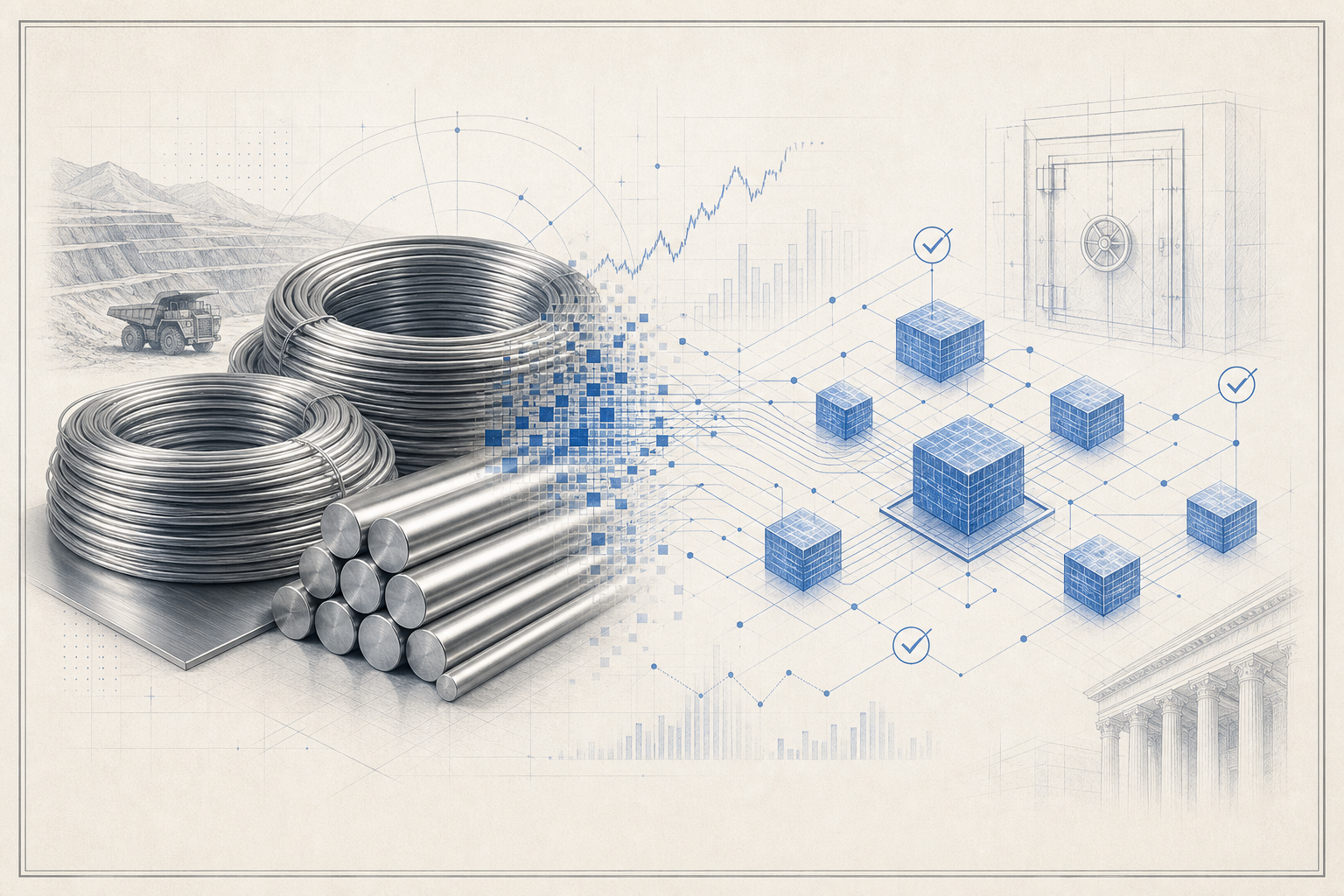
Bitfinex Securities says it has completed a $50 million capital raise for ALKN, a tokenized security tied to Alkemya Metacore SCSp, a Luxembourg investment vehicle whose underlying partnership holds industrial nickel assets. On the surface, that makes for another headline about tokenized real-world assets moving into a new vertical. What makes this one more important is the structure: instead of wrapping a government bill, a money fund or a precious-metals token already familiar to crypto markets, the issuance is built around limited-partnership interests linked to a working stockpile of nickel material meant to support industrial commercialization. That pushes tokenization a step further into capital formation against productive inventory rather than purely financial collateral.
According to reporting reviewed by RWA Trails and Bitfinex’s own announcement, the token represents interests in a partnership that holds roughly 7 million meters of 99.99% pure nickel wire, which the companies said had been independently valued at about $1.64 billion. Bitfinex described the completed raise as $50 million, while its announcement also said additional ALKN tokens remain available to eligible investors and that subscriptions are scheduled to continue through October 15, with a minimum purchase size of $120,000. That combination matters because it suggests the transaction is not being framed as a one-off pilot. It is being presented as a staged institutional fundraising program that uses token rails for issuance first and liquidity later, rather than promising immediate open-market trading on day one.
The official Bitfinex Securities materials add important detail on how the product is meant to function. The company said ALKN will be issued on the Liquid Network and that transfers will be restricted to approved wallets belonging to members that agree to become limited partners in the underlying partnership. Bitfinex also said investors must satisfy professional-investor requirements under EU rules and pass its KYC and AML checks before they can hold or transfer the instrument. In practice, that means ALKN looks far closer to a digitally administered private-market security than to a freely circulating commodity token. The architecture is still onchain, but the access controls, jurisdictional screening and membership mechanics remain central to the product design.
That design is consistent with the way Bitfinex Securities has been building its regulated tokenization business. Its May announcement that the Astana Financial Services Authority had increased the platform’s AIFC limit to $490 million showed the company preparing for larger issuance capacity, while its official lists in both the AIFC and El Salvador regimes show earlier activity concentrated in products such as Mikro Kapital debt instruments, USTBL and BMN2. Seen in that context, ALKN is not just another listing. It marks an expansion in the kind of underlying exposure Bitfinex is willing to bring onchain, from tokenized credit and Treasury-linked instruments toward commodity-backed partnership interests that sit closer to industrial supply chains.
That shift has real implications for how the RWA market matures. Treasury products have dominated tokenization because they fit neatly into existing custody, valuation and reporting models, and gold-backed tokens benefit from long-established commodity narratives and simple reserve framing. Industrial nickel is harder. Investors have to care about inventory quality, storage, valuation methodology, legal rights in the partnership, monetization of the material and the timetable for commercial use. If tokenization can support capital raising against that kind of asset while keeping investor rights, transfer restrictions and compliance logic intelligible, it broadens the category from passive wrappers into more bespoke financing structures. That is a more difficult market to build, but it is also where tokenization starts looking like infrastructure for specialty capital markets instead of a distribution layer for standard products only.
There are still meaningful caveats. The completed raise does not by itself prove deep secondary-market demand, and Bitfinex has already indicated that trading will follow the next fundraising tranche rather than begin immediately. The underlying economics also depend on how successfully Alkemya commercializes nickel-based materials for applications that reportedly include semiconductors. Investors are therefore underwriting much more than commodity price exposure. They are taking structured exposure to an operating plan, a legal vehicle and a regulated transfer system, all wrapped inside a tokenized security format. For RWA builders, that is a reminder that onchain issuance can reduce friction in distribution and administration without removing the old work of due diligence.
Even so, ALKN is a useful signal for the market. One reason tokenization narratives often stall is that too many deals amount to familiar instruments placed on new rails without demonstrating why the rails matter. Here, the argument is stronger: a restricted digital security can represent fractional partnership interests, encode who may hold the instrument, and potentially support a later trading venue without collapsing the compliance perimeter around the deal. That does not make every industrial-commodity structure suitable for tokenization, but it does show why issuers may prefer programmable ownership records when financing specialized assets across jurisdictions and investor classes.
The next questions are straightforward and consequential. RWA market participants should watch whether the remaining ALKN allocation is placed on schedule, whether Bitfinex actually opens credible secondary trading after the October fundraising window, and whether more issuers bring non-gold commodity inventory onto similar rails. If those milestones land, ALKN will look less like a novelty metals story and more like evidence that tokenized fundraising is starting to move from headline-friendly reserve assets into harder, more bespoke corners of real-world finance.