Big Tech hiring signals put stablecoin and tokenized-finance rails back in focus
Apple and Google are not announcing a consumer stablecoin product, but their latest digital-asset hiring signals show how payments, cloud infrastructure and tokenized finance are converging. For RWA markets, the useful read-through is infrastructure demand rather than headline crypto distribution.
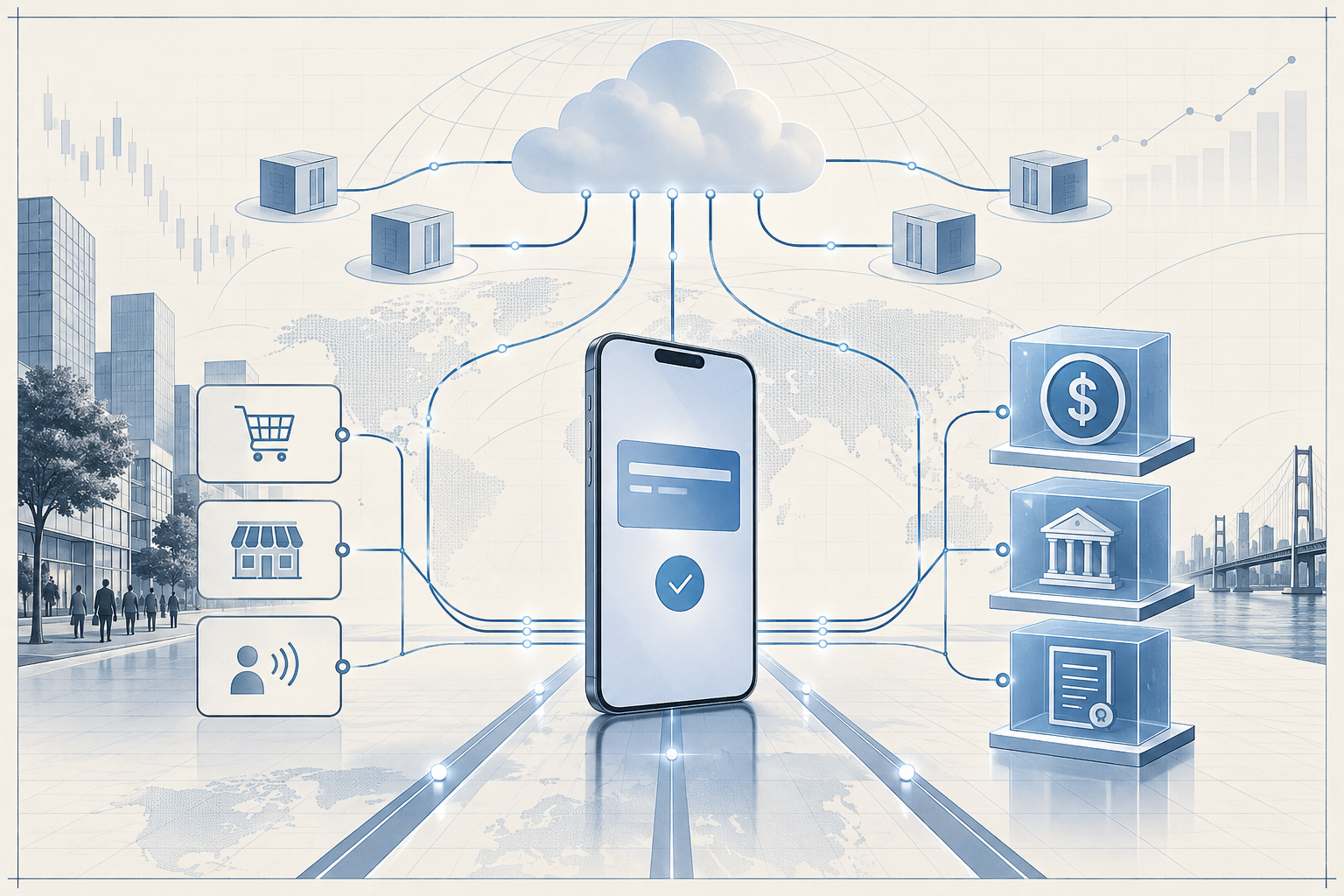
Big technology platforms are showing fresh signs of interest in the plumbing around stablecoins, tokenized deposits and institutional blockchain infrastructure, a development that matters more for rails than for near-term product launches. Recent hiring signals tied to Apple’s payments organization and Google Cloud’s financial-services work suggest that the largest consumer and enterprise technology companies are still evaluating where digital money fits into mainstream payment and capital-markets workflows.
The important distinction is that these moves do not amount to an announced Apple or Google stablecoin. They are better understood as capability-building: recruiting people who understand alternative payment systems, regulated financial partners, cloud architecture and the operational requirements of tokenized assets. In large platform companies, that kind of hiring often precedes product experimentation, partner evaluation or infrastructure support rather than an immediate consumer-facing rollout.
For Apple, the strategic context is its existing wallet and payments footprint. Apple Pay already sits at the point of sale for millions of consumers and merchants, which means any work around alternative payment rails would have to be judged through distribution, compliance, issuer relationships and user experience. Stablecoins could theoretically offer faster settlement or new cross-border flows, but integrating them into a closed, high-trust payment environment would require much more than adding a crypto balance. The company would need banking partners, reserve transparency, jurisdiction-specific controls and clear consumer protections.
Google’s signal is different because Google Cloud is an enterprise infrastructure business. Its relevance to tokenization is less about controlling a wallet and more about serving banks, exchanges, asset managers and fintechs that need compute, data, security and integration layers for blockchain-enabled products. Institutional tokenization projects depend on cloud-grade identity, monitoring, key management, analytics and connectivity to legacy systems. That makes cloud providers a natural vendor layer even when they are not issuing assets themselves.
The broader RWA implication is that stablecoins and tokenized assets are moving from isolated crypto products toward general financial infrastructure. Banks are testing tokenized deposits, asset managers are running tokenized money-market and Treasury products, and trading venues are exploring stock-like instruments on public or permissioned rails. If consumer-platform and cloud-platform companies build more internal expertise, the market gains another sign that digital-asset rails are being evaluated as payments and settlement technology, not only as speculative crypto distribution.
That does not remove the hard constraints. Tokenized money products still face questions around legal status, redemption rights, reserve assets, sanctions screening, data privacy and the boundary between payment tokens and securities. Large technology companies are especially exposed to regulatory and reputational risk, so any move into stablecoins or tokenized finance is likely to be incremental, partner-led and jurisdiction-specific. The most realistic near-term path is infrastructure support, merchant or developer tooling, and enterprise experimentation rather than a universal Big Tech token.
For tokenized public equities and other RWA markets, the hiring trend is still worth watching. Apple and Alphabet already have tokenized stock representations in several onchain venues, while their core businesses sit close to consumer identity, devices, commerce and cloud infrastructure. If those companies deepen institutional knowledge around digital settlement, the practical bottleneck may shift from awareness to standards: which assets have enforceable rights, which venues can meet compliance expectations, and which rails can interoperate with bank-grade systems.
The clean takeaway is cautious but constructive. Big Tech is not validating every stablecoin or tokenized-asset model, and no one should treat hiring posts as product announcements. But the direction of travel is meaningful: the companies that operate consumer payment surfaces and enterprise cloud stacks are studying the same rails that RWA issuers, banks and exchanges are trying to commercialize. That keeps stablecoins and tokenized finance in the infrastructure conversation, even if the first visible deployments are likely to be quiet, narrow and heavily intermediated.