Arcus is testing whether tokenized stock collateral can feed a more programmable perp market
Arcus is pushing Robinhood Chain beyond spot stock tokens by wrapping perpetual positions into transferable tokens and tying leverage to tokenized collateral. The real story is not just another perp venue, but a market-structure experiment around whether onchain equity exposure can become reusable trading inventory.
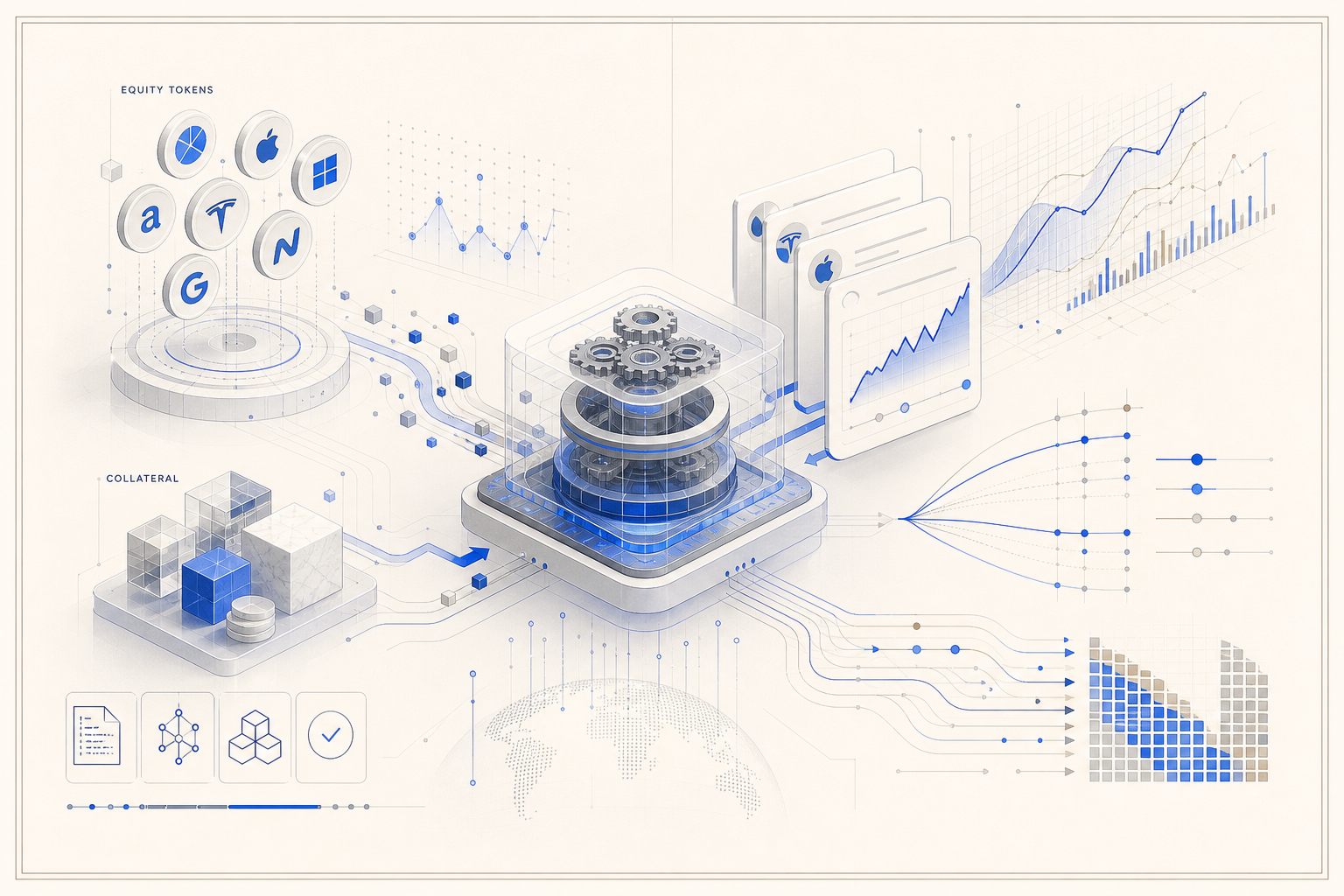
Arcus is trying to push tokenized-market infrastructure one layer further up the stack by treating leveraged positions themselves as programmable onchain objects. According to Cointelegraph, the Robinhood Chain-based venue has introduced perpetual futures positions that can be represented as transferable ERC-20 tokens while also allowing tokenized stocks to be posted as collateral for leveraged trades. If that model gains traction, the tokenized-equity story starts to move beyond simple spot ownership and toward a broader trading system where exposure, collateral and execution can all live inside the same onchain environment.
The details matter because this is not just a new market listing. Cointelegraph said Arcus is launching products such as pBTC3x and pHOOD3x, framing them as portable wrappers around leveraged exposure to Bitcoin and Robinhood’s HOOD stock token. The article also said tokenized stocks can back margin positions without forcing users to unwind their holdings first. That is a notable design choice. In conventional venues, investors typically move between cash equities, margin collateral and derivatives positions through siloed account infrastructure. Arcus is effectively testing whether those layers can be collapsed into a token-native workflow.
Arcus’ own materials support the broader strategic direction, even if they suggest the rollout is still being staged. The project’s documentation describes Arcus as a decentralized exchange built by dYdX Labs for tokenized equities and perpetuals, with an offchain matching engine rated for more than 100,000 orders per second and roughly 20-millisecond confirmations while custody and settlement remain onchain. Meanwhile, the public Arcus site advertises live 24/7 stock-token trading and asks users to join a waitlist for perpetuals with leverage. Taken together, that suggests the venue is operational today on the spot side while leveraged products are being opened in phases rather than all at once.
Robinhood Chain is a sensible place to run that experiment. Robinhood’s own chain documentation says the network is built to bring traditional markets, crypto and real-world assets together in a self-custodied environment with 24/7 access, and its ecosystem page already lists Arcus as a perpetuals venue alongside stock-token and stablecoin infrastructure providers. That positioning matters because Robinhood Chain is not marketing itself as a general-purpose chain first; it is explicitly trying to become a financial network for tokenized assets. Arcus, in that context, is less a standalone derivatives app than a test of whether the chain’s stock-token base can support higher-order products.
If transferable perpetual positions work as advertised, the bigger implication is composability. A leveraged trade normally lives inside an exchange’s internal ledger and disappears as soon as the user exits the venue. Turning that position into a token changes the design space. It creates the possibility that a trading position could be moved, tracked, hedged or integrated with other onchain workflows in ways closed derivatives books do not allow. Just as importantly, using tokenized equities as collateral means stock tokens may start functioning less like static wrappers and more like reusable balance-sheet assets inside an onchain prime-brokerage model.
That said, this is still an early and high-risk structure. Arcus’ own site indicates that perpetuals access is being gated, which means the public launch footprint may still be narrower than the headline suggests. The product also adds multiple layers of risk at once: the underlying stock-token wrapper, the margin engine, the leverage profile and the liquidity quality of a relatively new venue. Even if the mechanics work, the market will still need to prove that position tokens remain intelligible to users, that collateral haircuts are robust, and that liquidation behavior is safe under stress. Those are non-trivial hurdles for any venue trying to combine tokenized securities with perpetuals.
Even with those caveats, the Arcus rollout is worth tracking because it points toward the next battleground in tokenized markets. Issuers have already shown they can mint representations of equities onchain. The more difficult question is whether those representations can become productive financial inventory that supports borrowing, leverage and portfolio mobility without falling back into opaque exchange silos. Arcus is now running that test directly on Robinhood Chain. If it works, tokenized equities will look less like digital wrappers for spot exposure and more like foundational collateral in an always-on market structure.