Tokenized stocks are moving from market exposure to loan collateral
Arch Lending’s planned move into tokenized-stock-backed loans points to the next phase of onchain equities: using securities tokens as collateral, not just tradable exposure. Recent Ondo, Morpho, Base and Chainlink launches show the credit stack around tokenized equities is starting to fill in.
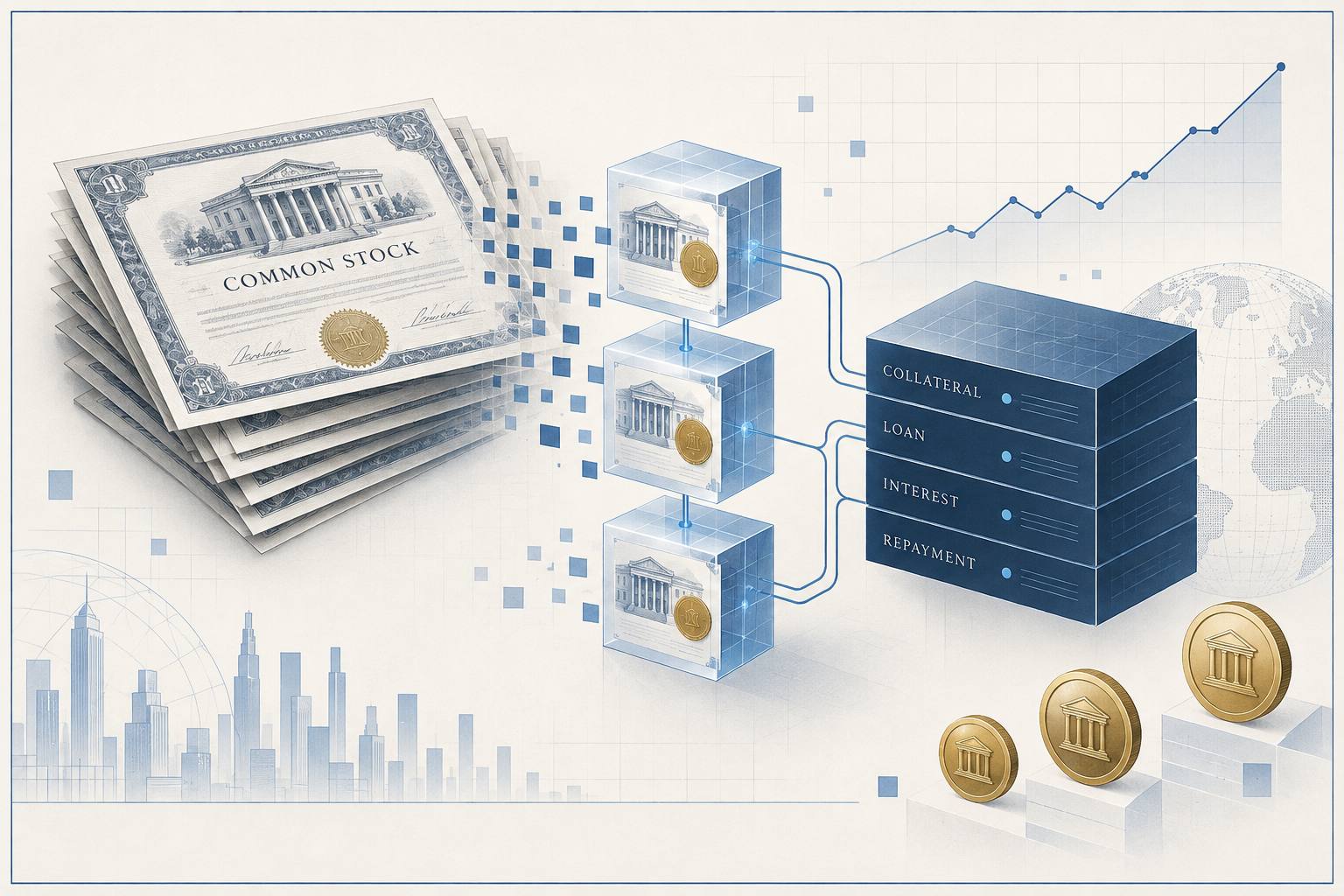
Tokenized stocks are beginning to move into the part of capital markets where utility gets tested: collateral. Arch Lending says it plans to expand into loans backed by tokenized equities, adding another signal that onchain stock products are being evaluated not only as instruments to buy and sell, but as balance-sheet assets that can support borrowing, margin and structured credit use cases.
The immediate catalyst is Arch’s plan to enter tokenized equity lending as the supply of onchain stock products grows. The lender already works with crypto collateral and recently added tokenized gold products to its collateral menu, including PAX Gold and Tether Gold. That matters because it shows the firm is not treating real-world-asset collateral as a theoretical category; it has started to publish asset-specific terms, loan-to-value thresholds and custody mechanics for non-crypto tokens before moving further into equities.
The broader market backdrop is that tokenized equities have shifted from isolated issuance experiments into connected DeFi primitives. Ondo Finance said in February that its tokenized stocks and ETFs were live in lending markets, starting with SPYon and QQQon through Morpho, with Gauntlet managing risk parameters. In Ondo’s framing, the step moved tokenized stocks from passive exposure into collateral that can support borrowing, leverage and more capital-efficient portfolio strategies. Morpho’s own case study describes the same integration as a way to turn securities-backed tokens into productive onchain capital, with isolated markets, USDC liquidity and risk controls around collateral factors, borrow caps and liquidation thresholds.
Base and Coinbase have pushed the same theme from the infrastructure side. Base’s tokenized stock pages describe Coinbase-issued B20 stock tokens as backed 1:1 by shares held in regulated custody, available only in eligible jurisdictions outside the United States, and designed for self-custody, trading, lending and borrowing across the Base ecosystem. Base’s developer documentation also highlights an important operational point for builders: tokenized stocks should be identified by contract address rather than ticker alone, and corporate actions such as dividends or stock splits can affect redemption ratios through multipliers.
That infrastructure detail is not cosmetic. If tokenized equities are going to become collateral, lending protocols need dependable asset identifiers, corporate-action handling, price data and risk controls. Chainlink’s documentation for Coinbase B20 tokenized equity feeds says its feeds combine the underlying equity’s market price with a multiplier read from Coinbase’s onchain oracle registry, while warning developers that tokenized equity feeds carry unique operational considerations and require appropriate protocol risk parameters. In practice, that means the collateral stack has to model equities differently from simple spot tokens.
Arch’s planned entry sits at the intersection of those rails. A lender evaluating tokenized stocks must look through the token wrapper to the quality of the underlying share exposure, legal claim, transfer restrictions, liquidity venue, oracle design, custody arrangement and liquidation path. The credit question is not simply whether a token tracks Apple, Nvidia or an ETF; it is whether a lender can price the token, seize or sell collateral under stress, and manage market-hours gaps, corporate events and jurisdictional eligibility without creating hidden borrower or lender risk.
The tokenized-gold precedent shows why this will likely develop asset by asset rather than all at once. In Arch’s September announcement for PAXG and XAUT collateral, the company described separate issuer structures, reserve programs, minimum loan sizes, starting LTVs, margin-call thresholds and liquidation thresholds. Tokenized equities would require a similar framework, but with additional complications around equity-market volatility, dividends, securities-law restrictions and after-hours liquidity.
For RWA markets, the important takeaway is that tokenized equities are crossing into credit-market design. Trading volume and issuance counts remain useful indicators, but the higher-value question is whether these assets can sit inside borrowing markets with conservative risk management and clear legal-operational rails. If lenders, issuers, oracle providers and DeFi protocols can make that work, tokenized stocks become more than wrappers for offchain shares; they become collateral primitives for always-on capital markets.
That does not make the segment mature. Eligibility limits, issuer concentration, pricing dependencies and liquidation mechanics still leave plenty of execution risk. But the direction is clear: the next competitive layer for tokenized equities will be how safely they can support credit. Arch’s planned move, alongside existing Ondo, Morpho, Base and Chainlink infrastructure, makes tokenized-stock collateral one of the more concrete RWA themes to watch.