AMC’s public challenge to Robinhood stock tokens puts issuer consent and product structure back at the center of tokenized equities
AMC’s backlash against Robinhood’s stock tokens is not just a brand dispute. It highlights the legal and product-design tensions that appear when tokenized equity exposure scales faster than issuer alignment and disclosure expectations.
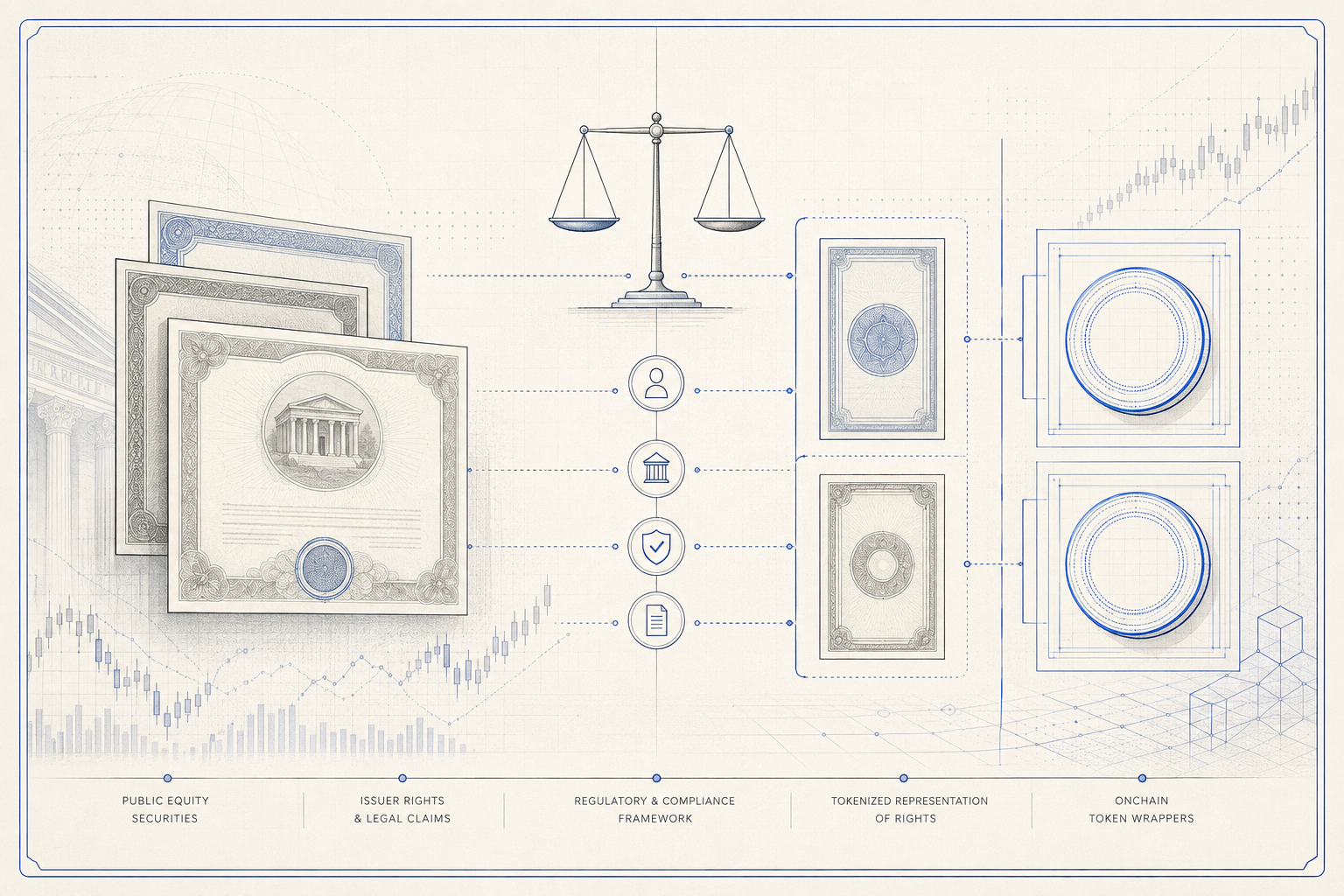
The latest dispute over tokenized equities is not really about one meme stock. It is about where issuer consent, investor understanding and product design sit in a market that wants to move public equities onchain. AMC Entertainment’s sharp criticism of Robinhood’s stock-token program pulled that tension into the open by challenging whether an exchange can create offshore tokenized exposure to a listed company’s shares without the company’s involvement or approval. That public pushback matters because tokenized stocks only become durable capital-markets infrastructure if investors, issuers and regulators understand exactly what is being issued and what rights token holders actually receive.
Robinhood’s own documentation makes clear that its stock tokens are not the underlying securities themselves. They are tokenized debt securities issued by Robinhood Assets (Jersey) Limited that provide economic exposure to U.S. shares and ETFs. The documentation also says token holders do not obtain legal or beneficial rights in, or against, the issuer of the underlying securities. In other words, the token may track the economic performance of a stock, but it is not the same thing as direct share ownership. That distinction is central to why this story matters: tokenized equities can look familiar to retail users while carrying a very different legal wrapper underneath.
AMC’s response brought that wrapper into focus. According to the published account of the dispute, AMC Chief Executive Adam Aron said the company had no connection to Robinhood’s tokenized AMC exposure, did not condone it and would have outside securities counsel review the matter. Whether that review leads to legal action is still unclear, but the signal is important even without an immediate case. Public companies care deeply about how their securities, brands and investor communications are represented in the market. When a tokenized product references a company’s stock without a formal relationship, the issuer may view the offering as confusing at best and potentially harmful at worst.
At the same time, Robinhood is not presenting the product as direct U.S. share registration on a public blockchain. Its chain documentation describes stock tokens as standard ERC-20 instruments designed for onchain transfer, composability and integration with decentralized applications. The company also says each token is backed one-for-one by the corresponding underlying equity and that underlying shares are held by a U.S.-based custody partner. That means the product is being marketed as a bridge between traditional market exposure and crypto-native portability, but within an offshore security-token structure rather than a direct rewrite of the public-equity settlement system.
That product design creates both opportunity and friction. On the opportunity side, tokenized equities can extend market access, support 24/7 trading patterns, enable wallet-based ownership and make stock exposure programmable inside broader financial applications. On the friction side, the farther the product moves from ordinary share ownership, the more important the disclosures become around redemption rights, dividends, insolvency treatment, jurisdictional restrictions and corporate actions. Robinhood’s FAQ addresses many of those points, including how dividends are handled and where the product is unavailable, but AMC’s reaction shows that issuer buy-in remains a separate question from technical feasibility.
For tokenized-equity platforms more broadly, this moment is a reminder that market structure will matter as much as user experience. A successful stock-token market cannot rely only on wrapper design and exchange distribution. It also needs credible legal architecture, unambiguous disclosures and a strategy for how listed companies respond when their securities appear in tokenized form. Some issuers may eventually welcome broader distribution and around-the-clock market access. Others may resist if they believe tokenized products create brand confusion, weaken investor protections or sit uncomfortably outside familiar securities frameworks.
The bigger RWA implication is that tokenization is moving from proof-of-concept into the messier terrain of issuer politics and securities-law interpretation. Public-market tokenization becomes more meaningful when it touches recognizable names, but that visibility also raises the bar for product clarity and regulatory defensibility. AMC’s criticism does not settle the debate over whether tokenized equity wrappers will become mainstream. It does, however, make one point unmistakable: scaling tokenized stocks will require more than smart contracts and collateral arrangements. It will require product structures that can withstand scrutiny from the very issuers whose shares are being represented onchain.