Zodia’s Luxembourg move points to the next institutional stablecoin stack in Europe
Zodia Custody’s latest Luxembourg authorization matters less as a one-off license headline than as evidence that institutional stablecoin infrastructure is converging around regulated custody plus regulated transfer rails. That combination is what banks, asset managers and treasurers need before stablecoins can move from pilot programs into routine European workflows.
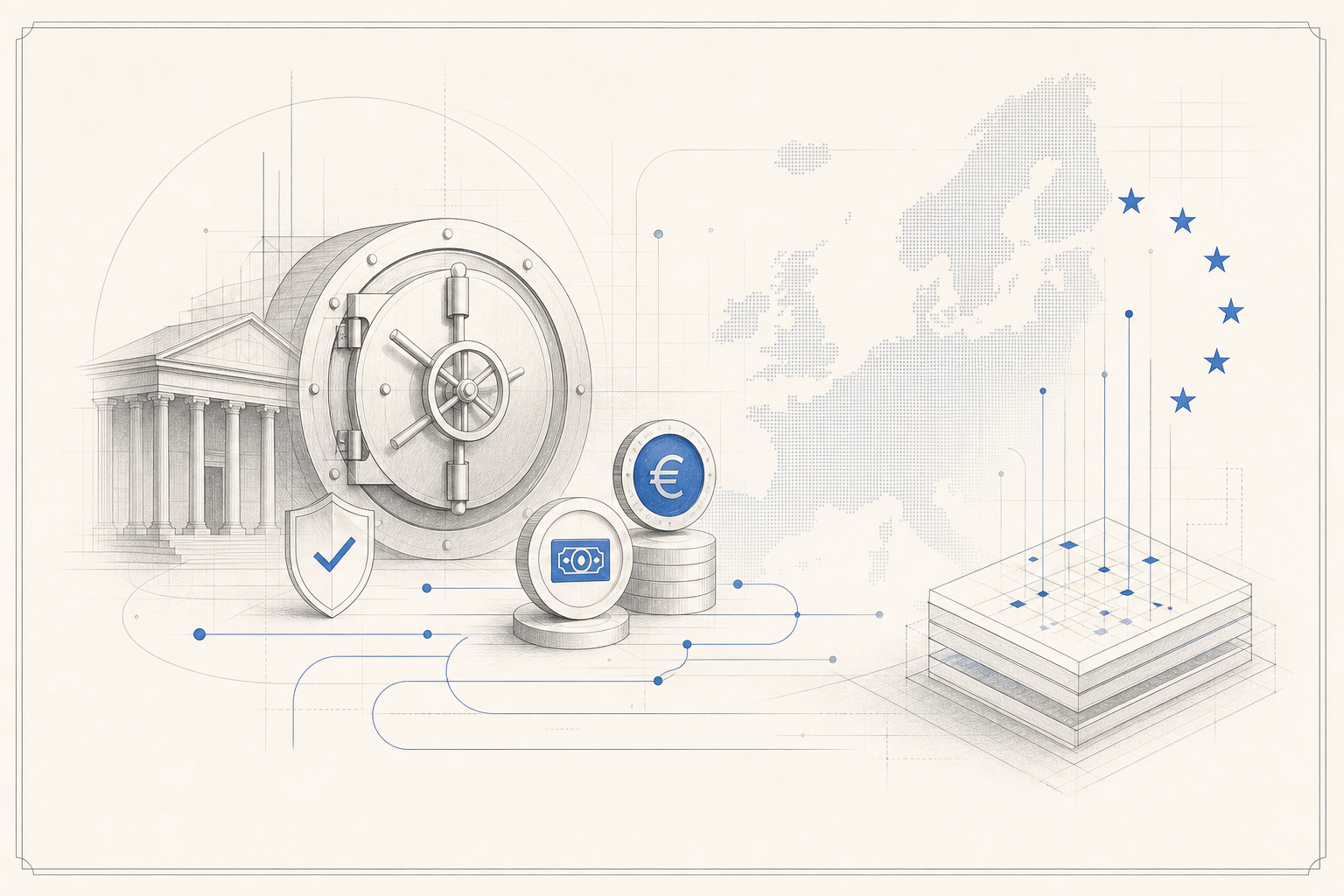
Zodia Custody’s latest Luxembourg milestone is important because Europe’s stablecoin market is moving past the stage where custody alone is enough. Institutions that want to use stablecoins at scale need a regulated way to hold them, a regulated way to move them, and a regulator they can point to when risk, compliance and treasury teams ask how the full workflow is supervised. That is why the company’s new Luxembourg authorization matters for RWA infrastructure. It suggests the market is starting to assemble a more complete institutional stack for tokenized cash rather than just bolting stablecoins onto existing crypto custody services.
The immediate development is straightforward. A fresh industry report says Luxembourg’s Commission de Surveillance du Secteur Financier granted Zodia Custody (Europe) a payment institution authorization that enables regulated stablecoin custody and transfer activity across the European Union. Zodia’s own public statement around its Luxembourg expansion frames the move through a MiCA lens, saying the company has authorization from the CSSF that allows Zodia Custody Europe to operate as a regulated crypto-asset service provider in the EU. Read together, those descriptions point to the same commercial outcome even if they emphasize different pieces of the legal wrapper: Zodia is trying to combine supervised custody with the ability to support the movement of electronic-money-style crypto assets across the region.
That distinction matters because stablecoin infrastructure becomes strategically valuable only when it can plug into real operating flows. For an institution, simply warehousing tokenized cash is not enough. The more meaningful use cases sit one layer deeper: treasury transfers, collateral movement, liquidity rebalancing, client settlement, exchange flows and cross-border cash management. If a provider can only safekeep an asset but cannot support how that asset is transferred in a compliant operating environment, the product remains a narrow custody service. If it can do both, stablecoins start to look more like usable financial plumbing.
Luxembourg is a logical place to build that stack. Under Europe’s MiCA regime, crypto-asset service providers are moving into a more formal supervisory framework, and firms with the right permissions can use passporting to expand regulated services across the bloc. That changes the economics of infrastructure building. Instead of treating each market as a separate compliance puzzle, a provider can invest in a single regulated hub and then widen distribution from there. For institutional stablecoin activity, where counterparties care as much about legal certainty and operational controls as they do about transaction speed, that regional consistency may be more valuable than any one product feature.
The Zodia development also highlights an increasingly important split inside the stablecoin sector. Consumer-facing stablecoin stories still tend to focus on apps, cards and retail payments. Institutional adoption is heading elsewhere. The more durable opportunity is in the back end: custody, transfers, settlement orchestration and treasury tooling that let firms treat tokenized cash as an operational asset class. That is the lane where Europe’s regulatory architecture is likely to shape winners. Firms that can demonstrate clear permissions for both asset servicing and transactional functionality should have a much easier time winning mandates from banks, funds and large corporates than firms offering only generic crypto access.
There is also a useful signal in the way the announcement has been described publicly. The reporting around the move references payment-institution functionality for electronic money token transfers, while Zodia’s own statement emphasizes MiCA authorization and regulated digital-asset custody services. Rather than treating that as a contradiction, the better reading is that institutional stablecoin businesses increasingly need multiple regulatory layers around the same product stack. In practice, the market is not asking who can say the word “stablecoin” the loudest. It is asking who can support custody, movement, control and reporting in a form that compliance teams will sign off on.
For RWA markets, that is the real takeaway. Tokenized funds, onchain treasury products and digital securities all work better when the cash leg can move through regulated rails without introducing a parallel operational headache. Zodia’s Luxembourg buildout is therefore notable not because it proves stablecoins have already won, but because it shows where serious infrastructure providers think the next contest will be fought: inside the regulated workflow that connects custody, payments and settlement into a single institutional service layer.