Visa launches a stablecoin operating layer for banks and fintech treasury flows
Visa has introduced a managed stablecoin platform that packages wallet infrastructure, mint-and-redeem workflows and payment-network connectivity for financial institutions. The move sharpens the race to become the default operating layer for tokenized dollar settlement in mainstream finance.
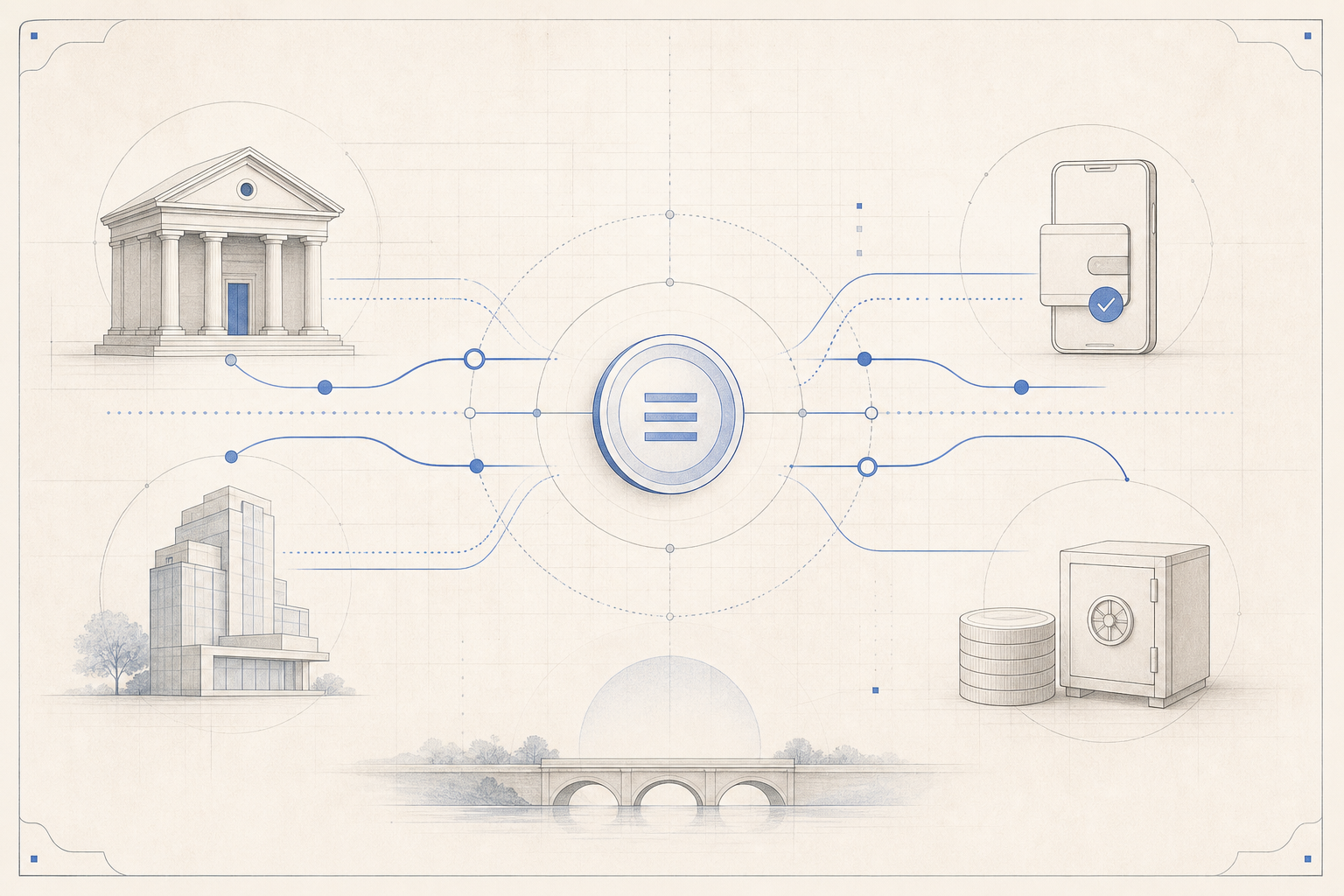
Visa is moving stablecoins from pilot territory into a more explicit enterprise product. The payments network on Thursday introduced the Visa Stablecoin Platform, a packaged service aimed at banks, fintechs and crypto-native firms that want to issue, hold, transfer and redeem dollar-backed tokens without stitching together their own custody, wallet and treasury stack. The launch matters because it shifts the stablecoin conversation away from one-off settlement experiments and toward operating infrastructure that can plug into mainstream payment workflows.
At a product level, Visa is pitching the platform as a managed layer between blockchain networks and the institutions already using its payment rails. Public materials for the launch describe wallet-as-a-service tooling, connectivity to blockchain networks, and operational controls including dual approvals, audit logs and transfer allow lists. In practice, that means an institution does not have to treat stablecoins as a side project run by a specialist digital-asset team; it can start to fold issuance, treasury movements and redemptions into the same operating environment it uses for commercial payments and internal money movement.
The first launch partner is Open USD, or OUSD, the stablecoin associated with Open Standard. Visa’s own stablecoins page frames OUSD as open infrastructure designed for businesses that care about economics, governance and reliability, while external reporting around the launch has emphasized that the model is intended to be easier for distributors to adopt than legacy issuer structures. That makes the product launch bigger than a single token integration. Visa is effectively signaling that the next phase of stablecoin competition will be won not only by circulation size, but by distribution economics, operational tooling and how easily financial institutions can fit tokenized dollars into existing compliance and treasury processes.
That framing is consistent with the broader direction of Visa’s digital-asset work. The company has already supported stablecoin settlement for selected partners, rolled out crypto-linked card programs and built cross-border capabilities that connect blockchain-based value transfer with conventional payments infrastructure. What changes with the new platform is packaging. Instead of asking institutions to navigate multiple vendors for wallets, onchain connectivity, compliance controls and payment integration, Visa is presenting stablecoin operations as a unified service that sits closer to its core network.
The scale question is what makes this strategically important for the RWA and stablecoin market. High-signal reporting on the rollout notes that Visa processes roughly $15 trillion in annual payments and serves a network that reaches about 15,000 financial institutions and more than 200 million merchants. Even if only a small slice of that base adopts stablecoin treasury or settlement features, the addressable distribution footprint is much larger than what most standalone stablecoin issuers or middleware providers can assemble on their own. For tokenized-dollar projects, access to that distribution can matter as much as reserve design.
There is also a market-structure angle. Stablecoins increasingly sit at the center of tokenized finance because they are the cash leg for onchain securities settlement, collateral transfers, subscriptions into tokenized funds and cross-border treasury movement. When a network like Visa standardizes the back-office tooling around minting, movement and redemption, it lowers one of the practical barriers to institutional adoption: operational complexity. That does not solve the harder questions around regulation, reserve transparency or issuer risk, but it does make it easier for traditional finance teams to test blockchain-based settlement without rebuilding internal controls from scratch.
The immediate takeaway is not that one new token will displace incumbents overnight. It is that major payment networks are now competing to become the operating layer through which stablecoins reach regulated financial institutions and real commercial flows. For RWA markets, that is a meaningful development. Tokenized assets need dependable cash rails, and Visa is trying to make those rails easier to deploy inside familiar treasury and payments systems. If adoption follows, the result could be less friction between onchain assets and the institutions that still control most real-world money movement.