Tradeweb’s Canton treasury trade shows tokenized settlement moving closer to real market plumbing
Tradeweb’s real-time Canton transaction tied a tokenized U.S. Treasury transfer to a tokenized cash leg, offering a clearer demonstration of delivery-versus-payment on institutional blockchain rails. The significance is less about the trade’s size than about whether Treasuries, cash and execution venues can start operating inside the same synchronized onchain workflow.
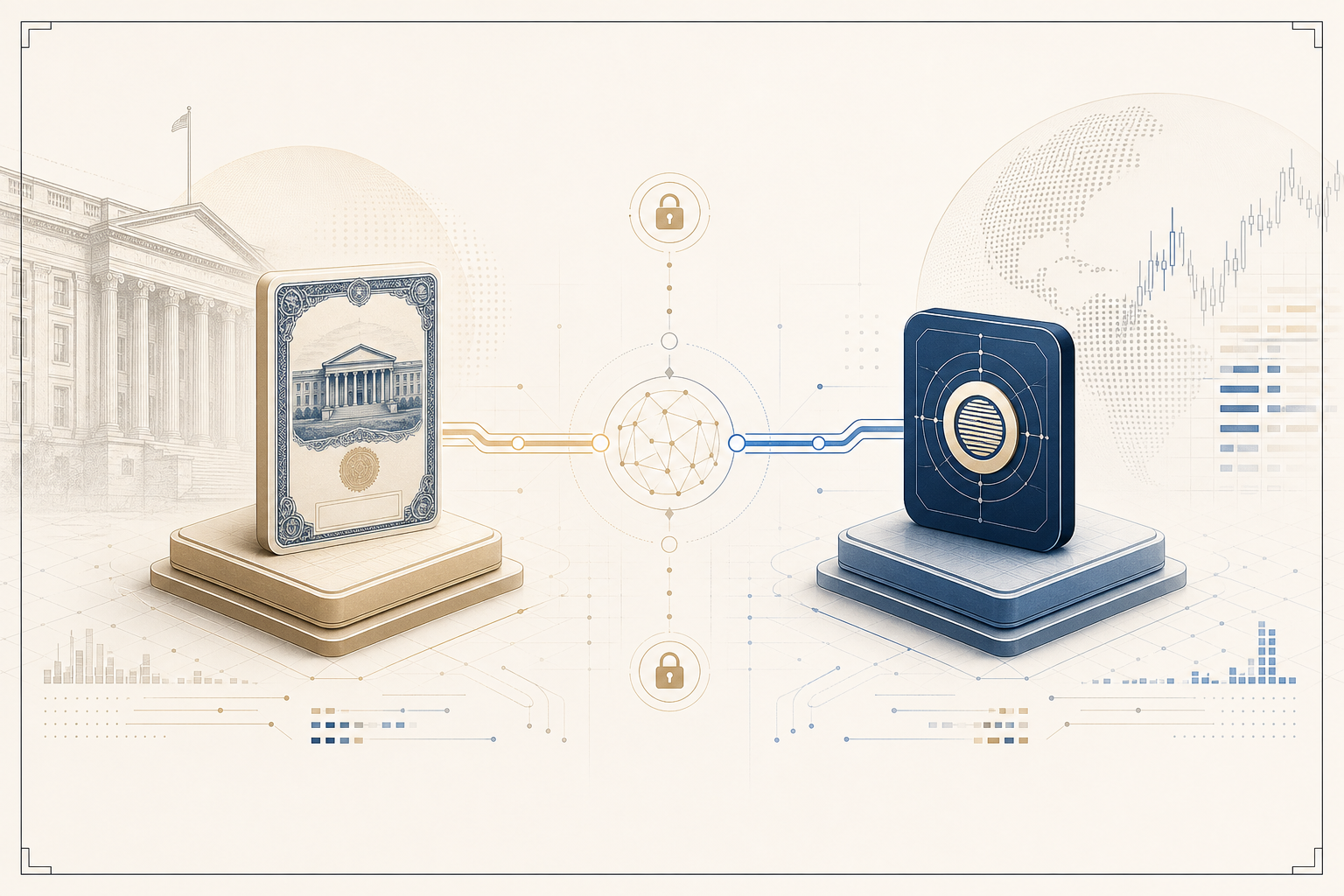
Tradeweb has moved one of the most practical tokenization use cases a step closer to live market infrastructure. The company said it executed a real-time transaction in which Franklin Templeton transferred a tokenized U.S. Treasury instrument to Virtu Financial in exchange for tokenized cash on the Canton Network, with Tradeweb providing execution and price discovery and the network coordinating synchronized settlement. The disclosed trade was not large enough to reset the Treasury market on its own, but it matters because it combines three functions institutions actually need in the same workflow: a recognizable fixed-income asset, a tokenized cash leg and an execution venue that already sits inside professional trading operations.
That combination is what separates another tokenization pilot from a more useful market-structure milestone. Institutional investors do not just need digital wrappers around assets; they need delivery-versus-payment mechanics that reduce settlement friction without forcing participants to give up privacy, credit controls or operational discipline. In this case, the cash side was settled with USDCx, a USDC-backed token issued on Canton, and the securities leg was synchronized on the same network so the asset transfer and payment leg could complete together in real time. If that model can be repeated consistently, it offers a clearer path toward intraday balance-sheet efficiency than the slower, manually bridged workflows that still dominate many conventional post-trade processes.
The Canton Network is central to why the transaction is drawing attention beyond crypto-native circles. On its public materials, Canton describes itself as a privacy-enabled public blockchain built for regulated markets and emphasizes synchronized financial-market workflows rather than open, fully transparent transaction rails. That positioning matters for Treasury and money-market instruments, where firms care less about retail visibility and more about whether multiple institutions can coordinate transfers, collateral movement and cash settlement without exposing sensitive trading data. In other words, the selling point is not simply that the trade happened onchain. It is that the network architecture is being marketed as compatible with the confidentiality and control assumptions of mainstream capital markets.
The broader institutional context also supports the view that this was more than an isolated experiment. Canton’s own site says DTCC and Digital Asset are working to tokenize a subset of DTC-custodied U.S. Treasury securities on the network, targeting 2026 for that next phase. That is an important signal because Treasuries only become strategically meaningful onchain when the surrounding market infrastructure starts to move with them: custody links, settlement coordination, collateral workflows and integration with established post-trade utilities. A bilateral or small-group transfer can demonstrate technical feasibility, but the real commercial prize is a market in which Treasury inventory can circulate through the same networks that already support funding, collateral and risk management.
Franklin Templeton’s role in the transaction adds another layer of credibility because the asset manager has already spent multiple cycles building live tokenized fund infrastructure rather than limiting itself to concept work. The firm has been one of the most visible traditional asset managers in onchain fund issuance and has repeatedly used blockchain rails as part of product distribution and operational design. That makes its participation notable: instead of treating tokenized Treasuries as a branding exercise, Franklin appears to be testing how regulated cash-like and government-backed instruments can move through institutional trading workflows where execution quality and settlement certainty both matter. Virtu’s involvement is equally relevant, since market-making participation is necessary if tokenized fixed-income products are going to evolve beyond captive buy-and-hold use cases.
There is also a timing advantage to this development. Tokenized Treasury exposure is already a multibillion-dollar segment of the broader onchain real-world asset market, but much of the growth so far has been concentrated in issuance and distribution rather than secondary-market plumbing. The missing piece has been a cleaner bridge between tokenized asset ownership and the actual mechanics of trade execution, payment and post-trade finality. A real-time Treasury transaction coordinated by an incumbent fixed-income venue suggests the industry is finally starting to work on that layer directly. If these systems mature, tokenized government securities could become more useful not only as investment wrappers but also as collateral that can move faster across trading, financing and treasury-management contexts.
That does not mean the hard problems are solved. Scale, interoperability, legal finality, cash-token standards and operational resilience all still matter far more than a single headline transaction. Institutions will want clarity on how these trades behave under stress, how assets can move across custodians and venues, and how tokenized cash instruments interact with bank deposits, fund shares and central clearing infrastructure. They will also care about whether liquidity concentrates in a few closed networks or whether tokenized fixed-income markets can connect to a broader ecosystem without fragmenting. Those questions will determine whether today’s progress becomes durable market plumbing or remains a sequence of impressive but self-contained pilots.
Even with those caveats, Tradeweb’s transaction is a meaningful data point for the RWA market. It shows that tokenized Treasuries are no longer being discussed only as static products parked in wallets for yield exposure; they are increasingly being tested as transferable instruments inside institution-grade trading and settlement flows. For the tokenization thesis, that is the direction that matters most. The long-term value is not in proving that a Treasury can exist onchain, but in proving that the surrounding market can clear, fund and settle around that digital representation with less friction than the legacy stack allows today.