Tokenized treasury growth is pushing crypto exchanges deeper into brokerage territory
The tokenized U.S. Treasury market is now hovering around the $15 billion mark, giving crypto platforms a growing base of yield-bearing onchain cash to build around. At the same time, exchanges are widening access to tokenized equities and equity-linked products, turning what used to be crypto venues into broader multi-asset distribution rails.
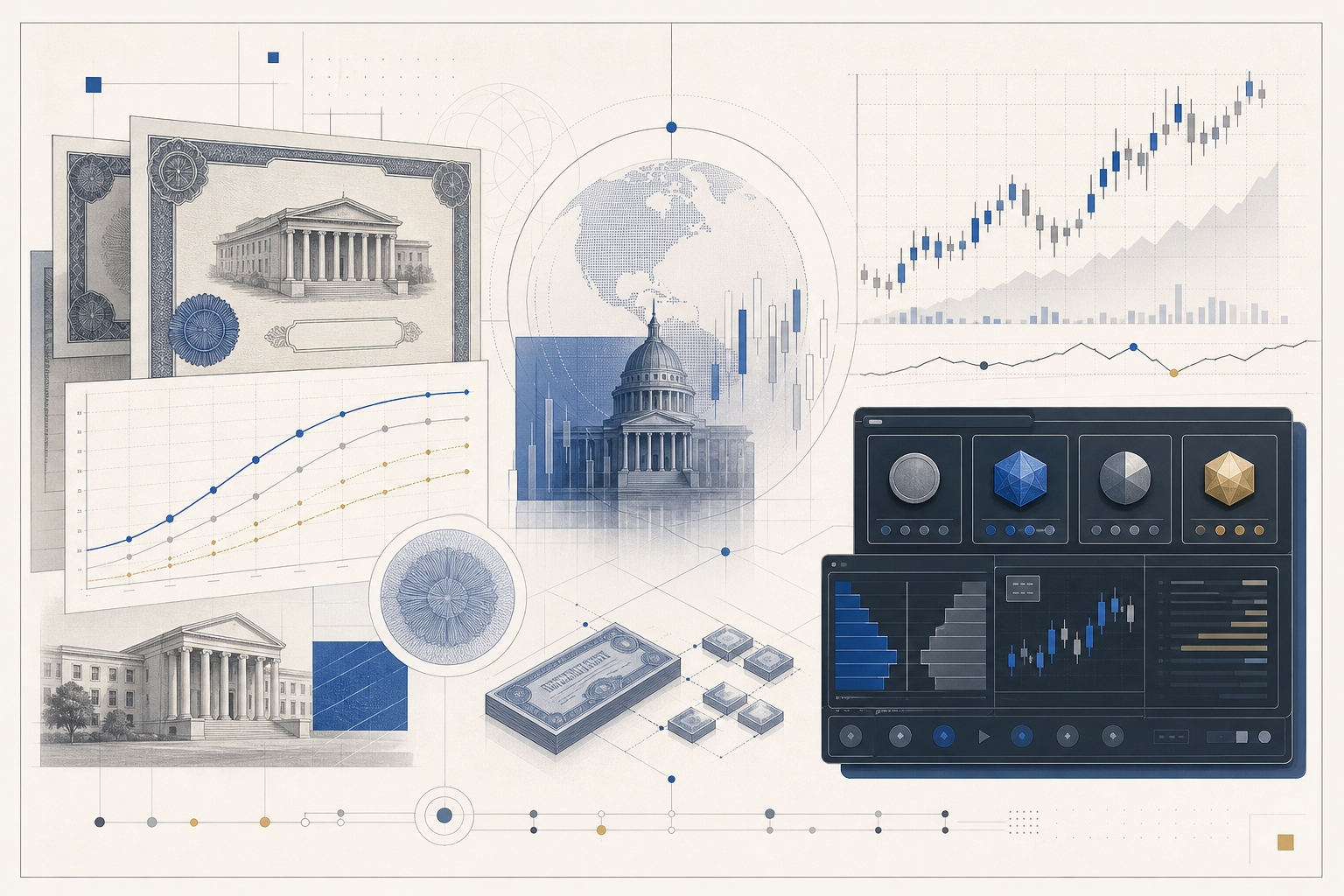
The latest shift in digital-asset market structure is no longer just about one more exchange listing or one more tokenized fund launch. It is about convergence. As onchain Treasury products scale toward a market measured in the tens of billions, crypto platforms are starting to look less like isolated token casinos and more like all-hours brokerages built on internet-native settlement rails. That change matters for RWA markets because the same infrastructure that holds dollar-backed liquidity and short-duration government exposure can also become the balance-sheet foundation for wider trading activity in tokenized stocks, ETFs and other financial instruments.
Current market data makes clear why this transition is accelerating. RWA.xyz now shows roughly $14.9 billion of distributed value across tokenized Treasury products, with the category still far above where it stood at the start of 2024. The leading products are no longer experimental pilots. Circle’s USYC is above $3.0 billion in total asset value, BlackRock’s BUIDL is near $2.37 billion, Ondo’s USDY is above $2.1 billion, Franklin Templeton’s BENJI fund is above $820 million, and Ondo’s OUSG remains above $550 million. In other words, tokenized government paper is no longer a niche wrapper around cash management. It is becoming a real institutional liquidity layer that can sit inside wallets, treasury operations and exchange ecosystems.
That matters because exchanges increasingly need more than speculative crypto turnover to keep users, balances and trading activity on-platform. A large base of yield-bearing, relatively low-volatility onchain dollar products gives them a new anchor product: something closer to digital brokerage cash than to a classic crypto trading balance. Once users can park capital in tokenized Treasury exposure and move seamlessly into other markets, the platform has a much stronger argument that it should be the primary venue for a broader financial relationship. The business model starts to look familiar to traditional finance: custody the client balance, offer market access, widen the menu of instruments and capture activity across the account lifecycle.
Kraken’s xStocks rollout shows how quickly that model is being built. Kraken’s product pages now position tokenized U.S. stocks and ETFs as directly tradable inside the same app used for crypto, with access extending across the weekday trading cycle and, on Kraken Pro for certain products, into full 24-7 availability. The company has also launched xStocks-based perpetual futures for eligible non-U.S. users in more than 110 countries, marketing up to 20x leveraged exposure to products tied to major equities, indexes and gold. That is not a small feature expansion. It is a meaningful step toward merging crypto market mechanics with traditional asset demand inside one account structure.
There is still an important distinction between access and ownership. Kraken’s own xStocks materials say the instruments do not confer direct ownership of the underlying shares, even if they are designed to pass through economic features such as dividend adjustments. That caveat is central to how the market should think about this next phase. Tokenized access products can broaden distribution and extend trading hours without fully reproducing the legal, governance and investor-rights profile of holding the conventional security itself. For RWA operators, that means the opportunity is large, but so is the need for careful product labeling, suitability controls, jurisdictional discipline and clean disclosure around what a buyer actually owns.
The deeper implication is that tokenized Treasuries may become the funding layer for a much broader onchain capital-markets stack. If users hold onchain Treasury exposure as their default idle balance, then reallocating into tokenized equities, commodities, private-credit products or structured strategies becomes a shorter operational jump. That helps explain why the most important RWA competition is increasingly about distribution, settlement design and embedded portfolio workflows rather than simply issuing one more wrapper around a familiar offchain asset. The winners may be the platforms that combine trusted reserve assets, compliant access rails, clear investor protections and liquid secondary-market pathways in a single operating environment.
For now, the signal is straightforward. The growth of tokenized government paper is giving crypto platforms a more credible financial core, and exchanges are already using that foundation to push outward into brokerage-style products. The market is still early, and regulatory, legal and market-structure questions remain unresolved. But the direction is hard to miss: tokenized Treasuries are maturing from a stand-alone RWA category into the cash layer that could support a far wider onchain financial system.