Tokenized equity perps are pulling RWA trading into derivatives scale
Tokenized stocks are still relatively small as spot assets, but derivatives tied to those names are already moving at a completely different scale. The gap shows where trader demand is landing first and where tokenized-equity infrastructure still has work to do before spot markets catch up.
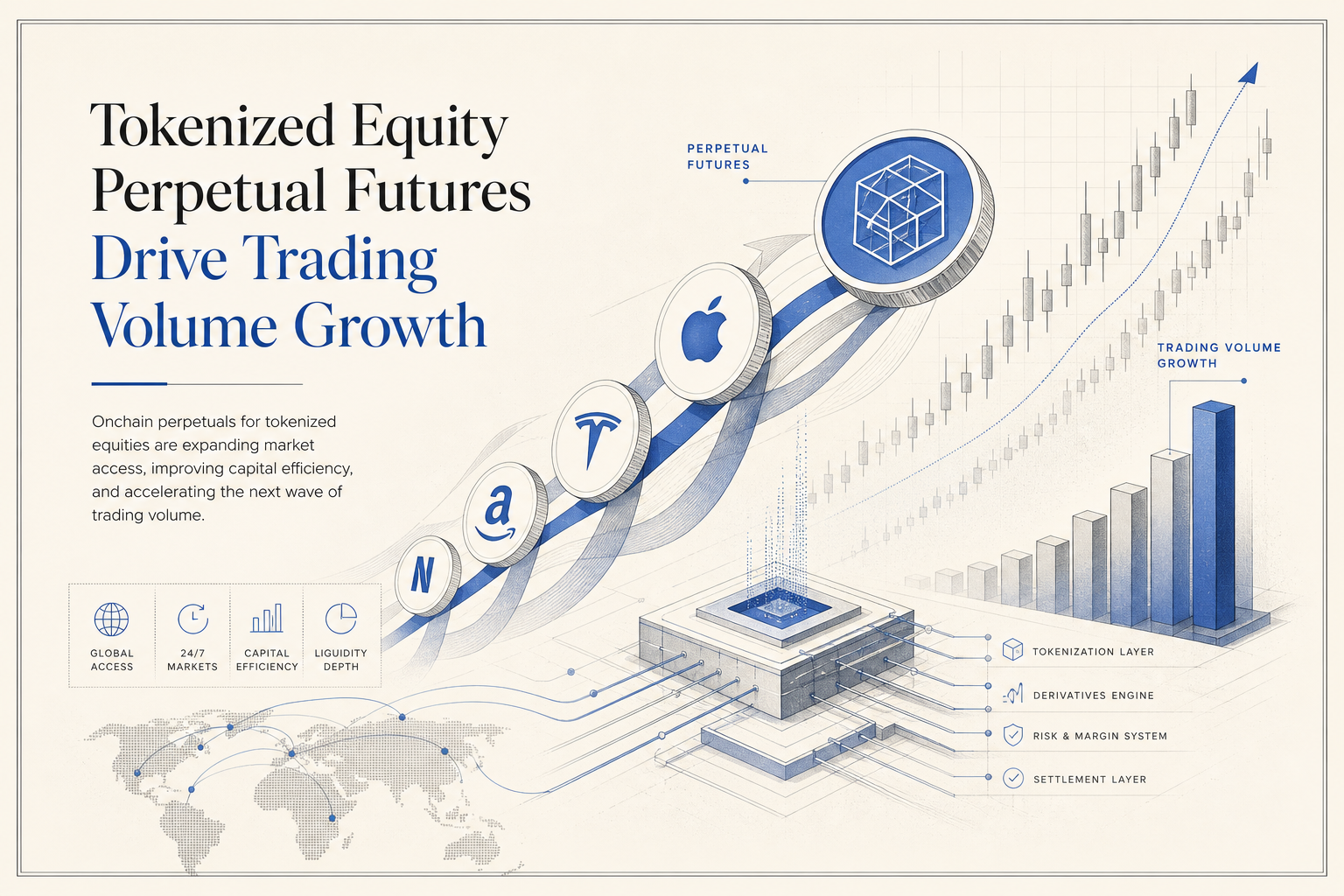
Tokenized equities are starting to look less like a niche corner of onchain finance and more like a market structure story with two very different speeds. On one side, tokenized stock issuers are expanding product catalogs, adding more names and pushing their instruments deeper into exchange and DeFi distribution. On the other, derivatives tied to those same equity exposures are scaling far faster than the spot market itself, pulling real-world-asset trading activity into territory that looks much more like mainstream leveraged markets than a small experimental RWA segment.
The latest signal is the jump in monthly trading tied to tokenized equity perpetuals. That matters because it suggests traders are not waiting for the cash market for tokenized stocks to mature before expressing demand. Instead, they are using synthetic or derivatives-based exposure to access round-the-clock equity trading, crypto-native collateral flows and global distribution that traditional broker rails still struggle to provide. In practical terms, the market is showing that liquidity, leverage and continuous trading may arrive before the full legal and operational stack for tokenized spot equities is fully standardized.
That divergence is visible in the current size of the spot tokenized-stock market. Recent market dashboards for tokenized stocks show about $1.96 billion in combined represented and distributed value, roughly $7.9 billion in transfer volume over the last 30 days, around 179,000 monthly active addresses and more than 683,000 holders. Those are meaningful numbers for a young asset class, but they are still modest relative to the scale implied by equity-linked perpetual trading. The result is a market in which derivatives activity can quickly overshadow the underlying cash instruments that are supposed to anchor price discovery and long-term adoption.
Supply is not the bottleneck on its own. One of the largest current tokenized-equity catalogs lists 561 products across U.S. equities and ETFs, and markets them as one-for-one backed, compliant and DeFi-ready. The same product materials emphasize that the instruments are not available to U.S. persons, underscoring how much of the current expansion is being built around offshore demand and crypto-native distribution rather than domestic retail brokerage channels. That is an important commercial clue: tokenized equities are scaling first where operators can combine blockchain transferability with flexible international market access.
Even so, spot tokenized stocks remain harder to industrialize than a simple ticker list might suggest. Operators still have to manage corporate actions, dividend handling, transfer-agent coordination, recordkeeping, investor rights mapping and the operational consequences of events such as stock splits. Those mechanics are mundane compared with the excitement around 24/7 equity trading, but they are exactly the functions that determine whether tokenized shares behave like durable capital-markets instruments or just high-velocity wrappers. Derivatives can grow quickly because they abstract away some of that complexity; spot markets cannot.
That helps explain why tokenized equity perps are gaining traction so quickly. For traders, perpetuals solve an immediate problem: they offer continuous exposure, margin efficiency and fast market access without requiring the entire lifecycle of a tokenized security to be rebuilt at broker-dealer depth. For platforms, they can aggregate demand faster than fully regulated cash-equity distribution because they fit the trading behavior crypto users already understand. The risk is that if derivatives become the dominant growth engine, the public narrative around tokenized equities will tilt toward short-term speculation before the cash market proves out its advantages in settlement, collateral mobility and programmable ownership.
For RWA builders, the implication is not that derivatives growth is unhealthy. It is that the stack is maturing unevenly. Exchanges and tokenization venues have demonstrated there is real global demand for equity exposure on crypto rails, especially outside the United States. The next challenge is to translate that trading demand into more robust spot-market infrastructure: better custody models, cleaner corporate-action handling, stronger investor disclosures and broader institutional distribution. If that layer catches up, derivatives volume can act as an accelerant for the whole category rather than a parallel market detached from the underlying assets.
The broader takeaway is that tokenized equities have crossed an important threshold. The question is no longer whether there is appetite for blockchain-based access to stocks. The question is which part of the stack will define the category first: fast-moving leveraged markets, or the slower but ultimately more defensible cash infrastructure that can support ownership, settlement and long-term capital formation. Right now, the volume surge says traders are voting for speed. The next phase of RWA market development will depend on whether issuers and market operators can turn that momentum into a spot market that is large enough, reliable enough and legally coherent enough to carry the sector beyond its derivatives boom.