Tether uses Ualá stake to deepen its Latin American financial-infrastructure push
Tether’s $20 million investment in Ualá is less about a near-term wallet integration than about placing equity behind one of Latin America’s largest digital financial distribution platforms. The deal gives the stablecoin issuer a strategic foothold inside a fast-scaling neobank that already operates across Argentina, Mexico and Colombia.
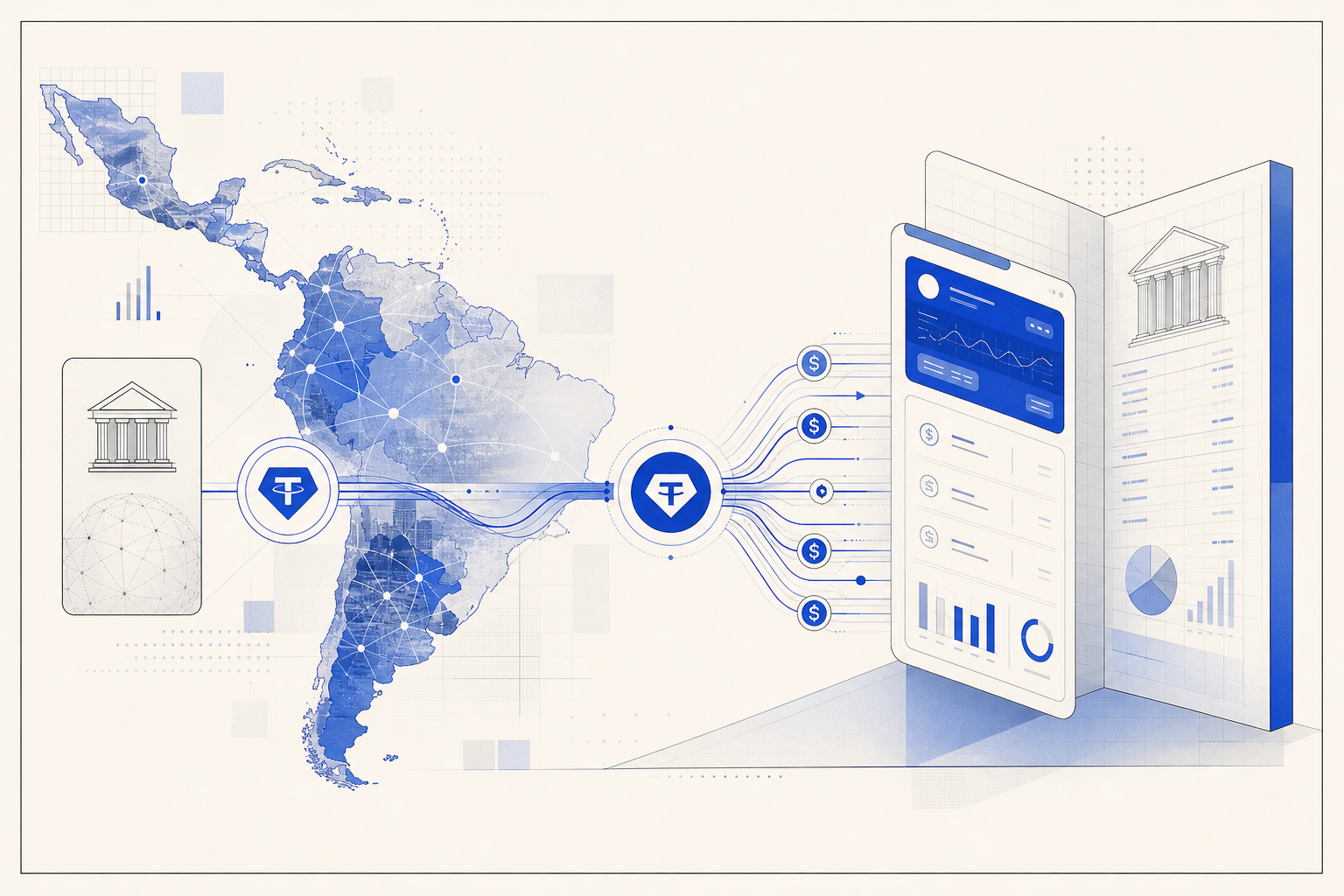
Tether’s newly disclosed $20 million investment in Ualá is a notable RWA-adjacent development because it extends the company’s Latin American strategy beyond exchange infrastructure and into mainstream consumer finance. Ualá is not a niche crypto app. It is a regional neobank with more than 11 million customers, full banking licenses in Argentina, Mexico and Colombia, and a product set that spans accounts, cards, lending, investing, insurance and merchant services. By taking a stake in that platform, Tether is positioning itself closer to the distribution layer where digital dollars, tokenized savings products and blockchain-based payment rails could eventually meet regulated retail finance at scale.
The core facts are relatively straightforward. Ualá said on July 15 that Tether had joined its investor base with a $20 million investment, and that the capital forms part of the company’s previously announced $197 million financing round. In Ualá’s March announcement of that round, the company said Allianz X led the financing, existing and new investors participated, and the deal valued Ualá at $3.2 billion post-money. Those announcements matter because they show this was not a standalone bridge round or an emergency capital raise. Tether was added into a larger financing package for a growth-stage financial platform that already had broad institutional backing and a defined regional expansion plan.
That context changes how the transaction should be read. The easiest interpretation would be to treat it as a simple crypto treasury investment, but the stronger reading is that Tether is continuing to assemble regional financial distribution relationships around the dollar-backed infrastructure it already controls. Ualá brings regulated customer relationships, local licenses and a large embedded retail footprint. Tether brings capital, balance-sheet scale and a business built around one of the most widely used dollar tokens in emerging markets. Even without an immediate product launch between the two companies, the combination is strategically meaningful because it links a major stablecoin issuer with a fast-growing consumer financial network in markets where demand for dollar access, digital payments and inflation hedging has been structurally strong.
The deal also fits a visible pattern in Tether’s regional capital deployment this year. Company statements and publicly reported transactions show Tether expanding its presence across Latin America through a mix of exchange, payments and operating-company exposure rather than confining itself to secondary crypto market activity. Earlier this month, Tether said it would invest $20 million in a financing round for Mercado Bitcoin to accelerate onchain financial infrastructure in the region. Other recent transactions have also tied the company to regional payments and agricultural businesses. Taken together, those moves suggest Tether is using excess reserve-generated profits not only to defend USDT’s scale, but to build optionality around future payment, savings and tokenization channels in markets where digital-dollar adoption can connect directly to real economic demand.
Ualá’s own operating profile helps explain why that optionality is attractive. In its funding materials, the company said nearly one in five adults in Argentina uses its platform, more than 3 million clients have invested through the app, and Mexico has become a key growth engine since Ualá obtained a banking license there. Those metrics matter for RWA watchers because tokenized financial products rarely succeed on technology alone. They need distribution, trust, compliance and recurring customer activity. A neobank that already manages deposits, cards, credit and investments across several Latin American jurisdictions is much closer to that reality than a crypto-native interface starting from zero.
What the investment does not prove is just as important. Neither company has announced a USDT integration inside Ualá’s product stack, a tokenized deposit rollout, or a live remittance product using blockchain settlement rails. The current evidence supports a financial investment with strategic significance, not an immediate payments launch. That distinction should keep expectations disciplined. But it does not reduce the importance of the signal. In cross-border finance, equity relationships often precede product integration because licensing, treasury controls, custody design and consumer-protection rules have to be worked through before digital-dollar functionality can be embedded into a regulated front end.
For the RWA market, the broader takeaway is that stablecoin issuers are increasingly competing for access to real distribution rather than just crypto liquidity. If tokenized finance is going to matter in everyday banking, it has to plug into institutions that already serve consumers and businesses, not only into trading venues. Tether’s Ualá investment is important because it hints at that next phase. The story is no longer only about minting digital dollars. It is about securing channels through which those dollars, and potentially other tokenized financial products, can move into mainstream financial activity across high-demand markets.