Tether pushes stablecoin infrastructure into robotics with lead role in NEURA funding round
Tether’s lead role in NEURA Robotics’ new financing round is not just a venture bet on humanoids. It is a signal that stablecoin issuers want wallet, settlement and edge-compute tooling embedded directly into autonomous machine workflows.
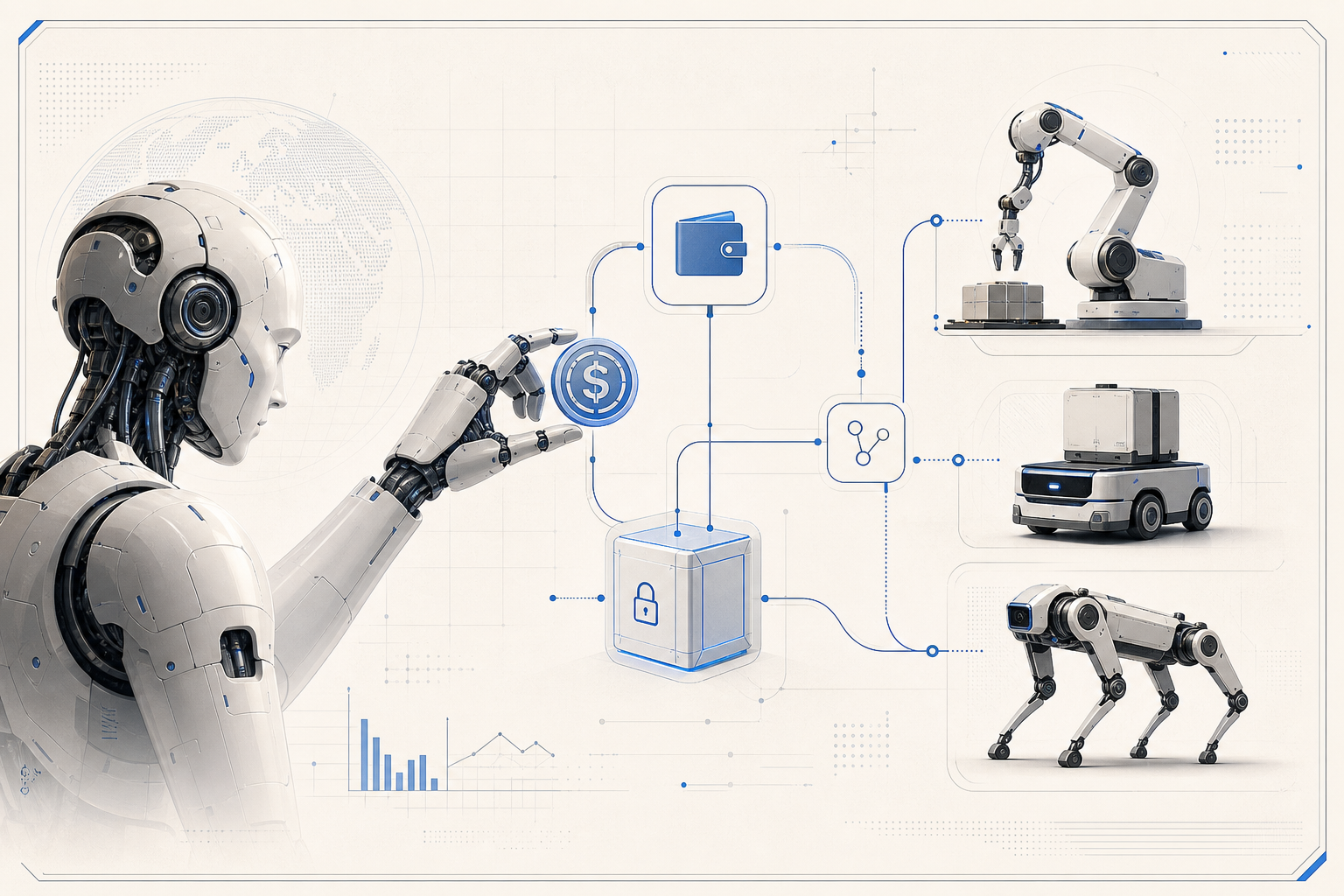
Tether’s lead role in NEURA Robotics’ new Series C financing round matters for RWA and stablecoin markets because it extends onchain payment infrastructure beyond apps and exchanges and into physical automation. NEURA said on June 10 that it had secured a financing round of up to $1.4 billion to accelerate its Physical AI platform, while Tether separately said it was leading the investment and planned to deploy core technology into the robotics company’s ecosystem. That combination turns the announcement from a straightforward growth round into a live test of whether stablecoin-native financial tooling can become part of how autonomous machines operate in the real world.
The financing itself is material. NEURA described the raise as a landmark Series C for its cognitive robotics and Neuraverse platform, and said the investor group includes Tether, Qualcomm Technologies, Amazon, NVIDIA, imec.xpand, Bosch, Schaeffler, the European Investment Bank, Lingotto Horizon and other strategic and financial backers. The company also said its existing order book and deployment pipeline exceed $1 billion. Those details matter because they place the story in the category of industrial infrastructure, not just a crypto-adjacent experiment looking for a narrative. A company with that scale and partner mix has enough commercial momentum for its choices around payments and device intelligence to be worth tracking.
Tether’s strategic contribution is even more notable than the capital. In its own announcement, the company said NEURA is expected to integrate Tether’s Wallet Development Kit so that self-custodial wallet functionality can sit directly inside robotic systems. Tether also said the two groups will work on testing and deploying QVAC, its edge-first AI runtime, inside the Neuraverse so models can run locally on devices rather than relying entirely on centralized cloud infrastructure. Put plainly, Tether is trying to supply two pieces of machine-native economic infrastructure at once: a way for devices to hold and move value, and a way for them to process intelligence close to where physical work is happening.
That is where the stablecoin angle becomes more substantive. Stablecoins have already become part of cross-border treasury, card settlement and exchange liquidity, but most deployments still assume a human operator or institution is initiating and supervising each transfer. Embedding wallet tooling inside robots points toward a different design space in which autonomous systems may eventually need to receive micropayments, pay for services, maintain balances, or interact with software and hardware marketplaces without waiting for a manual approval chain on every step. Tether framed the need in those terms, arguing that payment systems built for human oversight do not scale cleanly to machines acting at millisecond speed.
NEURA’s recent partnerships reinforce why that argument is getting attention now. In April, the company announced a strategic agreement with Amazon Web Services to expand the infrastructure used to train, validate and deploy Physical AI systems at scale. It has also outlined work with SAP and NVIDIA aimed at connecting enterprise AI agents, business data and robotic execution in live operating environments. Taken together with the new Tether relationship, the pattern is clear: NEURA is building a stack in which robotics, enterprise software, cloud training and machine payments are being designed as connected layers rather than separate products stitched together later.
For RWA-focused operators, the practical implication is less about humanoid headlines and more about the next addressable market for tokenized cash rails. If robots and industrial agents eventually participate in procurement, maintenance, logistics or service fulfillment, then the financial layer behind those actions will need programmable money, clear permissions and reliable settlement. Stablecoins are not guaranteed to win that role, and regulated bank-issued tokenized deposits may compete aggressively in enterprise settings. But Tether’s move shows that major issuers are already positioning for a world in which autonomous systems are economic actors, not just software users.
There are also clear constraints. Neither company claimed that robots will immediately transact at scale on public blockchain networks, and there is still a long distance between embedding a wallet SDK and operating compliant machine-to-machine payment flows in production. Questions around identity, spend controls, liability, recovery, auditability and jurisdiction do not disappear when the endpoint is a robot. In many industrial environments, hybrid models that combine local autonomy with policy controls, enterprise approval layers and selective onchain settlement may prove more realistic than fully independent machine wallets.
Even with those caveats, this is a meaningful signal for the shape of the stablecoin market. The most important takeaway is not that Tether invested in a robotics company, but that it used the financing to push its wallet and edge-compute stack into a platform built for real-world deployment. That makes the story relevant to RWA readers: as tokenized finance matures, the competition is shifting from who can issue digital dollars to who can embed financial rails into the operational systems that will actually use them. NEURA gives Tether a high-visibility venue to test that thesis in the physical economy.