Tassat pitches a reserve marketplace for banks chasing stablecoin deposits
Tassat is preparing a reserve-management marketplace that would let regional banks compete for stablecoin balances instead of leaving that business concentrated at a handful of specialist institutions. The proposal matters because reserve allocation is becoming core financial infrastructure as issuers scale and tokenized liquid assets enter the funding mix.
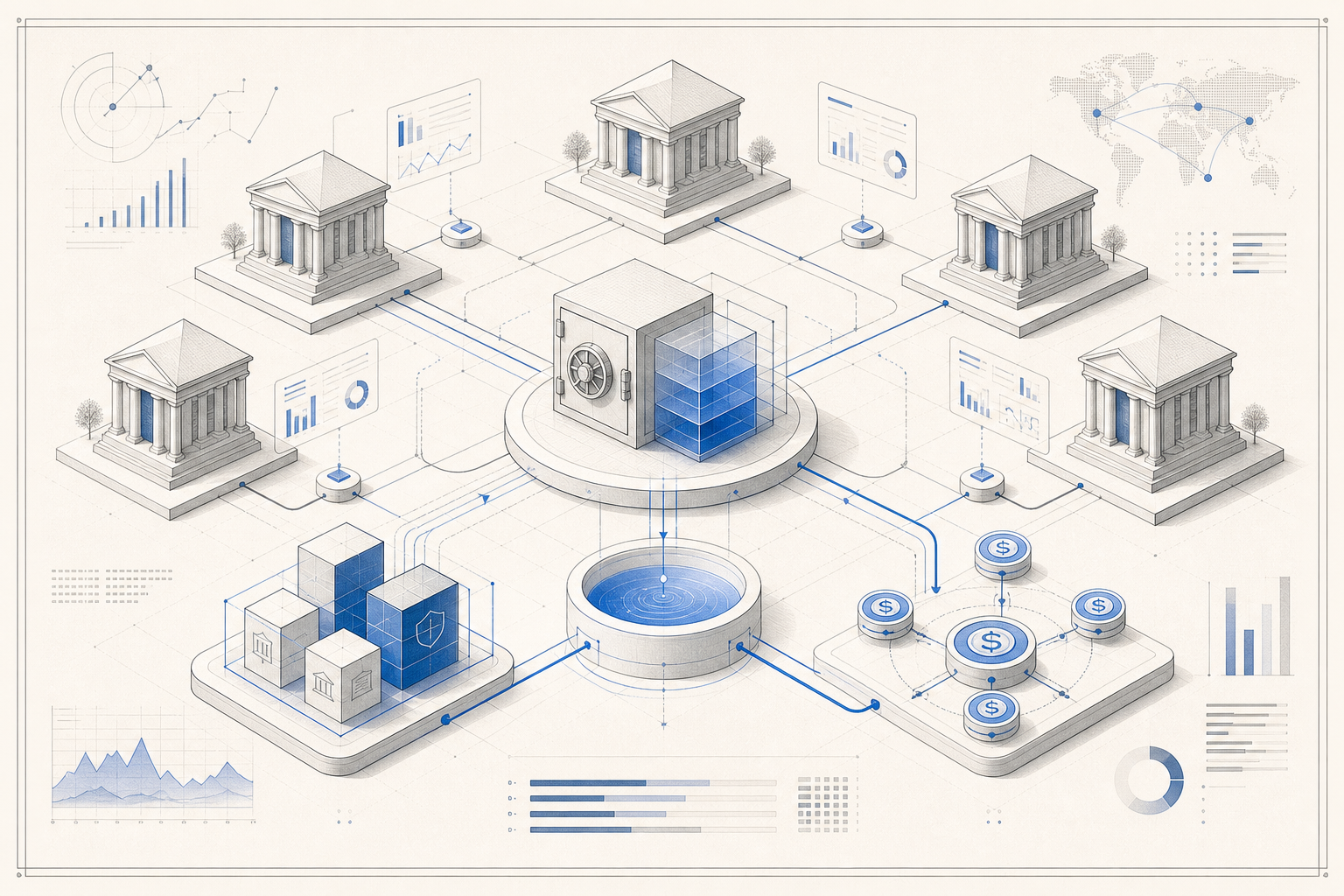
Stablecoin growth is starting to create a less glamorous but increasingly important infrastructure question: who actually holds the cash and liquid assets behind the tokens, and how widely can that business be distributed across the banking system. Tassat, the firm best known for developing Signature Bank’s former Signet payments network, is now trying to turn that problem into a market. Its newly announced Project NENYA is designed as a reserve-management platform that would help regional and midsize U.S. banks compete for stablecoin reserve balances that today are typically handled by a small set of larger or more specialized institutions.
The operating model is closer to market plumbing than to a consumer-facing payments product. Tassat says the platform will connect regulated stablecoin issuers with participating banks through a shared marketplace for allocating reserves across traditional deposits and tokenized high-quality liquid assets. Banks would be able to bid for reserve balances, while issuers would be able to compare pricing and spread funds across multiple counterparties instead of relying on a narrow banking circle. The company has said pilot activity is expected in the first half of 2027, with a broader launch planned after that.
That design choice is notable because the reserve question is becoming more strategic as stablecoins move further into mainstream financial planning. A larger issuer base means more demand for regulated banking partners, more scrutiny around liquidity management, and more pressure to show that reserves can be diversified without losing operational visibility. Tassat’s proposal is effectively to treat reserve allocation as a risk-managed network problem rather than a series of one-off bilateral banking relationships. In that framing, the value is not only finding yield or balance-sheet capacity, but also giving issuers a way to monitor concentration, counterparty exposure and funding terms in one place.
The emphasis on smaller banks is also deliberate. Many regional institutions have shown interest in stablecoin-related deposit business, but the practical barriers are high: compliance controls, treasury operations, pricing expertise, and the technical work needed to connect to tokenized assets and round-the-clock digital settlement environments. Tassat’s pitch is that those banks do not need to build every layer from scratch if a common orchestration platform can handle onboarding, monitoring and execution. Just as important, the platform itself is not meant to be another blockchain venue. The company has indicated it will sit above those rails and connect to tokenized asset and deposit networks where appropriate, lowering the integration burden for banks that want exposure without becoming crypto-native operators.
The timing helps explain why the idea is surfacing now. Stablecoin legislation and broader institutional product work have pushed reserve management from back-office detail into board-level strategy. Citi has projected that the stablecoin market could approach roughly $4 trillion by 2030, and Tassat’s own framing goes even further in stressing the need for scalable reserve infrastructure if the category grows into the multi-trillion-dollar range. At that size, reserve concentration stops being just a competitive issue and becomes a market-structure issue. If too much reserve funding sits with too few institutions, issuers face counterparty bottlenecks while banks and regulators inherit larger liquidity and deposit concentrations.
That is where tokenized real-world assets enter the story in a more concrete way. Tassat is not only talking about cash accounts; it is explicitly describing a model where reserves can be allocated across tokenized high-quality liquid assets as well. In practice, that points to the same institutional RWA stack that has been gaining traction elsewhere in the market: short-duration government funds, tokenized Treasury exposure and other highly liquid instruments that can be monitored and transferred with more flexibility than legacy collateral workflows usually allow. Even if the platform launches first as a reserve-routing and pricing layer, its architecture assumes that tokenized balance-sheet instruments will increasingly sit next to bank deposits inside stablecoin treasury operations.
There is also a political and competitive subtext. Stablecoin infrastructure will be easier to normalize in Washington if participation is not limited to a handful of money-center banks and crypto specialists. A broader reserve marketplace gives policymakers a story about inclusion inside the banking system rather than displacement of it. For smaller lenders, meanwhile, reserve servicing could become a new deposit and fee opportunity at a time when tokenized finance is beginning to redraw where transactional balances live. For issuers, the attraction is resilience: diversification across counterparties, better visibility into liquidity terms and potentially cleaner integration with tokenized collateral.
Project NENYA is still at the proposal stage, so the key tests are ahead. Tassat will need to show that banks are willing to onboard, that issuers want a marketplace model rather than bespoke relationships, and that tokenized reserve assets can be integrated without creating new operational or regulatory friction. But the core thesis is credible and highly relevant to RWA infrastructure: the next stablecoin buildout is not only about distribution, wallets or payments volume. It is also about constructing the reserve layer that sits underneath issuance, and doing so in a way that broadens institutional participation instead of concentrating it further.