Stablecoin compliance rulemaking is pushing the market deeper into bank-style infrastructure
A new U.S. customer-identification proposal for permitted payment stablecoin issuers adds to a broader GENIUS Act rule stack that is making onboarding, custody, sanctions screening and reserve operations central to stablecoin competition. The practical effect is that banks and regulated infrastructure providers may capture more of the durable economics than token branding alone.
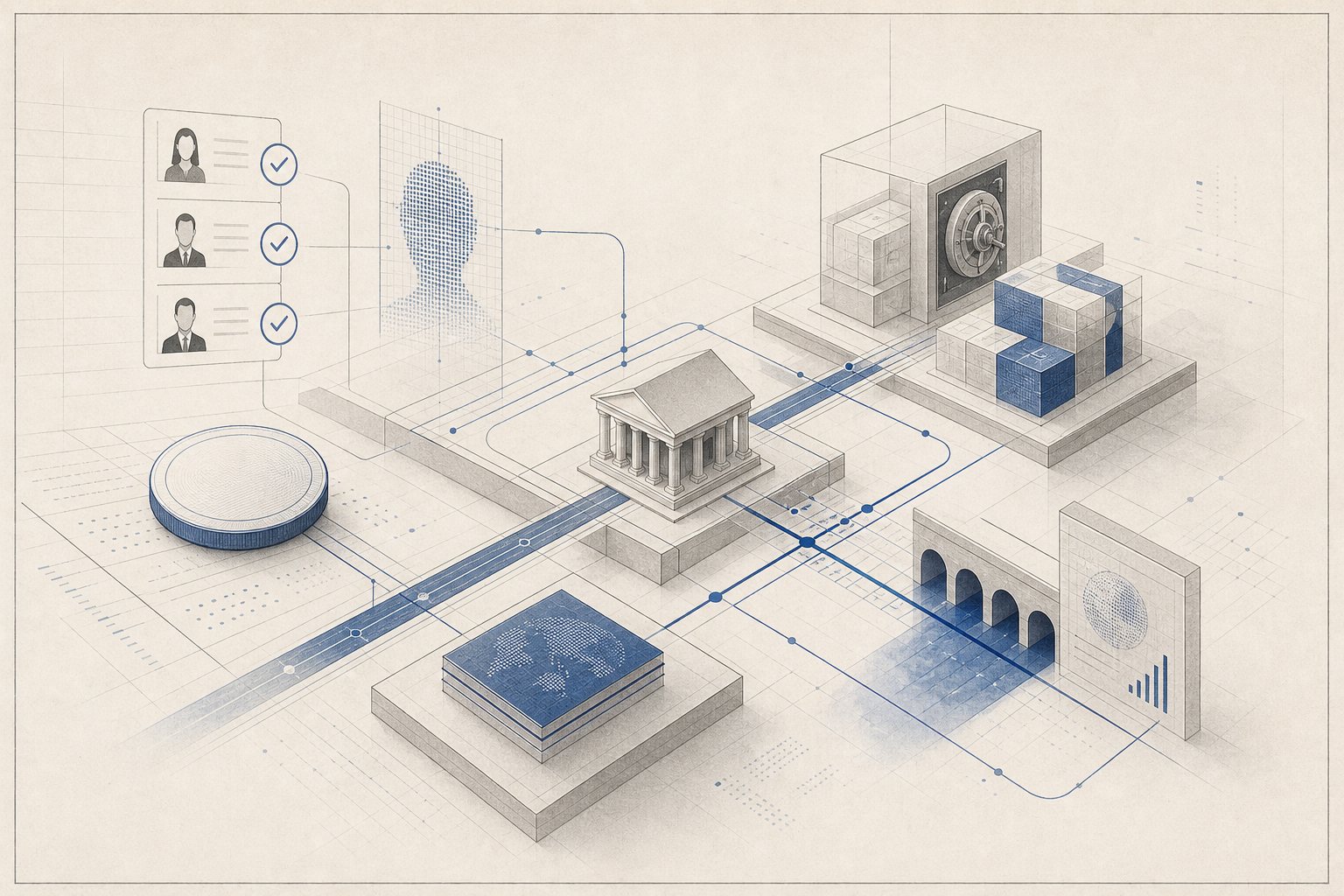
A fresh round of U.S. rulemaking is sharpening a point that has been building across the stablecoin market for months: the hardest part of scaling payment stablecoins may not be minting the token, but fitting the token into bank-grade identity, compliance and reserve workflows. That shift came into clearer view after FinCEN, alongside the OCC, Federal Reserve, FDIC and NCUA, published a proposed customer identification program rule for permitted payment stablecoin issuers on June 22. The proposal does not read like a product launch announcement, but it matters because it pushes stablecoin issuance further into the operational territory long dominated by regulated financial institutions.
The immediate hook is straightforward. Under the June proposal, permitted payment stablecoin issuers would be treated as financial institutions for Bank Secrecy Act purposes and would be required to maintain an effective customer identification program. In practice, that means the compliance perimeter around issuance, redemption and certain direct customer relationships becomes more formalized. For institutional users, that is not a side issue. It affects who can onboard customers, who can verify them, who can hold the regulated relationship and who can reliably connect tokenized dollars to treasury, payments and settlement flows without creating legal or operational ambiguity.
That proposal is not appearing in isolation. In April, FinCEN and OFAC also published a separate proposed rule covering anti-money-laundering, counter-terrorist-financing and sanctions compliance obligations for permitted payment stablecoin issuers. The same month, the FDIC published its own GENIUS Act proposal for FDIC-supervised issuers and insured depository institutions, including clarifications around deposit insurance treatment for reserve-asset deposits and the treatment of tokenized deposits. Taken together, those proposals sketch a market structure in which the visible token is only one layer. The more defensible moat may sit in onboarding, screening, custody, reserve segregation, redemption processing and connections to insured banking balance sheets.
That is why the latest debate matters for RWA infrastructure, not only for crypto payments. Real-world-asset products increasingly depend on cash-like settlement legs that can move across broker, fund, custody and treasury workflows without forcing participants back into slower legacy reconciliation. If the stablecoin side of that stack becomes more explicitly tied to bank-style controls, then the institutions that already operate customer identification, sanctions, transaction monitoring and reserve management systems gain leverage. In other words, the market may reward the firms that make tokenized money financeable and auditable inside regulated workflows, not just the issuers that circulate the most tokens on exchanges.
There is also an important nuance in the customer-relationship question. The federal proposal highlighted in recent industry coverage is aimed at direct relationships with the issuer, rather than every secondary-market wallet holder by default. That distinction matters because it leaves room for different distribution models. Some issuers may continue to prioritize wholesale issuance, partner distribution and secondary-market circulation. Others may move closer to end-user wallet, custody or redemption services and accept a heavier compliance burden in exchange for more control over distribution. Either path still increases the value of regulated intermediaries that can perform identification and monitoring functions at scale.
For banks, that opens a clearer commercial lane even if they do not win the branding war. Stablecoin economics are often discussed in terms of circulation, yield and transaction volume, but those are only part of the value chain. The regulatory build-out suggests that account infrastructure, compliance operations and reserve connectivity could become equally important revenue centers. That is consistent with the direction of travel already visible across tokenized finance, where institutional adoption usually accelerates only when legal rights, collateral treatment, custody structure and redemption mechanics are defined tightly enough for risk, treasury and audit teams to sign off.
The broader implication is that stablecoins are moving from a crypto-native distribution story toward a regulated financial plumbing story. That does not mean banks automatically control the category, and it does not eliminate room for nonbank issuers. It does mean the market is being shaped around who can deliver dependable controls at the point where digital dollars meet customers, reserves and regulated payment flows. For RWA builders, that is a meaningful signal: the next phase of tokenized finance may be won less by the loudest issuer narrative and more by the institutions that can make onchain money behave like infrastructure that credit committees, compliance teams and treasury desks can actually use.