SEC proposal to unwind key Reg NMS rules could materially widen the lane for tokenized U.S. equities
The SEC’s move to rescind Regulation NMS Rules 611 and 610(e) is more than a market-structure debate. If adopted, it would remove two longstanding frictions that have made fully onchain trading of U.S. equities far harder to square with existing execution rules.
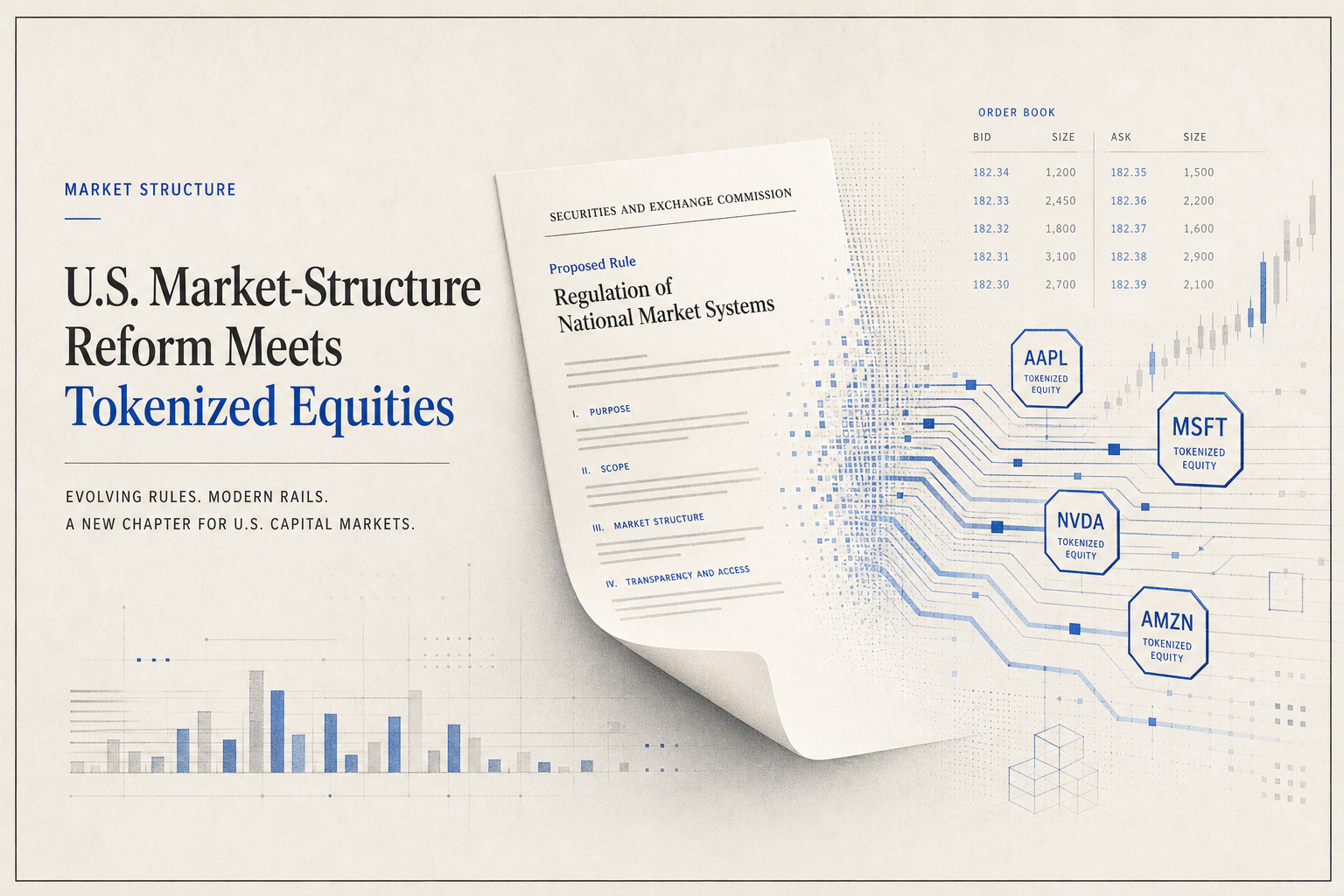
The U.S. Securities and Exchange Commission has opened a consequential new front in the tokenized-equities story, and it is coming from traditional market structure rather than from a crypto-specific rulemaking. On June 11, the agency proposed rescinding Regulation NMS Rule 611, the trade-through rule, and Rule 610(e), which restricts locked and crossed quotations in national market system stocks. On paper, that is a proposal about how U.S. equity venues interact. In practice, it goes straight to one of the core legal and technical tensions that has limited how tokenized versions of public stocks can trade on blockchain rails.
Rule 611 was designed in 2005 to stop one venue from executing an order at a worse price than a protected quote displayed elsewhere. Rule 610(e) was built to limit quotation configurations that could lock or cross the market. In the SEC’s new fact sheet, the agency says the market has changed dramatically since those rules were adopted and now operates in a far more automated and interconnected environment. Chairman Paul Atkins went further in his open-meeting statement, arguing that the rules helped create a fragmented, costly and overly complex equity market structure rather than the cleaner competitive framework regulators originally expected.
That matters for tokenized stocks because many blockchain-native trading venues do not work like broker-routed exchange infrastructure. Automated market makers, continuous liquidity pools and other onchain execution environments generally price against pool state, curves or local order flow. They do not naturally pause to compare every execution against the best protected quote across the national market system, nor do they route intermarket sweep orders in the way the legacy rule set assumes. That mismatch has been one of the reasons tokenized U.S. equity products have often stayed offshore, remained heavily permissioned, or been structured as wrappers that stop short of open onchain secondary trading.
The SEC is not proposing a tokenized-stock framework here, and that distinction matters. Nothing in the release says tokenized equities become automatically compliant, freely distributable or newly approved for U.S. retail trading. Securities laws, transfer restrictions, broker-dealer obligations, custody standards, issuer permissions and offering exemptions would all remain live constraints. But removing two rules that are tightly bound to the architecture of the national market system would eliminate a specific category of execution risk that has made decentralized or blockchain-based equity trading unusually difficult to map onto U.S. market rules. For tokenization builders, that is not the whole answer, but it is a meaningful structural shift.
The timing is notable because the product layer is already moving. RWA Trails’ live catalog shows active tokenized exposure to large-cap U.S. names including NVIDIA and Tesla across both share-backed and derivatives-style venues, while index-linked proxies tied to the S&P 500 are already trading in crypto market infrastructure. That means the regulatory question is no longer hypothetical. The market has already been testing demand for onchain equity exposure; what has been missing is a cleaner path between that demand and the rules governing how equity executions are supposed to work. The SEC proposal does not solve primary issuance, investor eligibility or market surveillance, but it does make the execution-model debate much harder to ignore.
The proposal also signals something broader about the current regulatory posture. Rather than trying to design bespoke crypto carve-outs, the Commission appears willing to revisit legacy rules whose assumptions may conflict with new market plumbing. That is a subtler but potentially more durable route for RWA adoption. If regulators conclude that some legacy protections now impose more cost than benefit even for conventional markets, the same rethink can create room for tokenized products to compete on technology, latency, collateral mobility and programmability instead of being screened out by rules written for another era.
For issuers and platforms, the practical implication is that tokenized equities may be entering a more serious policy phase. The near-term work is still legal and operational: distribution controls, disclosure, transfer mechanics, market oversight and integration with regulated intermediaries. But if the SEC ultimately finalizes this rescission, one of the most persistent objections to truly onchain trading of NMS-linked equities gets weaker. That would not guarantee an immediate wave of U.S. tokenized-stock launches, yet it would move the conversation from whether certain onchain execution models are structurally incompatible with Reg NMS toward how regulated tokenized equity markets should actually be designed.