SBI and Solana Recast Japan Venture Around Tokenized Finance and Stablecoin Rails
SBI Holdings is retooling its former SBI R3 Japan venture around Solana, aiming to turn Japan into an issuance and distribution hub for tokenized assets, stablecoins and cross-border settlement infrastructure.
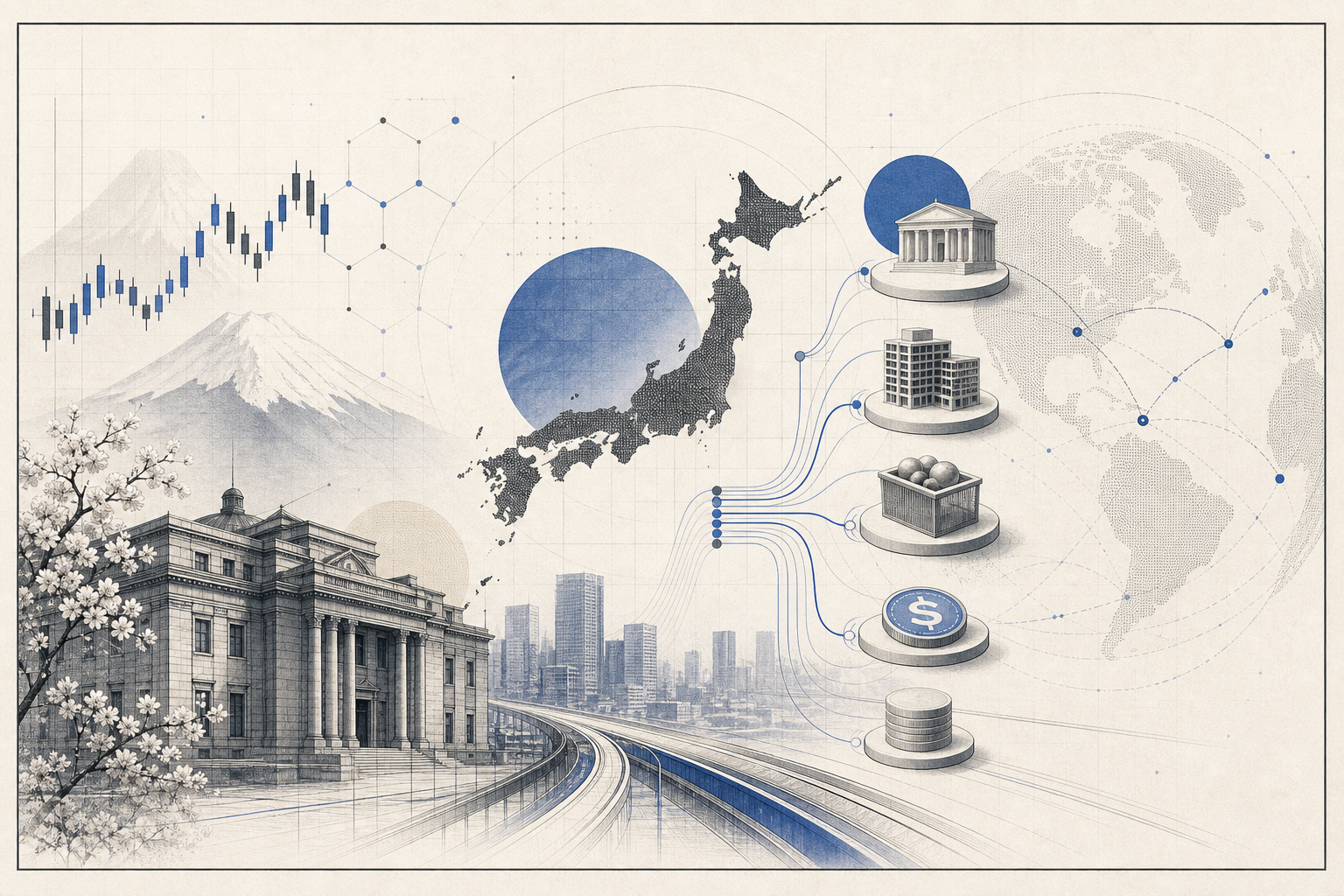
SBI Holdings has moved one of its core digital-market ventures onto a new track, repositioning the former SBI R3 Japan business around Solana and a broader plan to build an onchain financial market from Japan. In a joint announcement released Monday with Solana Foundation and SBI R3 Japan, the group said the company is preparing to operate under the name SBI Solana Global and will use Solana as the core network for a market strategy spanning tokenized real-world assets, stablecoins and settlement infrastructure. The shift matters because it turns a previously enterprise-blockchain-focused initiative into a more explicit public-chain distribution play aimed at both domestic issuance and international liquidity.
The structure around the venture also signals that this is larger than a branding exercise. SBI said the company will continue with backing from existing shareholders SBI Holdings and Sumitomo Mitsui Financial Group, while adding Solana Foundation into the collaboration. The stated goal is to connect Japan’s domestic financial asset base with global blockchain liquidity and position the country as a regional hub for onchain finance in Asia. Rather than treating tokenization as a narrow pilot, the announcement frames the business as market infrastructure: technology, issuance, distribution and settlement packaged together.
The operating agenda is specific. SBI Solana Global said it plans to support the issuance and distribution of stablecoins including JPYSC, structure and distribute tokenized real-world assets such as corporate bonds, commercial paper, funds and real estate, and develop cross-border settlement rails and institutional onchain financial services. The company also singled out payment infrastructure for the “AI-agent era,” suggesting SBI sees tokenized money and tokenized assets converging into a broader transaction layer rather than remaining separate product categories. That combination puts the venture directly in the part of the market where tokenized securities, regulated money and automated treasury workflows start to overlap.
The Solana move also marks a clear evolution from the company’s earlier Corda-centered posture. SBI R3 Japan highlighted in May that R3 and Solana Foundation had entered a strategic collaboration to bridge private and public blockchain environments and push internet capital markets forward. In its summary of that development, SBI R3 Japan said the tie-up was designed to combine enterprise-grade permissioned systems with Solana’s public network scale, and it cited the prospect of more than $10 billion in regulated assets gaining pathways to public-chain distribution and new settlement options, including stablecoins. Monday’s announcement turns that strategic shift into a concrete Japan-market operating plan.
Why Solana, specifically, is not hard to read from the official materials. SBI and Solana described the network as offering high throughput, low transaction costs and a large global ecosystem, attributes that matter if the ambition is not only to mint tokenized claims but also to circulate them, settle them and eventually use them in collateral and payment workflows. For an issuer-led market buildout, public-chain reach is a feature, not an accessory. The central promise is that Japan-originated digital assets should not be trapped in isolated domestic systems if they are meant to attract regional and global demand.
The commercial opportunity is also broader than a single yen stablecoin or one asset class. By naming bonds, commercial paper, funds and real estate in the same roadmap, SBI is effectively describing a platform thesis: multiple forms of balance-sheet and capital-markets exposure can be issued into a common blockchain environment, then paired with tokenized cash for faster distribution and settlement. If that model gains traction, it would give Japanese financial institutions a path to test how traditional issuance, treasury operations and cross-border movement of value can be redesigned around shared digital rails instead of stitched together through separate legacy systems.
For the wider RWA market, the announcement stands out because it comes from an incumbent financial group with a clear domestic market base, an identified bank-affiliated shareholder set and a defined list of product targets. Many tokenization announcements still revolve around proofs of concept or individual instruments. SBI’s latest move is closer to a market-construction strategy: create the venue, align the issuance stack, and make settlement native to the same network architecture. Execution risk remains substantial, especially around distribution, regulatory coordination and institutional workflow integration, but the direction is unmistakable. Japan is being pitched not just as a jurisdiction that permits digital assets, but as an export base for regulated onchain finance.