Ripple’s full MiCA authorization gives its Europe strategy a regulated distribution lane
Ripple’s new Luxembourg CASP approval matters less as a headline licensing win than as evidence that Europe’s post-transition MiCA market is starting to reward firms that can combine payments infrastructure, stablecoins and compliance under one operating perimeter. For RWA and onchain finance, that makes Europe a more credible venue for scaled institutional deployment.
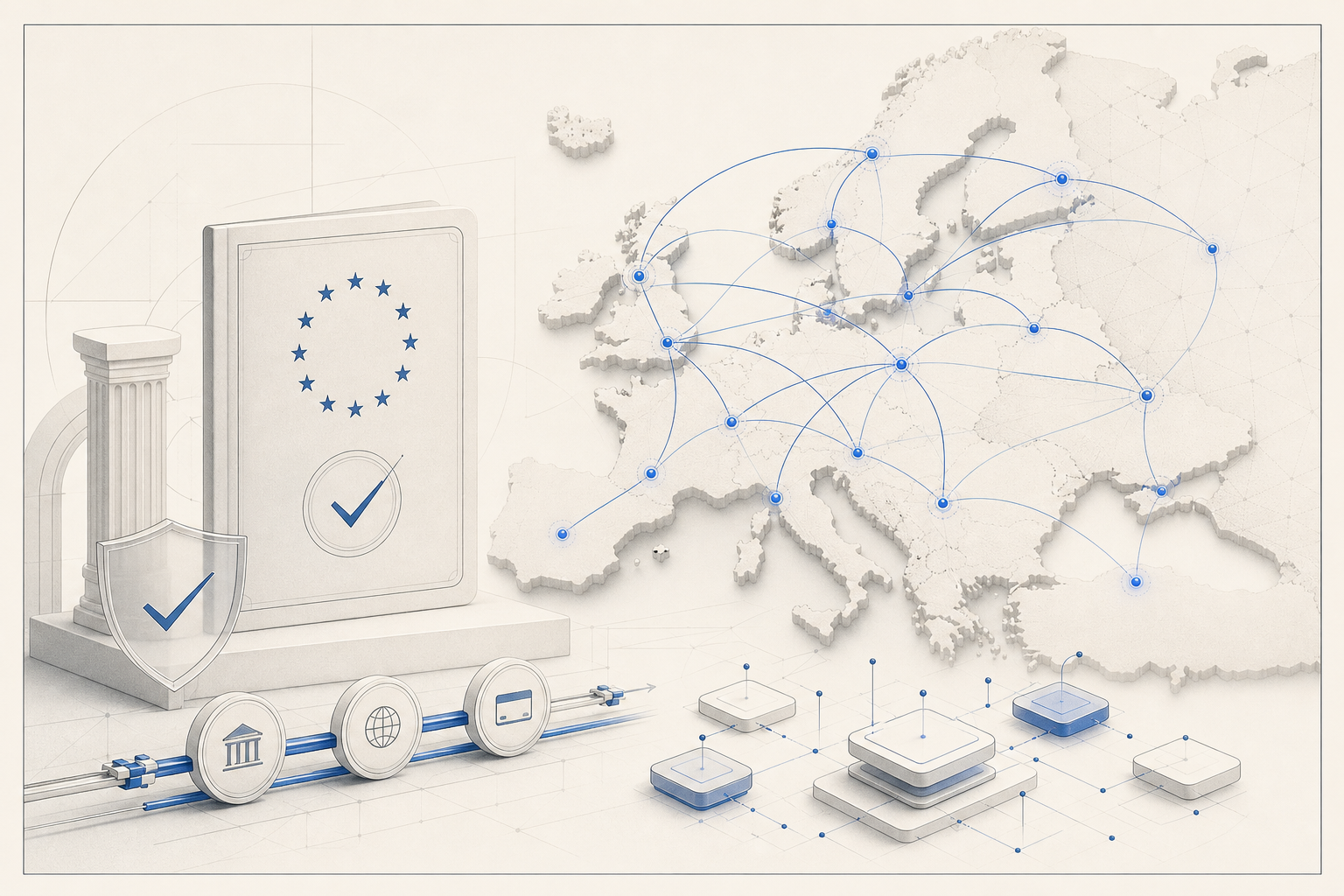
Ripple’s receipt of full Crypto-Asset Service Provider authorization in Luxembourg is one of the clearer signals yet that Europe’s MiCA regime is moving from rulebook to distribution channel. The approval gives Ripple a fully authorized base for cryptoasset services across the European Economic Area and turns what had been a provisional regulatory pathway into an operational one. For RWA markets, the importance is not just that another large digital-asset company has a license. It is that a firm trying to connect payments, liquidity, custody and stablecoin infrastructure now has a cleaner route into one of the world’s most important regulated financial blocs.
The immediate event is straightforward. Ripple said Luxembourg’s Commission de Surveillance du Secteur Financier granted full authorization for its CASP license on July 6, following preliminary approval announced in late June. Ripple says the approval completes its MiCA requirements and makes its regulated crypto payments product available across all 30 countries of the EEA. In practical terms, that means the company can present itself to European financial institutions as already through the gate rather than still waiting in the line of transitional reviews and national workarounds.
That distinction matters because Ripple had already assembled another key part of the stack earlier this year. In February, the company said the same Luxembourg regulator granted it full Electronic Money Institution approval in the European Union. Ripple’s June statement on the preliminary CASP approval argued that the combination of CASP and EMI permissions would let banks, fintechs and corporates access cryptoasset and stablecoin payment infrastructure through a single integration covering collection, exchange and payout. Put differently, the company is not pursuing MiCA as a symbolic compliance badge. It is using Luxembourg licensing to package a broader payments and treasury proposition for institutions that want digital-asset capabilities without stitching together multiple unregulated vendors.
That packaging is especially relevant for the RWA segment. Tokenized funds, onchain collateral flows and cross-border settlement arrangements all depend on regulated cash movement as much as they depend on token issuance. A provider that can offer licensed payment rails, stablecoin support and cross-border operating coverage becomes more valuable when institutions want to move from pilot programs to production workflows. Ripple’s own materials frame its platform around payments, custody, liquidity and treasury management, with RLUSD and XRP as part of the value stack. Whether every institution adopts that full model is a separate question, but the regulatory perimeter is now much easier to explain to compliance teams.
Europe’s framework is part of the story too. ESMA’s MiCA program explicitly emphasizes convergent authorization of CASPs during the transitional phase, and its public register tracks compliant providers and non-compliant entities as the regime beds in. That matters because MiCA is trying to solve a long-running fragmentation problem in European digital-asset markets: too many firms operating with uneven national treatment, incomplete passporting certainty and inconsistent supervisory expectations. As the market moves into a post-transition environment, the firms that secure full authorization early should have a distribution advantage, particularly with institutional buyers that cannot afford regulatory ambiguity in the middle of settlement or treasury workflows.
This does not automatically make Ripple the default winner in Europe. Large exchanges, custodians, banks and payments firms are pursuing the same opportunity, and many will prefer different technology stacks or different stablecoin relationships. But full authorization changes the commercial conversation. Instead of selling future readiness, Ripple can now sell current readiness. That is a meaningful upgrade when counterparties are evaluating whether to launch tokenized cash products, blockchain-based treasury operations or regulated cross-border payment services within the EEA.
It also says something broader about where infrastructure competition is heading. The next contest in digital assets will not be won solely by the firm with the most liquid token or the loudest consumer brand. It will be won by the firms that can combine licensing, distribution, product breadth and operational reliability in the jurisdictions that matter most to institutional finance. Europe is one of those jurisdictions, and MiCA is forcing providers to prove they can operate inside a formal supervisory framework rather than around it.
The practical takeaway for RWA observers is that licensing has become part of product architecture. Ripple’s Luxembourg approvals do not just expand its legal permissions; they increase the plausibility of using regulated digital-asset infrastructure for actual treasury, settlement and tokenized-finance workflows across Europe. If MiCA continues to mature in this direction, the winners will be the platforms that can translate authorization into working financial rails. Ripple has now put itself in position to try.