Ramp pushes stablecoins deeper into business treasury and vendor payments
Ramp has launched stablecoin accounts and vendor-payment workflows that let businesses hold digital dollars, move funds around the clock and settle cross-border payouts without leaving Ramp’s finance stack. The rollout matters because it packages stablecoins as an operating tool for treasury and payables teams rather than a separate crypto workflow.
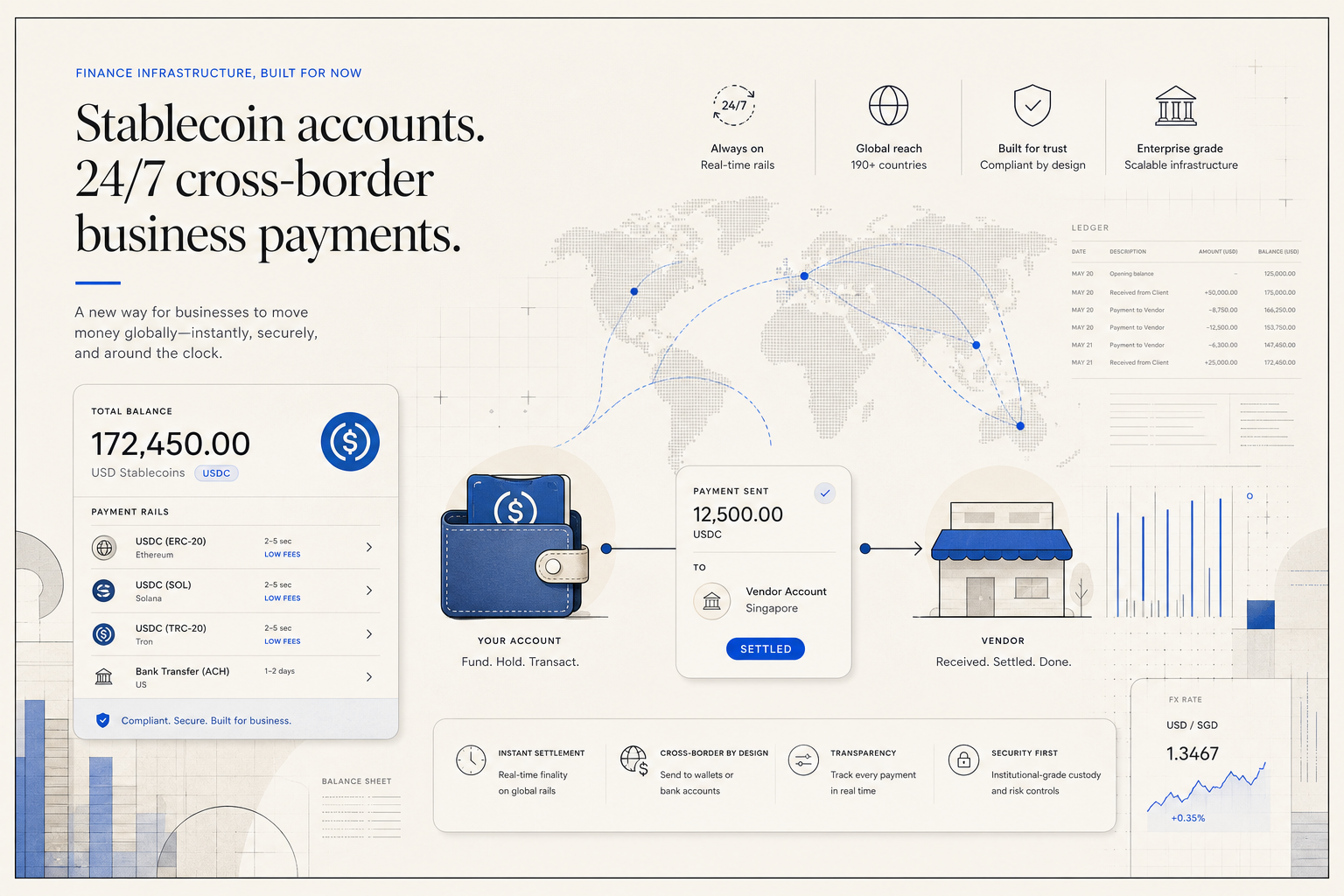
Ramp is making a more direct bet on stablecoins as business infrastructure, not just as a crypto-native payments rail sitting outside traditional finance workflows. The company said customers can now open a stablecoin account inside Ramp, hold dollar-linked balances there, and use the same environment to send vendor payments across borders on a 24/7 schedule. That is a meaningful product shift for the broader RWA and stablecoin market because it brings tokenized dollars into a finance software stack that corporate operators already use for approvals, payables, treasury visibility and reconciliation, rather than asking teams to bolt on a separate exchange or wallet process.
Ramp’s own product announcement frames the launch around a familiar pain point in international business payments: wire cutoffs, opaque intermediary fees and delays that can stretch a simple vendor payment across days. The new setup is designed to compress that gap. Businesses can open what Ramp calls a Stablecoin Account to store digital dollar balances directly inside the platform, or they can skip the holding step and still pay vendors in stablecoins from a linked U.S. dollar bank account. In practice, that means a finance team can originate a payment from a standard treasury workflow while the recipient receives USDC or USDT in a wallet, without the sender managing a separate onchain operating stack.
The mechanics matter. Ramp says stablecoin balances in the new accounts are intended to remain dollar-linked and are backed by cash reserves, while conversions between USD and USDC or USDT are offered without conversion fees inside the product flow. The company also says the accounts already sit alongside existing cash balances in the same dashboard and under the same approval and accounting controls as its other products. Ramp disclosed that custody for the stablecoin product is provided by Bridge Building Inc. and affiliates, and it explicitly states that these balances are not bank deposits, are not FDIC or SIPC insured, and should not be treated as an investment product. That positioning is important because it shows how fintech platforms are trying to separate stablecoin utility for payments and treasury movement from any promise of principal protection associated with insured bank money.
Ramp also published a set of early operating signals that help explain why it is expanding here now. The company said hundreds of businesses have already opened a Stablecoin Account, while more than 1,000 businesses are already using stablecoins to pay vendors through Ramp. More than 70% of that stablecoin payment volume, according to Ramp, happens outside traditional banking hours. That detail is especially relevant for market structure watchers because it illustrates the practical advantage tokenized dollars still have over bank-centric payment rails: the value proposition is not just lower friction, but the ability to settle when commercial banking systems are effectively closed. In cross-border B2B payments, that timing edge can be as important as fees.
The geographic coverage outlined by Ramp reinforces that point. The company says customers can send USDC or USDT to vendor or contractor wallets in more than 140 countries, or convert into fiat for payouts in more than 40 currencies through local rails. It also says eligible customers can open the stablecoin account directly from the Ramp interface, although the feature is not available to customers in New York. That blend of wallet settlement and fiat off-ramps is what makes the launch notable from an RWA perspective. It is not simply a stablecoin wallet embedded in software. It is a workflow that tries to connect tokenized dollars, compliance controls, vendor operations and local payout infrastructure in one finance product.
The launch also shows how stablecoin distribution is evolving. Bridge’s own materials describe the company as infrastructure for global money movement with stablecoins, and Ramp’s legal disclosures make clear that Bridge is a key part of the custody layer underneath the product. That suggests the market is moving toward a layered model in which issuers provide the dollar token, infrastructure providers handle wallet, custody and movement rails, and enterprise finance platforms package the result into a business-facing experience. For RWA builders, that stack matters because it is the same pattern increasingly seen across tokenized cash, deposits and treasury-adjacent products: the winning interface may not be the token itself, but the software that turns tokenized instruments into a default operational primitive.
There is still a meaningful caveat. Stablecoin accounts do not erase the regulatory and operational distinctions between tokenized dollars and bank deposits, and Ramp is careful to say so. Businesses still need to understand custody arrangements, legal terms, geographic restrictions and the risk profile of digital assets held outside insured deposit frameworks. But the launch is a strong signal that stablecoins are moving deeper into ordinary corporate finance, especially where speed, always-on settlement and cross-border coordination matter more than legacy banking conventions. For the RWA market, that is the bigger takeaway: tokenized dollars are increasingly being sold not as a speculative crypto instrument, but as working capital infrastructure for real businesses.