PayPal is moving PYUSD deeper into Polygon’s payment rails to turn a branded stablecoin into working infrastructure
PayPal USD is now being issued natively on Polygon and plugged into Polygon’s Open Money Stack, giving businesses a cleaner route to move dollar liquidity across wallets, payout rails and local currency exits. The expansion matters less as a chain-listing headline than as a distribution move aimed at making PYUSD usable inside real payment flows.
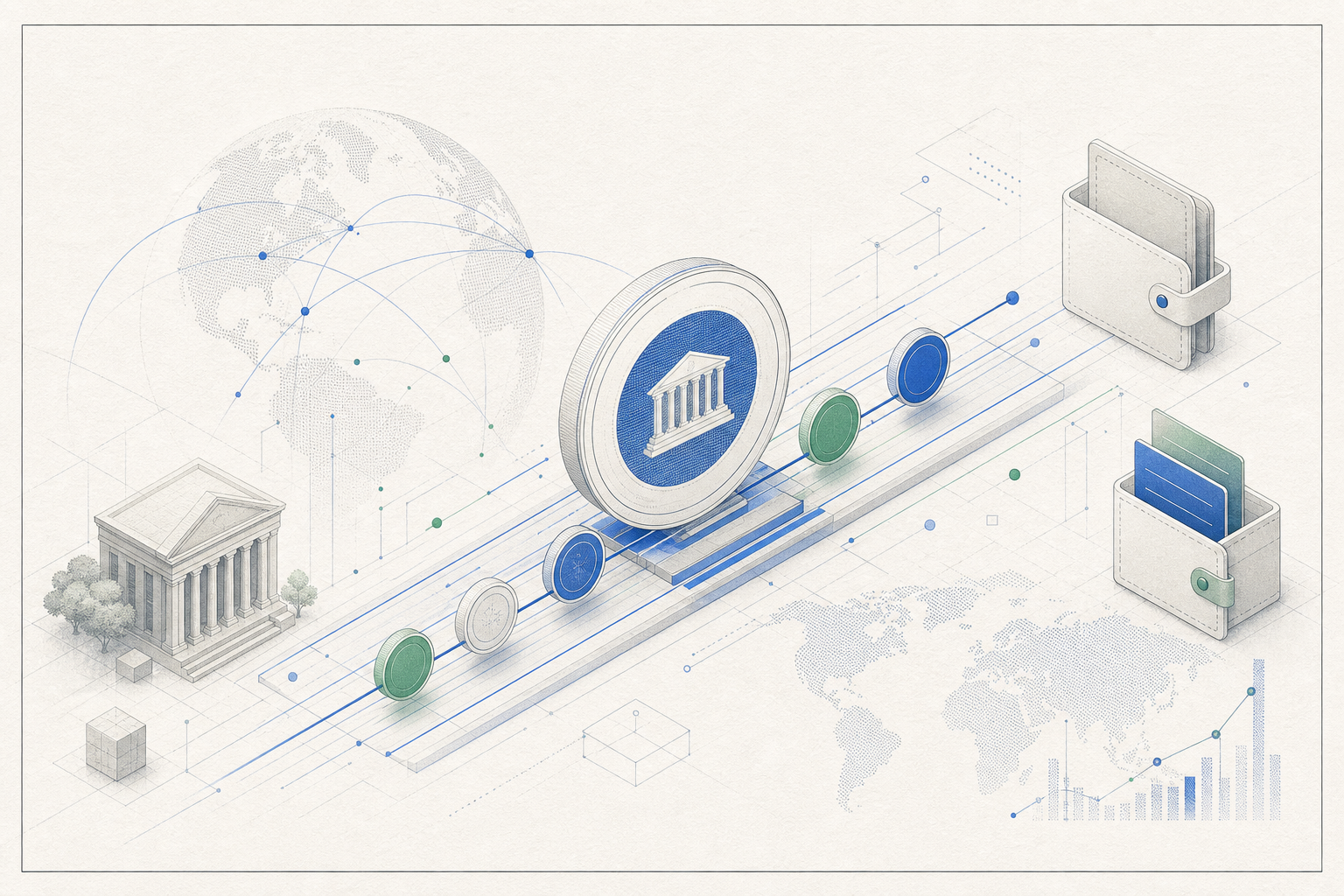
PayPal has taken a more operational step in its stablecoin strategy by moving PYUSD into Polygon’s payments stack, not just onto another blockchain. The new setup puts PayPal USD into a network already geared toward business settlement, cross-border transfers and programmable payouts, which makes the announcement more consequential than a standard multichain expansion. For RWA and stablecoin infrastructure, the real question is not whether a dollar token exists, but whether that token can move through regulated, low-friction commercial rails. This launch is a direct attempt to answer that distribution problem.
According to Polygon’s July 9 announcement, PYUSD is now issued natively on Polygon through Paxos and available through the Polygon Open Money Stack, the company’s bundle of wallets, ramps, compliance tooling and routing infrastructure. Polygon said businesses already processing payments on its network can access PYUSD through the same integration points they already use, rather than stitching together separate providers for token issuance, wallet support, compliance checks and cash-out rails. The original source report framed the move in similar terms: the goal is to make it easier for businesses to use PYUSD for global payment settlement instead of leaving it mainly as a branded balance-sheet product inside PayPal’s own orbit.
That fits with how PayPal is positioning the asset on its own channels. On PayPal’s PYUSD product page, the company describes the token as a dollar-backed stablecoin that users can buy, hold, send and convert globally, and it emphasizes that PYUSD can move on and off PayPal to Venmo, exchanges, external wallets and multiple blockchains. PayPal also says users will increasingly be able to buy, send and get paid across dozens of markets through its network. Native issuance on Polygon extends that open-system positioning into a chain environment built around lower-cost transfers and enterprise payment tooling, which is a different proposition from merely supporting another wallet withdrawal route.
The trust layer matters as much as the transport layer. PayPal states that PYUSD is issued by Paxos Trust Company, and Paxos’ own PYUSD materials stress that the stablecoin operates under strict oversight from the Office of the Comptroller of the Currency. Paxos also says reserves are held in U.S. dollar deposits, short-duration Treasuries and cash equivalents, with monthly reserve reporting and attestations. For enterprise users, that regulatory framing is part of the product. A stablecoin meant for payroll, remittances or marketplace settlement has to clear a higher bar than a trading token, and the selling point here is that businesses are getting a federally supervised issuer paired with a payments-oriented execution layer.
Polygon is also presenting scale, not just compatibility. In its announcement, the network said it now settles more than $2.5 billion in stablecoin volume per day and more than $2.6 trillion cumulatively. It pitched the Open Money Stack as a way for businesses to accept funds from cards, bank accounts or exchange balances, move stablecoins across borders and exit back into local currency through one commercial integration. Whether every enterprise buyer adopts that full stack immediately is a separate question, but the packaging is important: the combination of wallets, ramps, compliance and settlement tooling lowers the coordination cost that often keeps treasury teams and product teams from deploying stablecoins in live payment operations.
This also shows where PYUSD is actually competing. The token still sits well behind USDT and USDC in overall scale, and it is unlikely to catch up by competing purely on exchange liquidity or offshore trading share. Instead, PayPal appears to be leaning into distribution advantages it already understands: merchant relationships, wallet familiarity, consumer reach and now tighter integration with a chain marketed around payments. PayPal’s in-app rewards on PYUSD can encourage balances to stay within its ecosystem, while Polygon’s infrastructure gives those balances more practical utility once businesses want to move them through payout or settlement workflows.
For the broader RWA stack, the significance is that branded consumer finance and institutional payment plumbing are beginning to converge around the same dollar instruments. A stablecoin that starts as a wallet feature becomes more relevant when it can plug into payroll, remittance, treasury and marketplace flows without custom assembly at every step. If PayPal and Polygon can make PYUSD easier to receive, hold, route and redeem in one operational chain, the token becomes less of a marketing extension and more of a piece of working financial infrastructure. That is the threshold RWA builders care about: not symbolic tokenization, but stable instruments that can survive contact with real treasury, compliance and settlement requirements.
The next test is execution. Businesses will need to decide whether PYUSD offers enough counterpart trust, liquidity coverage and geographic reach to justify adding another stablecoin rail alongside existing USDC and USDT workflows. But the strategic logic is already clear. PayPal is trying to make PYUSD available where actual money movement happens, and Polygon is trying to prove that its payments stack can host federally regulated dollar liquidity at scale. If both sides execute, the result is not just one more chain deployment; it is a stronger case that stablecoins are becoming packaged operating rails for mainstream finance rather than standalone crypto products.