OKX Elevates Tokenized Equities in Its U.S. Push With Cuomo Board Appointment
OKX has added Andrew Cuomo to its board as the exchange steps up a broader U.S. market-infrastructure push tied to tokenized products. The move matters less as a political headline than as another sign that exchanges now see onchain equities as a strategic distribution business, not a side experiment.
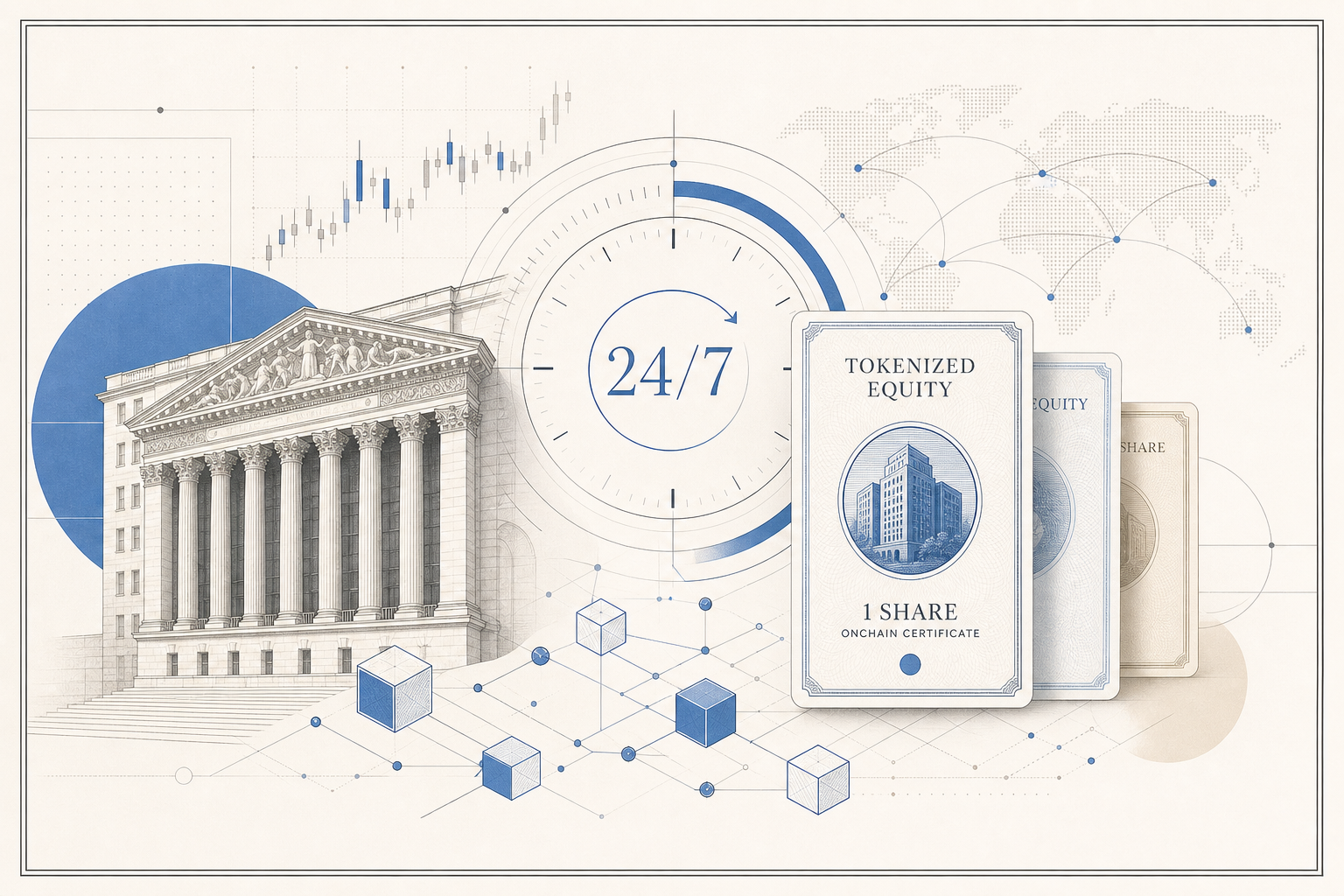
OKX is making tokenized equities a more visible part of its U.S. strategy, and the decision to add former New York governor Andrew Cuomo to its board is best read through that lens. The board appointment arrives as the exchange tries to position itself less as a conventional crypto venue and more as a financial infrastructure company that can sit between traditional market plumbing and onchain distribution. That shift is important for RWA watchers because it suggests tokenized stocks are moving higher in the strategic stack for large platforms rather than remaining an experimental product line.
The immediate facts are straightforward. OKX said Cuomo has joined its board after advising the company on U.S. regulatory and institutional strategy since 2023. Separately, Cuomo used a television appearance to argue that tokenization could extend equity market access through fractional ownership and near-instant digital settlement. Whether or not one agrees with the messenger, the message itself is now familiar across the market: tokenized equities are being framed as a way to widen access, reduce operating frictions and make stock trading available on a more continuous basis than the legacy exchange calendar allows.
What gives the appointment more substance is the operating context around it. OKX said in its own announcement that it is in the middle of a wider expansion plan aimed at becoming a broader financial infrastructure provider. The company pointed to a June joint venture with Intercontinental Exchange, the parent of the New York Stock Exchange, with Cuomo serving as co-chair. According to OKX, that venture combines ICE's exchange and market-data capabilities with OKX's onchain and self-custody rails to give institutional investors access to tokenized products. OKX also said an earlier strategic investment from ICE in March valued the company at $25 billion, underscoring how seriously it wants to be taken by traditional market participants.
That matters because the commercial case for tokenized equities is no longer theoretical. Distribution networks are getting wider, the product set is getting deeper and the infrastructure is becoming more recognizable to institutions. The xStocks network, for example, says it now offers more than 170 tokenized U.S. stocks and ETFs with 24/7 trading and 1:1 asset backing. In the RWA Trails catalog, instruments such as HOODx, COINx and SPYx are already live examples of that model. The significance is not just that tokenized wrappers exist, but that exchanges, issuers, brokers and liquidity venues are beginning to build repeatable market structure around them.
There is also a regulatory and market-access angle to the OKX move. Bringing a former governor and attorney general onto the board does not remove the legal questions that still surround tokenized equities, especially around jurisdiction, distribution, custody and investor protections. But it does show that larger platforms think board-level regulatory fluency is now part of the product strategy. For firms trying to connect crypto-native rails with public-market exposure, success will depend as much on licensing, disclosure, collateral controls and supervisory credibility as it does on user experience or smart routing.
The competitive backdrop reinforces that point. Tokenized equities are increasingly attracting platforms that want to blur the line between brokerage, exchange, wallet and settlement venue. Some are approaching the market from crypto, others from fintech or traditional brokerage, but the strategic prize is similar: own the customer interface while also controlling enough of the issuance, custody and trading stack to keep costs low and markets open for longer. If that model works, tokenized stocks could become one of the clearest bridges between retail-facing crypto distribution and institutional-grade RWA infrastructure.
For now, the Cuomo appointment does not by itself change market structure. What it does do is signal that OKX wants board governance, exchange partnerships and onchain product strategy to move in sync as it pursues a bigger role in tokenized finance. That is a meaningful development for the RWA market because it points to where competition is heading: not just toward more tokenized assets, but toward tighter integration between traditional exchange infrastructure, regulated oversight and always-on digital distribution. In other words, the next phase of tokenized equities may be decided less by ideology than by who can make the rails durable enough for mainstream capital.