MoneyGram is making its blockchain stack look more like payments infrastructure than crypto product
MoneyGram’s latest stablecoin push is less about consumer crypto branding than about hiding blockchain inside remittance flows, wallet balances and cash-out networks that already fit how cross-border users move money.
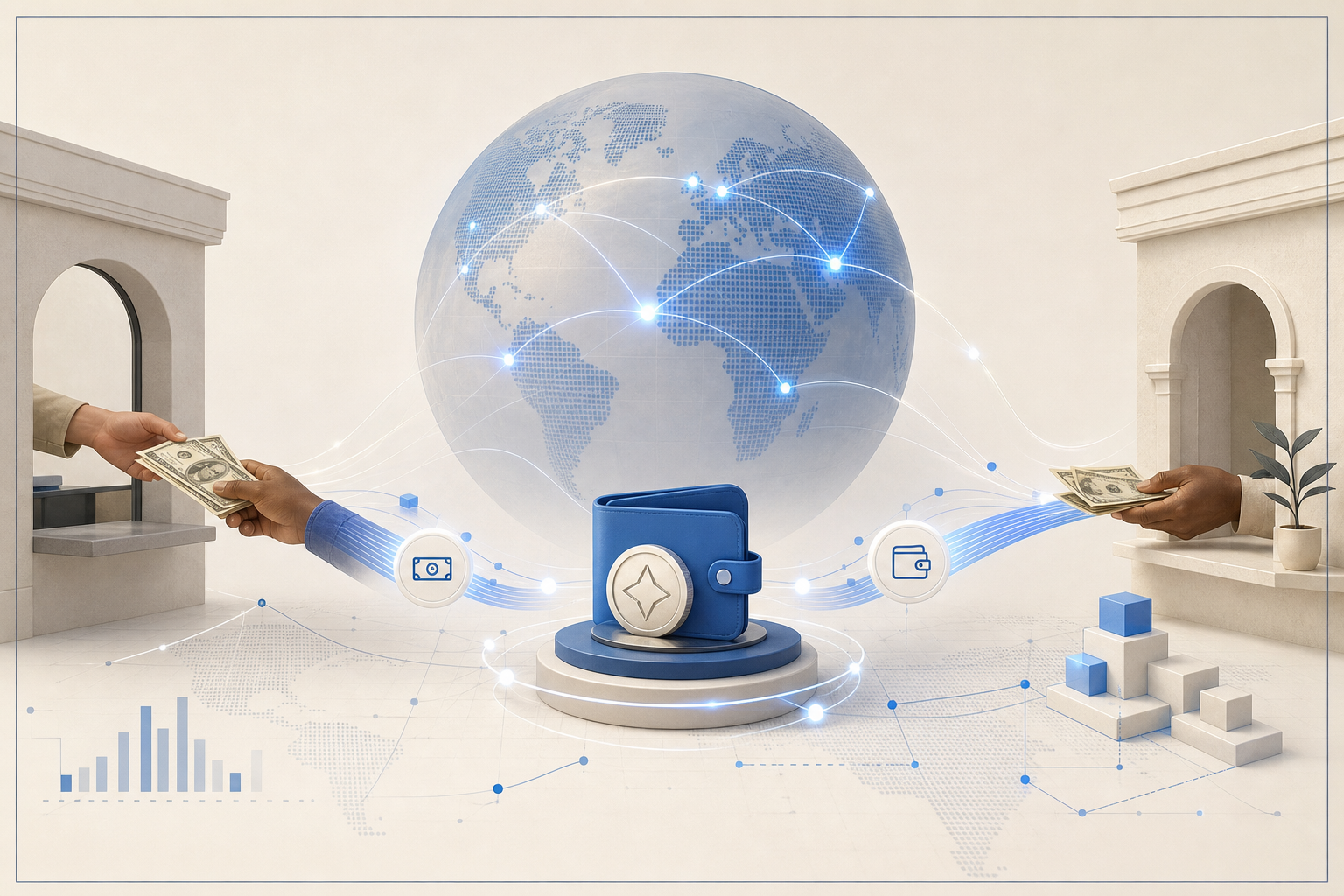
MoneyGram’s latest blockchain messaging is notable because it is getting less promotional and more operational. In an interview with CoinDesk, chief executive Anthony Soohoo said the company has learned that blockchain works best when customers do not have to think about it. That sounds simple, but it marks an important shift in how a large payments network is framing onchain finance. Rather than selling crypto as a destination, MoneyGram is treating blockchain as background infrastructure for cross-border transfers, wallet balances and cash access. For RWA and stablecoin markets, that is often where adoption becomes more durable: not when users are asked to embrace a new asset class, but when settlement gets faster and the interface still feels like a familiar money service.
CoinDesk reported that MoneyGram now sees blockchain as a way to make remittances faster, cheaper and more transparent across a customer base of roughly 60 million active users. That is consistent with the company’s public product rollout over the last several years. The underlying use case is not speculative trading. It is the same one that has always mattered in remittances: moving value across borders with less delay, fewer intermediaries and more predictable access for recipients. In that sense, MoneyGram is less interesting as a crypto brand than as a distribution network that can put stablecoin rails in front of mainstream payment flows without forcing customers to behave like crypto traders.
The clearest primary evidence sits in MoneyGram’s long-running work with Stellar. In a recent partnership extension announcement, the Stellar Development Foundation said the two organizations have spent more than five years building real-world stablecoin utility and have already delivered what they describe as the world’s largest cash on- and off-ramp for digital assets, a developer-facing Ramps API, and a stablecoin balance embedded inside the MoneyGram app. That matters because it shows the company is no longer experimenting at the edge. It has assembled a stack that can support consumer-facing balances, developer integrations and physical cash access in the same operating model.
The current regional rollout reinforces that point. Stellar said the MoneyGram app’s stablecoin balance, powered by Stellar, Crossmint and Circle’s USDC, first went live in Colombia and has now expanded to El Salvador, with broader Latin American expansion planned. The product design is straightforward but powerful for remittance users: funds can arrive into a dollar-denominated balance, be held in stable form, and then be cashed out at trusted MoneyGram locations. That blend of digital storage and local cash redemption is one of the most practical bridges between tokenized dollars and everyday financial behavior. It does not require users to abandon cash, and it does not require senders or recipients to understand how blockchain settlement actually works in the background.
MoneyGram’s own support materials make the consumer workflow even clearer. On its help center, the company describes USDC in MoneyGram Wallet as a stablecoin issued by Circle and says wallet users can withdraw USDC by selecting a MoneyGram location, entering the amount, confirming the transaction and completing pickup within 24 hours with valid identification. Those details may look mundane, but they are exactly what serious payments infrastructure needs. RWA and stablecoin products become useful at scale when they come with defined cash-in and cash-out mechanics, compliance checks and a user journey that mirrors established payment habits rather than replacing them with crypto-native complexity.
There is also a network-level angle worth watching. Stellar separately announced that MoneyGram will operate as a Tier 1 validator on the network, joining a class of institutions that help secure ledger operations for regulated finance use cases. That move suggests the company is not only consuming blockchain infrastructure through partners; it is starting to participate more directly in the underlying network stack. Taken together with Soohoo’s comments, the strategy looks less like a one-off wallet experiment and more like a broader attempt to control more of the infrastructure that sits behind money movement, digital balances and compliance-heavy payout flows.
The implication for RWA Trails is that stablecoin adoption may continue to spread through payment networks before it spreads through consumer investment apps. MoneyGram is showing a playbook in which tokenized dollars are useful because they improve remittance plumbing, not because they are marketed as a novel financial product. The challenge, of course, is maintaining regulatory discipline, liquidity quality and user trust as these services scale across jurisdictions. But if MoneyGram can keep pairing global cash distribution with invisible blockchain settlement, it will offer one of the clearest examples of how tokenized dollars can move from crypto infrastructure into everyday cross-border finance.