MetaMask folds stablecoin yield and card spending into a self-custodial money account
MetaMask has launched Money Account, a Monad-based product that combines a stablecoin balance, DeFi-generated yield and card-linked spending inside the wallet. The release matters because it packages treasury-backed stablecoin infrastructure and onchain lending rails into a single consumer-facing balance.
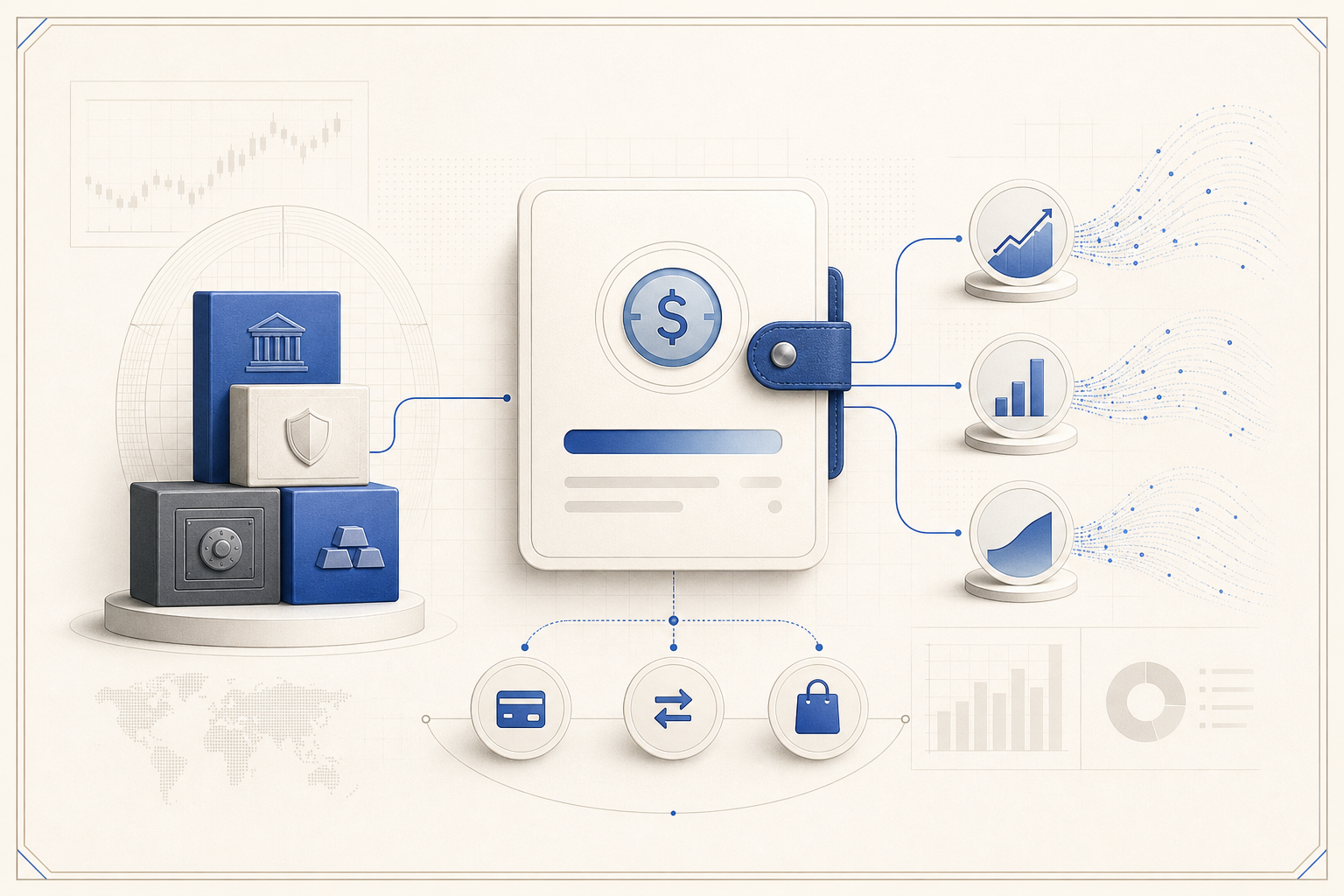
MetaMask is moving further into onchain financial products with the launch of Money Account, a self-custodial balance designed to let users hold a dollar stablecoin, earn yield and spend from the same pool of funds. The product runs on Monad and uses MetaMask USD, or mUSD, as its base asset. Instead of asking users to move money between separate savings, payments and trading apps, MetaMask is positioning Money Account as a unified balance that can support all three functions while remaining under the user's own wallet control.
For RWA observers, the important detail is what sits underneath that experience. MetaMask says mUSD is backed one-for-one by US dollars and short-term US Treasury bills held in regulated custody by Bridge, the Stripe-owned infrastructure company, with issuance powered by M0. That means the product is not just another wallet feature layered on top of a volatile token. It is built on a reserve-backed dollar instrument that depends on the same offchain custody, treasury management and redemption discipline that define the broader tokenized-dollar market. In other words, the consumer interface is new, but the balance itself still rests on real-world collateral and operating controls.
The yield layer is deliberately separated from the reserve layer. MetaMask says account balances can earn up to 4% variable APY through third-party smart-contract vaults operated by Veda and curated for risk by Steakhouse Financial. At launch, capital is allocated to Morpho, with Aave markets expected to follow. That structure matters in the current U.S. policy environment because it distinguishes DeFi-generated returns from issuer-paid interest on a payment stablecoin. The mUSD backing remains static and redemption-oriented, while the additional yield comes from how deposited balances are routed into lending protocols after the user opts in.
MetaMask is also connecting the account directly to spending. Where the MetaMask Card is supported, purchases can settle from the Money Account balance without a manual off-ramp step, and the company says eligible card purchases can earn up to 3% back in mUSD. That makes the product more than a passive yield wrapper. It is trying to turn a stablecoin balance into a working transaction account that can move between earning, trading and point-of-sale usage without forcing users back through exchanges or bank rails each time they switch contexts.
Funding mechanics reinforce that strategy. MetaMask says users can move supported stablecoins including USDC, USDT and DAI into the account at one-to-one parity with no conversion fee, while card and bank-based purchases can also flow directly into mUSD. On the product side, that reduces the friction of starting from zero. On the market-structure side, it positions Money Account as an aggregation layer above existing dollar tokens, using a treasury-backed house stablecoin as the common balance while still drawing liquidity from other established assets already circulating across crypto markets.
There are tradeoffs. MetaMask makes clear that Money Account is not a bank account or insured deposit product, and the yield is variable rather than guaranteed. The company also says the product is unavailable in the UK and other restricted jurisdictions. Users are therefore getting a more integrated stablecoin experience, but they are still taking on smart-contract, liquidity and protocol risks from the DeFi layer, along with the ordinary operational risks that come with any reserve-backed token. Self-custody removes some counterparty dependencies, but it does not remove risk from the stack.
Still, the launch is strategically important because it compresses several parts of the tokenized-dollar value chain into one surface. Treasury-backed reserves sit underneath mUSD. DeFi lending markets create the yield overlay. Card rails handle merchant acceptance. Monad provides the network environment and MetaMask supplies the distribution. That is a more complete product architecture than many earlier stablecoin launches, which often solved only one piece of the workflow at a time. If it gains traction, the model could push more wallets and fintech platforms to treat tokenized dollars not simply as transfer instruments, but as programmable cash accounts with embedded earning and spending features.
The broader significance for RWA is that tokenized-dollar products are increasingly being judged by end-user utility rather than reserve composition alone. Good collateral remains table stakes. The next layer of competition is packaging: how well a platform turns treasury-backed balances into something people will actually keep, use and transact with every day. Money Account is MetaMask's clearest attempt yet to answer that question, and its success will depend on whether users see enough value in combining self-custody, yield and payments inside one stablecoin-native balance.