MassPay adds Coinbase infrastructure to widen USDC-based global payouts
MassPay is integrating Coinbase’s digital-asset stack into its payout workflow, letting business customers fund disbursements in dollars or USDC and deliver value across global corridors with fewer wire-era delays. The launch stands out because it packages stablecoin settlement as an operational treasury tool rather than a standalone crypto product.
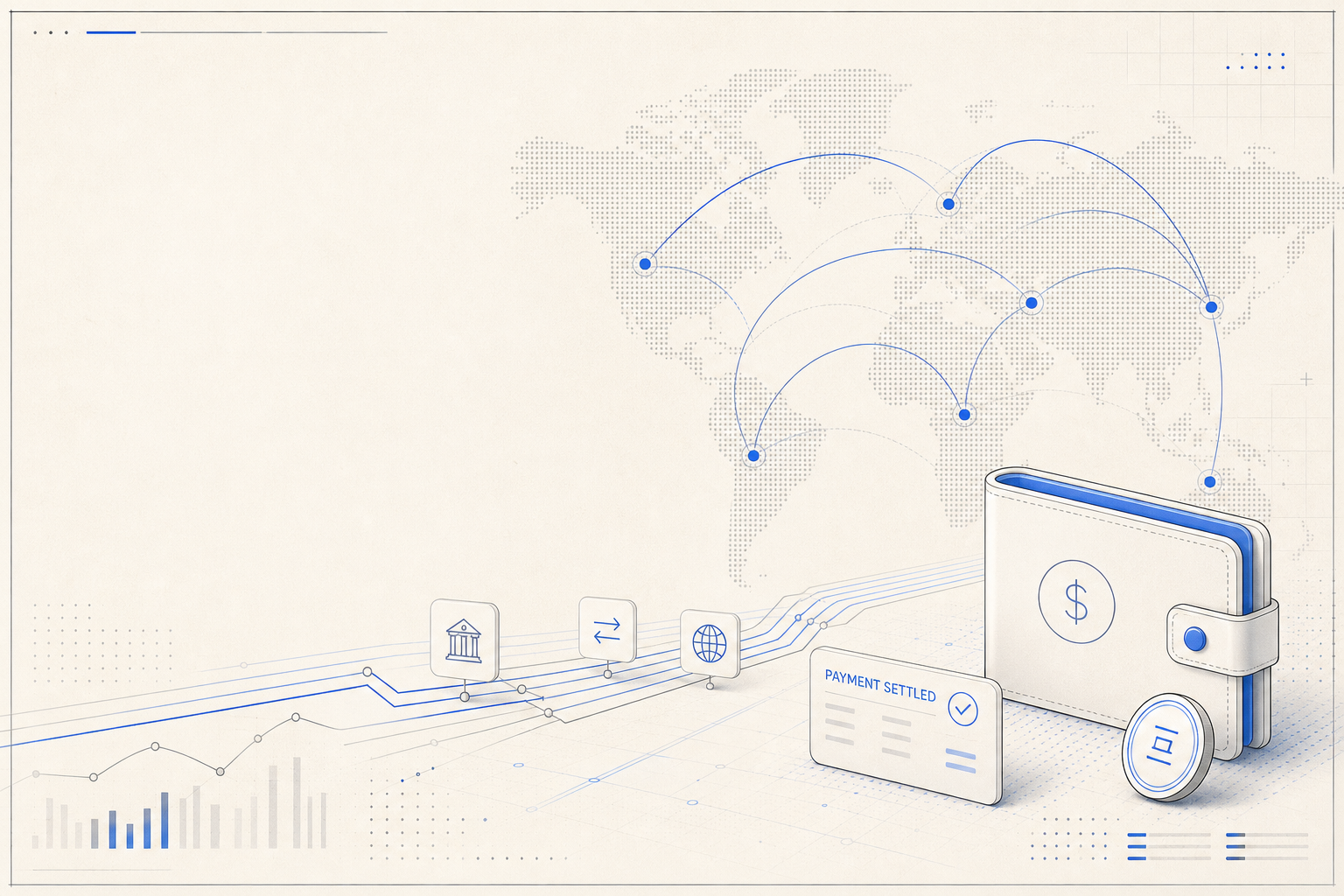
MassPay is widening its push into stablecoin settlement by plugging Coinbase’s digital-asset infrastructure into its global payout stack, a move that turns a familiar crypto use case into a more operational enterprise product. The key point is not simply that another payments company has added USDC. It is that a payout orchestrator serving cross-border business flows is now packaging stablecoin funding, conversion, custody and last-mile delivery into a workflow that looks much closer to ordinary treasury operations than to a standalone crypto experiment.
The commercial structure is straightforward. MassPay says eligible business customers will be able to fund disbursements in U.S. dollars, convert into USDC through Coinbase, or deposit USDC directly, then send value onward through the payout methods that fit each corridor. That can include stablecoin delivery to digital wallets, but also local-fiat disbursements and other rails managed by MassPay. In other words, the partnership is less about replacing legacy payout channels than about inserting a programmable settlement layer in front of them, which matters for firms trying to compress settlement times without rebuilding their entire payments operation.
The division of labor is also telling. According to the companies’ descriptions of the integration, Coinbase supplies the wallet infrastructure, custody and onchain settlement functions, while MassPay keeps control of payout orchestration and payee delivery. MassPay’s own product materials emphasize a compliance-heavy operating model that includes sanctions screening, tax documentation, configurable payout controls and auditability across the payment lifecycle. That design matters for enterprise adoption because many corporate treasurers are not looking to run separate wallet operations or stitch together multiple crypto vendors; they want a service layer that lets them access stablecoin settlement without taking on a new stack of operational complexity.
Management is framing the economics in practical, not ideological, terms. In comments reported around the launch, MassPay said customers using stablecoin-enabled flows have seen payout costs run roughly 40% to 70% below international wires, while settlement that traditionally takes days can move close to real time. The company also said it expects the new rail to support nine-figure payout volume in its first year. Those numbers should be treated as early operating expectations rather than industry benchmarks, but they help explain why stablecoins continue to gain traction first in cross-border disbursement niches where wire fees, trapped prefunding and slow reconciliation are already a material pain point.
The broader market context supports that reading. MassPay’s own coverage materials position the business around cross-border disbursement into more than 200 countries and roughly 80 currencies, spanning bank transfers, mobile wallets, cash pickup and crypto. Circle is advancing a similar thesis from the issuer side through its Circle Payments Network, which it describes as a partner network for business, consumer and institutional payments with 24/7 settlement using stablecoins such as USDC and EURC. The convergence is notable: payout platforms, exchanges and stablecoin issuers are all trying to turn digital dollars from a trading instrument into a payments primitive that can sit inside standard treasury and operations workflows.
That is also why the Coinbase link matters beyond the headline names involved. Stablecoin adoption in enterprise payments often stalls at the same point: moving reliably between bank money, onchain dollars and locally compliant payout methods in different jurisdictions. A model in which one provider handles licensed digital-asset infrastructure and another manages corridor-level delivery, onboarding and controls is more likely to fit how finance teams actually buy technology. It also creates a more realistic bridge between centralized governance requirements and the always-on settlement model that stablecoins make possible.
There are still real constraints. Stablecoin payout products remain dependent on regulatory perimeter, banking access, wallet controls and the willingness of counterparties to receive digital assets or trust conversion into local currency. Corporate adoption will also hinge on whether finance teams can reconcile these flows cleanly inside ERP, treasury and audit systems. But the direction is increasingly clear: the market is moving away from one-off pilot programs and toward embedded payment products that hide the blockchain plumbing while preserving the speed and programmability benefits.
For RWA and onchain-finance watchers, the significance is broader than remittances or vendor payouts alone. Every enterprise workflow that normalizes dollar-backed tokens for funding, transfer and settlement expands the operational footprint of tokenized money. That creates more overlap between stablecoins, tokenized deposits and other real-world-asset rails that are competing to become the cash leg of onchain finance. MassPay’s Coinbase integration does not settle that competition, but it is a concrete sign that stablecoins are continuing to win distribution where businesses care most: cost, control, speed and cross-border reach.