Lawson’s JPYC pilot brings yen stablecoin payments to the checkout lane in Japan
Lawson is preparing a pilot that will let shoppers use the yen stablecoin JPYC at a Tokyo store, pushing stablecoins from treasury and trading workflows into a live retail payments environment. The test matters because it links consumer checkout, wallet UX and regulated fiat-backed settlement in one of Japan’s largest convenience-store networks.
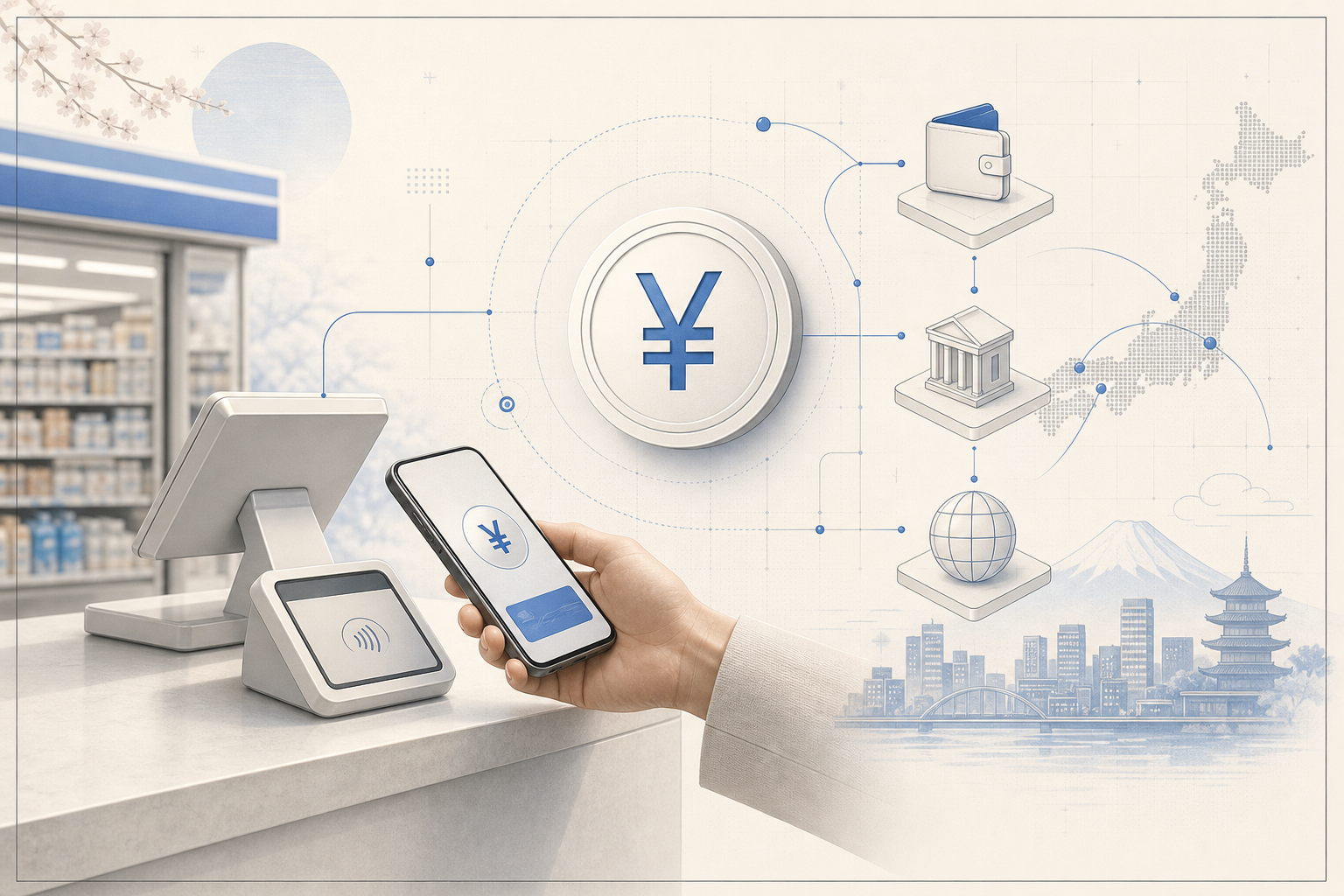
Lawson is preparing to test yen stablecoin payments at the point of sale, giving Japan’s digital-asset market one of its clearest retail payment experiments to date. The pilot is expected to begin in early August at the Takanawa Gateway City location in Tokyo, where customers will be able to settle purchases with JPYC, a yen-denominated stablecoin designed to hold a one-to-one value against the Japanese currency. For RWA and stablecoin operators, the significance is not the size of the first rollout but the fact that a large mainstream merchant is moving a fiat-backed token out of the wallet-and-exchange loop and into an everyday checkout environment.
The trial brings together three different parts of the stack. Lawson supplies the merchant footprint and the consumer transaction environment, KDDI adds distribution and telecommunications reach, and HashPort contributes wallet infrastructure that already supports JPYC transfers. That structure matters because merchant stablecoin pilots usually fail when one of those layers is missing: either the user experience is too technical, the settlement layer is not integrated into commerce systems, or the token itself is not embedded in a regulated operating model. By tying those layers together inside a physical store, the pilot becomes a useful test of whether stablecoins can behave less like trading instruments and more like payment rails.
Lawson’s scale is what turns a single-store experiment into a signal for the wider market. The company remains Japan’s third-largest convenience-store chain, with nearly 14,700 domestic locations and annual net sales above ¥3 trillion in its latest fiscal year. Even a narrow proof of concept can therefore reveal how stablecoin payments perform under the practical demands of retail: transaction speed at the register, wallet handoff friction, refund handling, reconciliation with store systems and whether the economics make sense for a merchant handling a high volume of small-ticket purchases. Those are the operating questions that matter if stablecoins are ever going to move beyond institutional settlement and crypto-native payments into broader consumer commerce.
The token at the center of the test has also been building more operational depth. JPYC said last week that its onchain circulation had surpassed ¥2 billion, giving it a larger live float than many smaller local digital-money experiments. Company materials describe the token as fully backed by yen deposits and Japanese government bonds, and the issuer has recently pushed upgrades around issuance and redemption workflows, account linking and user security. JPYC is also already available across multiple public chains, including Ethereum, Avalanche, Polygon and Kaia, which means the Lawson pilot is not being launched on a technically isolated rail. That multichain footprint gives the project optionality if the pilot later expands into different wallet partners or settlement environments.
The broader Japanese context is important here. Since stablecoin-specific licensing rules took effect in 2023, issuers and distribution partners have spent much of their energy on compliance architecture, custody design and institutional use cases. Retail spending has been the harder frontier because it requires more than legal clarity. It requires merchants, wallets, consumer support flows and payment acceptance logic that can all operate without making a shopper think like a crypto user. A convenience-store pilot is therefore a cleaner market test than another treasury or intercompany settlement announcement, because it asks whether regulated stablecoins can fit inside ordinary consumer behavior rather than specialist financial workflows.
For the RWA market, the story is less about one token and more about where tokenized fiat instruments are finding product-market fit. Stablecoins became the first scaled real-world asset category because they compress issuance, transfer and redemption into a programmable format that businesses can move instantly. But the next phase of the category depends on distribution: where the token is accepted, who holds the wallet, what redemption path exists and how seamlessly the instrument fits into existing economic activity. If a merchant like Lawson can make that experience legible at checkout, it strengthens the case that regulated fiat-backed tokens can serve as consumer-facing infrastructure rather than just backend liquidity tools.
The pilot remains early and should be treated that way. One location does not prove nationwide demand, and a successful demo does not automatically resolve merchant incentives, accounting treatment or customer acquisition costs. Even so, this is the kind of real-world deployment the stablecoin sector needs more of: a narrowly scoped launch with clear operating constraints, real users and a known merchant environment. If the Lawson test works, the result will be more than a headline about paying for convenience-store items with a digital yen token. It will be evidence that stablecoins in Japan are starting to cross the line from regulated issuance to usable retail infrastructure.