Kakao and Circle Move Early on Korean Stablecoin Infrastructure
Kakao, Kakao Pay and Kakao Bank have signed an MOU with Circle to examine won-based stablecoin payments, remittances and merchant settlement. The real signal is not an immediate launch, but that South Korea’s consumer-finance stack is starting to design regulated onchain cash rails before the rulebook is fully in place.
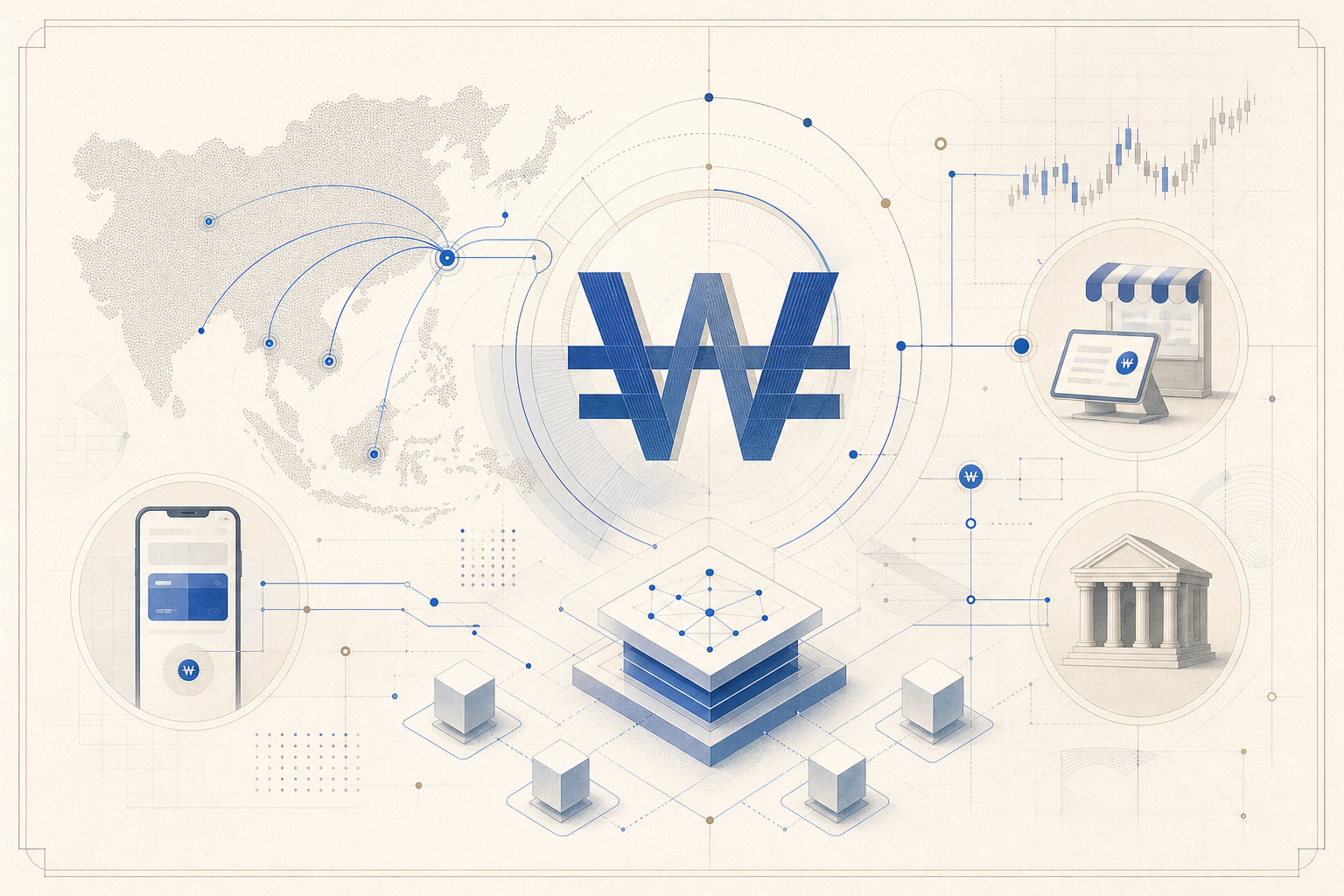
Kakao’s consumer-finance stack has taken one of the clearest steps yet toward a regulated won stablecoin model. Kakao, Kakao Pay and Kakao Bank have signed a memorandum with Circle to study how a won-denominated onchain cash rail could be used for consumer payments, remittance flows, merchant settlement and broader tokenized-finance use cases. There is no launch date or live product yet, but the significance is in who is doing the design work. Instead of a crypto-native startup testing a niche wallet, the effort links one of South Korea’s best-known digital platform groups with a global stablecoin issuer whose core business is issuance, redemption and cross-border settlement. That combination puts distribution, compliance design and payment operations in the same conversation from the beginning.
The immediate takeaway is that this is an infrastructure exploration, not a retail token launch. The companies said they will study how Circle’s blockchain and global payments stack could connect to Kakao’s consumer platforms and financial services. That matters because stablecoin markets are moving past the question of whether digital cash can exist onchain and toward a harder operational question: which institutions can issue it, how reserves and redemption work, and where it can plug into mainstream payment flows. Circle’s current product set already spans USDC liquidity access, 24/7 stablecoin foreign exchange tooling and a broader payments network built around moving fiat and digital dollars more efficiently. In that context, a won-based initiative would not be a standalone coin story; it would be an attempt to fit a local currency rail into a larger settlement architecture.
Kakao’s side of the equation is just as important. Kakao Pay describes itself as a TechFin subsidiary of Kakao Corp. that built a lifestyle financial platform through KakaoTalk and the Kakao Pay app, spanning online and offline payments, transfers, memberships, bill payments, authentication and additional financial services. That kind of distribution matters far more for a domestic stablecoin than speculative exchange listings do. If a won token is eventually allowed to move through merchant checkout, wallet balances, remittance flows or app-based financial features, the core challenge will be trusted user touchpoints and operational integration. Kakao, Kakao Pay and Kakao Bank together offer a path to test exactly that: how a regulated token could sit inside consumer payment habits rather than remain trapped inside crypto-native trading venues.
The timing also reflects where South Korean policy is now. Lawmakers and regulators have been working through a framework for won-backed stablecoins that addresses issuance standards, collateral management, redemption and internal controls, while still debating which institutions should be allowed to issue or control those products. That unresolved policy question is critical. A won stablecoin market will look very different if issuance is effectively restricted to bank-led structures than if large fintech and platform groups can participate more directly through licensed partnerships. By moving into the design phase before the final rules are published, Kakao and Circle are effectively preparing for whichever model emerges, while also signaling that private-sector demand for compliant won settlement rails is arriving faster than the legal perimeter.
There is also evidence that the technical groundwork in Korea is already moving beyond theory. Kaia’s institutional materials say the network is being built for stablecoin settlement and onchain finance across Asia, and its KRW infrastructure page says it has already completed a pilot with KB Kookmin covering KRW stablecoin issuance, offline merchant payments and cross-border remittances. Whether or not that exact architecture becomes the market standard, the broader point is clear: Korean financial and technology groups are no longer talking about stablecoins solely as a future policy category. They are testing issuance controls, payment acceptance, wallet security and interoperability in anticipation of a regulated rollout. The Kakao-Circle memorandum fits that pattern. It looks less like a one-off announcement and more like another piece of a domestic buildout that is gradually becoming institutionally legible.
The reference to tokenized financial services adds a second layer of importance. Circle is not only a stablecoin issuer; its product lineup now also includes USYC, a tokenized money market fund, alongside payments and treasury tooling. That matters because once a market has a compliant onchain cash instrument, the natural next step is not merely faster payments. It is the creation of adjacent financial products that use that cash as collateral, settlement inventory or an entry point into tokenized savings and investment structures. The companies did not announce any specific product in that category, so it would be premature to assume a Korean tokenized fund push is imminent. Still, the wording suggests the discussion is broader than point-of-sale payments alone. The stack under consideration appears to include both transactional money and the financial products that can grow around it.
For RWA markets, the bigger implication is strategic rather than immediate. A regulated won stablecoin connected to a major consumer platform would strengthen the local-currency side of tokenized finance in a market that has often been discussed through a dollar lens. It could improve domestic settlement options, create cleaner rails for remittances and merchant flows, and eventually support tokenized assets that need dependable onchain cash rather than synthetic workarounds. None of that is live yet, and the regulatory gate remains the deciding factor. But the combination of Kakao’s distribution, Circle’s issuance and payments infrastructure, and Korea’s accelerating stablecoin preparation makes this a credible early signal that onchain won liquidity is starting to move from policy debate into product architecture.