India’s USDT premium widens as FEMA enforcement disrupts stablecoin remittance rails
USDT has moved to a much steeper premium on Indian platforms after Enforcement Directorate searches targeted Bengaluru firms that marketed stablecoin on-ramp and off-ramp services. The spread is turning into a live stress test for how dependent local dollar liquidity still is on semi-formal crypto payment channels.
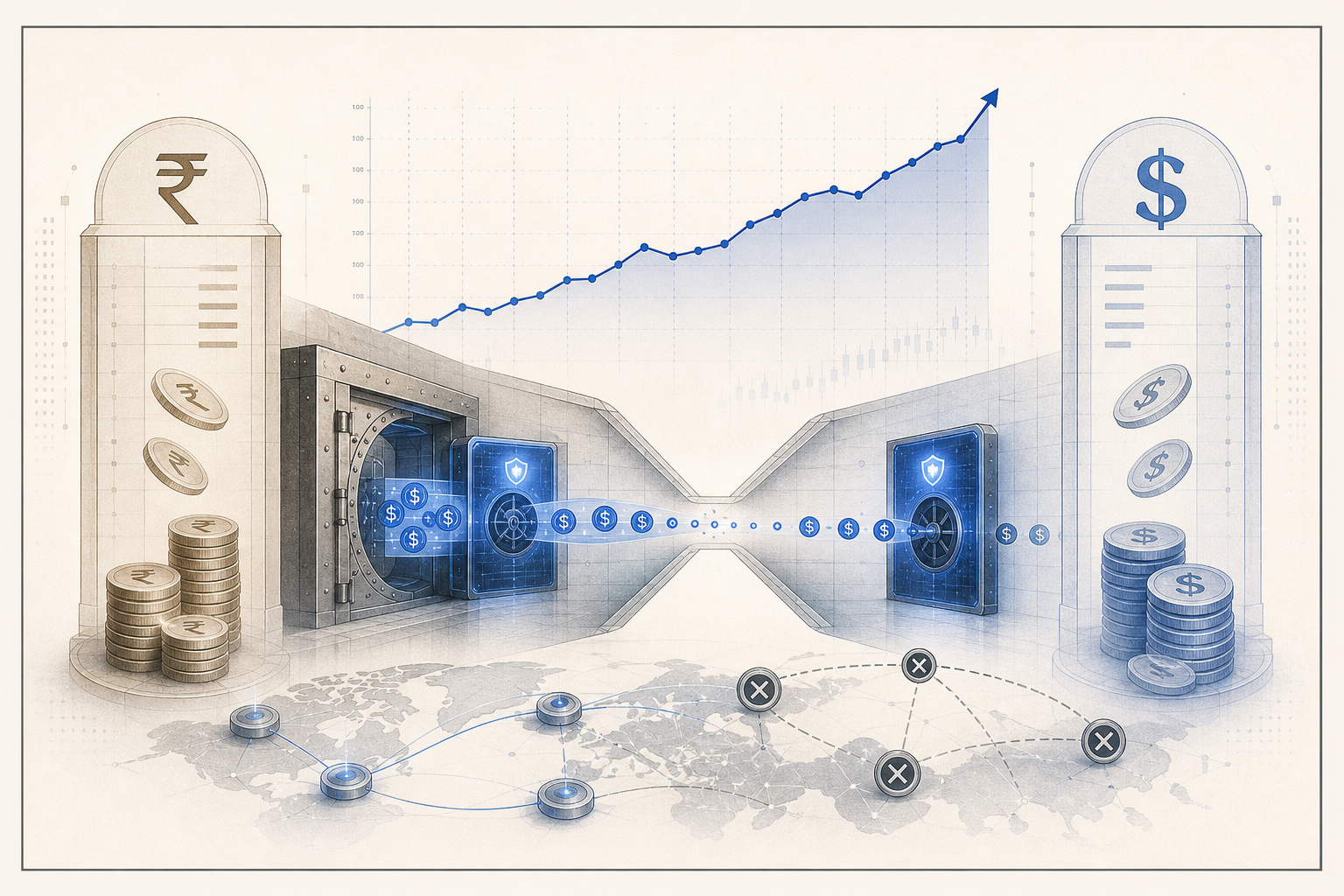
India’s local price for USDT has lurched well above the token’s dollar peg, and the move is telling the market something more important than a simple quote dislocation. What has widened is not just the gap between one stablecoin and one U.S. dollar, but the gap between demand for digital dollars inside India and the set of rails that can legally and reliably supply them. After recent enforcement action in Bengaluru, the premium on USDT jumped past its usual range, highlighting how much local liquidity still depends on intermediaries that sit between formal banking rules and crypto-native transfer infrastructure.
According to market reporting over the weekend, USDT traded around 102.88 rupees against an official dollar-rupee rate near 94.65, pushing the premium above 8.5%. That is materially higher than the roughly 3% to 4% premium that has often persisted in India when access to offshore dollar liquidity is already constrained. In practical terms, the premium is the price users are willing to pay for a blockchain-based dollar when banking channels, capital controls and compliance frictions make conventional dollar access slower or harder. When that spread widens suddenly, it usually signals that supply has been interrupted faster than demand has eased.
The clearest new supply shock came from India’s Enforcement Directorate. In a June 19 press release, the agency said its Bengaluru Zonal Office had searched six premises on June 17 under section 37 of the Foreign Exchange Management Act, or FEMA, over allegations of unauthorized cross-border money transfers conducted through virtual digital assets. The release named entities including Transak, Carret, Mokshagna Technologies, Buyhatke’s Onramp.money brand and Onmeta. ED said the investigation pointed to large-scale circumvention of FEMA rules by operators that were not authorized by the Reserve Bank of India to handle cross-border remittances.
The agency’s description of the transaction flow matters because it lines up directly with how India’s stablecoin premium can form. ED said users deposited money with these platforms, the funds were used to purchase virtual digital assets, especially stablecoins such as USDT, and those assets were then sold on Indian crypto exchanges so proceeds could be remitted onward. It also said preliminary findings pointed to more than Rs. 2,500 crore of unauthorized cross-border transfers, with restraint orders placed on bank accounts holding around Rs. 6 crore. If even part of that activity represented a recurring source of offshore stablecoin inventory entering Indian markets, its disruption would tighten local token supply almost immediately.
The corporate websites of several named firms help explain why the enforcement action reverberated through pricing. Transak publicly markets on-ramp and off-ramp infrastructure, named virtual bank accounts and flows where a sender pays in local currency while settlement bridges through stablecoins before the recipient receives local fiat. Onmeta advertises stablecoin-to-INR payout rails and settlement in USDT or U.S. dollars. Onramp.money promotes fiat-to-crypto and crypto-to-fiat conversions across multiple blockchains. None of that proves wrongdoing on its own, but it does show that these platforms operate squarely in the conversion layer that connects domestic fiat balances, dollar stablecoins and cross-border money movement.
That is why the premium should not be read as a speculative anomaly alone. It is also a market-structure indicator. India has long had strong underlying demand for portable dollar exposure, whether for trading, treasury management, freelancer payouts, remittances or simply faster settlement than the banking system can offer. Stablecoins meet that need because they move at internet speed while still representing dollar-denominated value. When regulators cut into the channels that source those tokens from abroad or recycle them into local rupee liquidity, the domestic market starts rationing access through price. The premium becomes the balancing mechanism.
There is also a policy message here. Enforcement agencies appear increasingly willing to treat stablecoin-based payout networks as remittance infrastructure rather than as a side case of crypto trading. That shifts the compliance burden from token issuance alone to the entire local conversion stack: onboarding, OTC execution, wallet routing, bank account collection and payout settlement. For legitimate stablecoin businesses, the lesson is that distribution into high-demand markets cannot rely on gray-zone operating models for long. If demand remains durable, regulated players will eventually try to replace these flows with clearer licensing, bank partnerships and auditable treasury controls.
For now, the immediate takeaway is straightforward. Demand for digital dollars in India has not disappeared; if anything, the price action suggests it remains strong. What changed was access. The wider USDT premium is the market’s way of repricing regulatory friction, settlement risk and reduced inventory at the same time. That makes this episode worth watching beyond India, because it shows how quickly stablecoin adoption can collide with foreign-exchange rules when dollar demand migrates onto crypto rails faster than regulated distribution does.