IMF Warns Tokenization Can Remove Market Frictions — and Some of Finance's Buffers
The IMF's latest warning on tokenization goes beyond enthusiasm and into market structure: faster settlement and integrated rails can improve capital efficiency, but they can also remove the timing buffers and intermediated controls that have historically absorbed shocks.
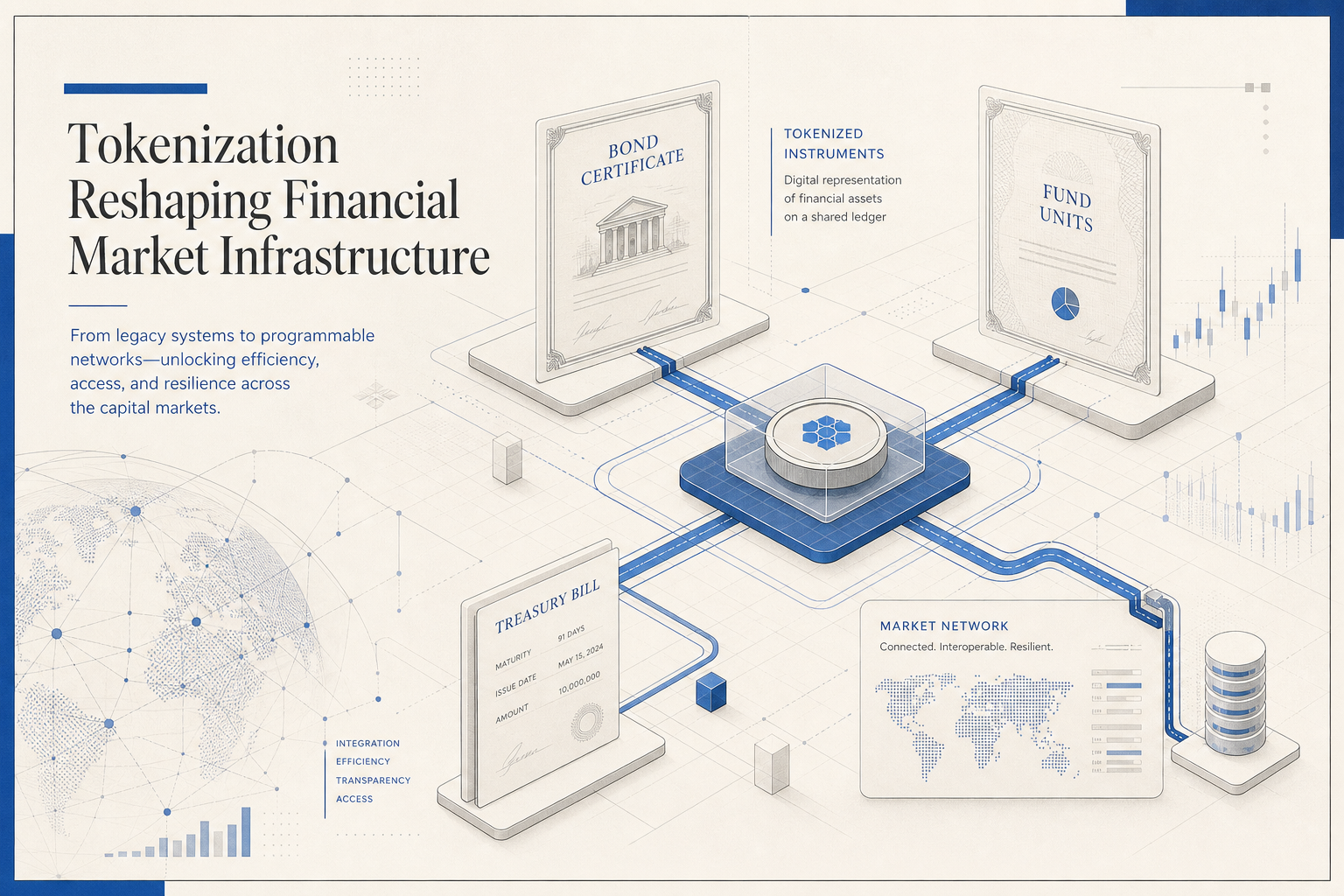
The International Monetary Fund is making a more nuanced intervention in the tokenization debate: the technology may genuinely compress costs, shorten settlement paths and widen access to financial products, but the same design choices that remove friction can also remove some of the shock absorbers that traditional market structure has relied on for decades. That framing matters for the RWA market because tokenized funds, Treasury products and onchain cash instruments are increasingly moving from pilot status into live issuance, which means the conversation is no longer about whether tokenization is technically possible. It is about what happens to stability, supervision and market plumbing when issuance, transfer, collateral movement and settlement become part of one always-on digital stack.
Reporting around fresh IMF commentary this week centered on remarks from Tobias Adrian, the fund's monetary and capital markets chief, warning that in tokenized finance “frictions disappear — but so do buffers.” That is a concise way to describe a structural tradeoff. In legacy markets, multiple intermediaries, batch windows, reconciliation processes and delayed settlement all add cost. They also create time for exception handling, risk review and operational backstops. Tokenized rails promise to collapse much of that sequence into a more continuous process where ownership records, payments and settlement logic can update on shared infrastructure. For issuers and investors in RWAs, that is the appeal: faster transfer, cleaner auditability and the possibility of broader distribution for instruments that have historically lived inside slower institutional channels.
The IMF's broader line of argument is that tokenization is not simply a new wrapper for securities but a potential redesign of market architecture. IMF publication materials released this week describe tokenization as a rising force across payments and asset markets, with implications for market structure, risk management and public policy. That tracks with what the industry is already building. Products such as BlackRock's BUIDL, Franklin Templeton's BENJI and Ondo's OUSG show how cash management and short-duration government exposure are becoming the first serious proving grounds for compliant onchain finance. These products are easier to tokenize than more operationally complex assets because the underlying instruments are familiar, the valuation is relatively transparent and the investor use case is legible: cash efficiency, intraday mobility and programmable collateral.
But the IMF's warning is that efficiency should not be mistaken for resilience. If more functions migrate onto common technical rails, risk can concentrate in new places: transfer restrictions embedded in code, custodial key management, oracle dependencies, smart-contract logic, token standards and the operators that sit at the center of these networks. Traditional finance spreads responsibility across agents, custodians, clearing systems, paying agents and central securities depositories. Tokenization can streamline that chain, but streamlining also means that a software flaw, governance error or infrastructure outage can propagate quickly across instruments that look diversified on the surface. For RWA builders, that makes operational design every bit as important as legal structure.
The policy challenge becomes sharper when tokenized assets interact directly with tokenized forms of money. Many of the most ambitious institutional roadmaps now assume some combination of stablecoins, tokenized deposits or wholesale central bank settlement assets will sit beside tokenized securities. In that model, settlement can happen closer to real time, collateral can move faster and treasury operations become more programmable. The upside is obvious: fewer manual handoffs and less trapped liquidity. The downside is that liquidity stress can also travel faster. If investors can redeem, switch collateral or unwind positions continuously, the market may lose some of the time buffers that historically slowed contagion during periods of stress.
That is why the IMF's intervention lands at an important moment for the sector. The current RWA market is no longer defined only by proof-of-concept work from crypto-native teams. Large asset managers, transfer agents, custodians, fintechs and market-infrastructure firms are all testing production models. The next phase of competition will likely hinge less on who can mint a token and more on who can deliver credible controls around governance, interoperability, redemption, compliance and failure handling. In practice, that means robust permissions, clearly mapped legal claims, transparent reserve and custody arrangements, tested upgrade procedures and conservative assumptions about cross-platform dependencies.
For RWA Trails readers, the useful takeaway is not that tokenization is overhyped or unsafe. It is that the market is entering the stage where architecture choices matter as much as product launch headlines. The IMF is effectively arguing that the strongest tokenization models will be the ones that preserve the economic benefits of faster settlement and programmable ownership without pretending that all friction is waste. Some friction exists because markets need checkpoints. The winners in tokenized finance are likely to be the issuers and infrastructure providers that can decide, very deliberately, which frictions to remove and which safeguards still need to stay in the system.